VPL - View
Giving healthcare logistics teams a clearer view of every shipment

Following VPL Traject, VPL awarded me a second engagement to design VPL View: a separate supply-chain visibility application for tracking shipments, managing backorders, reviewing delivery details, and monitoring exceptions.
While VPL Traject supported the creation and management of shipments, VPL View was designed to help teams understand what was happening after an order was in motion.
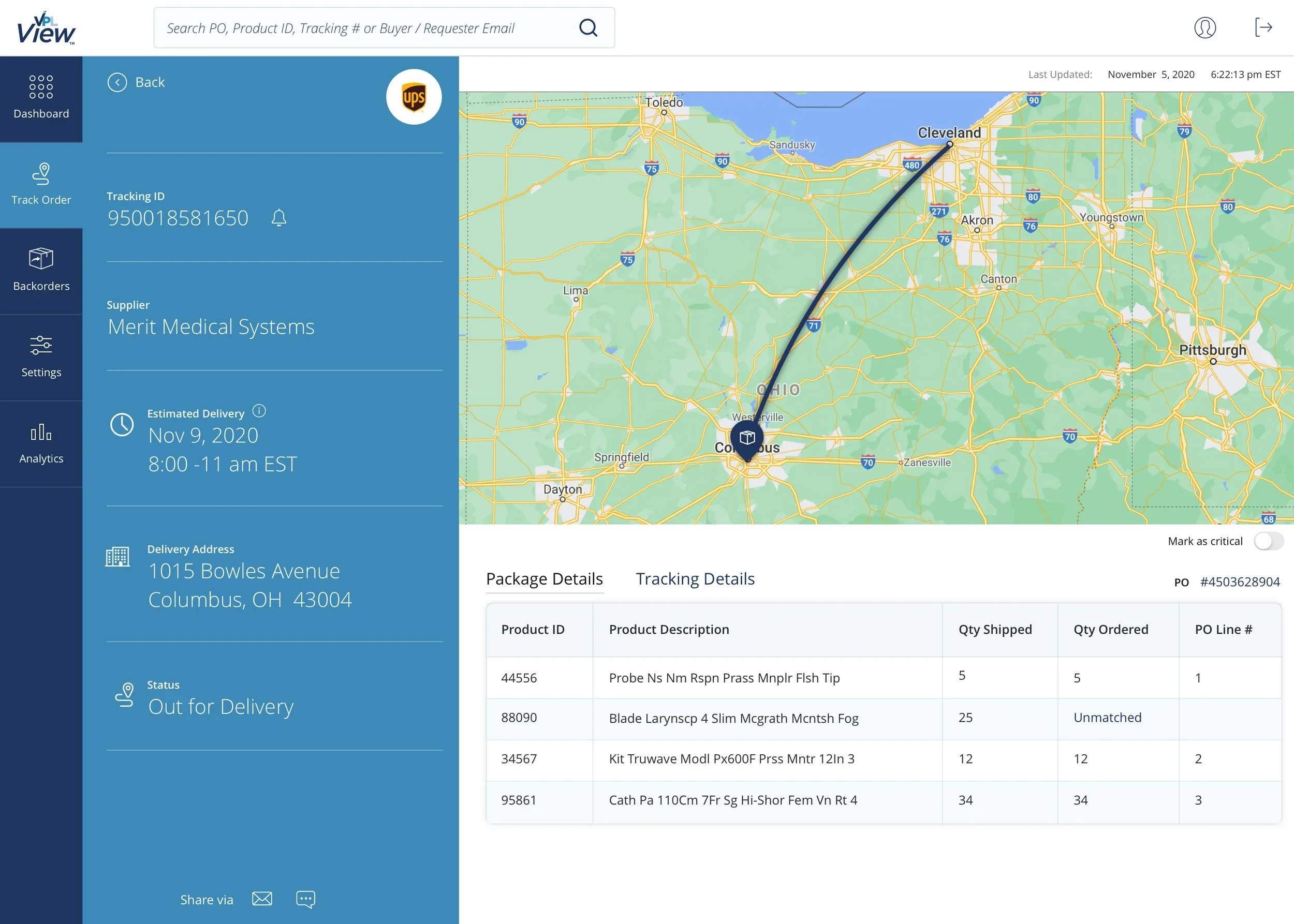
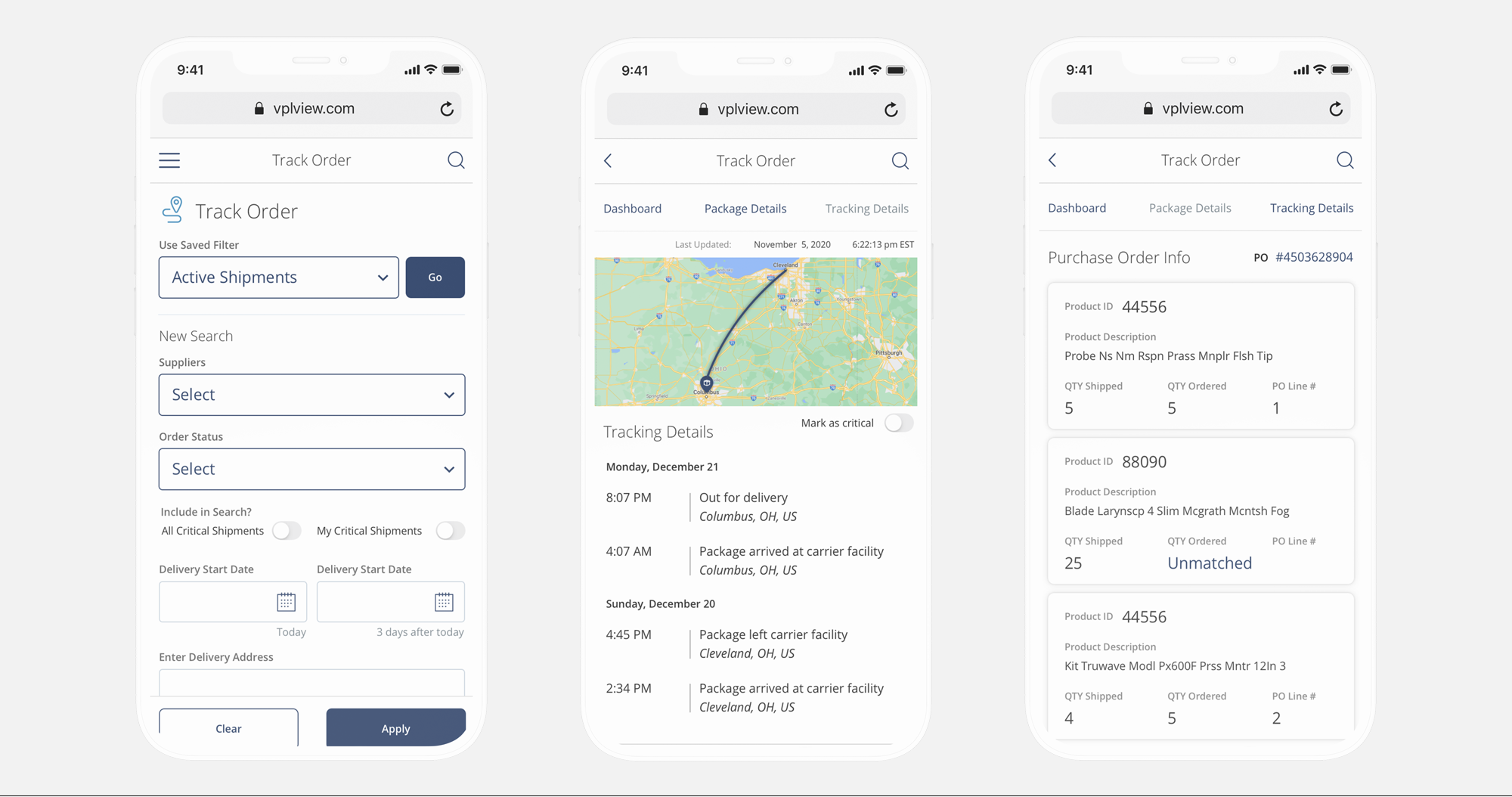
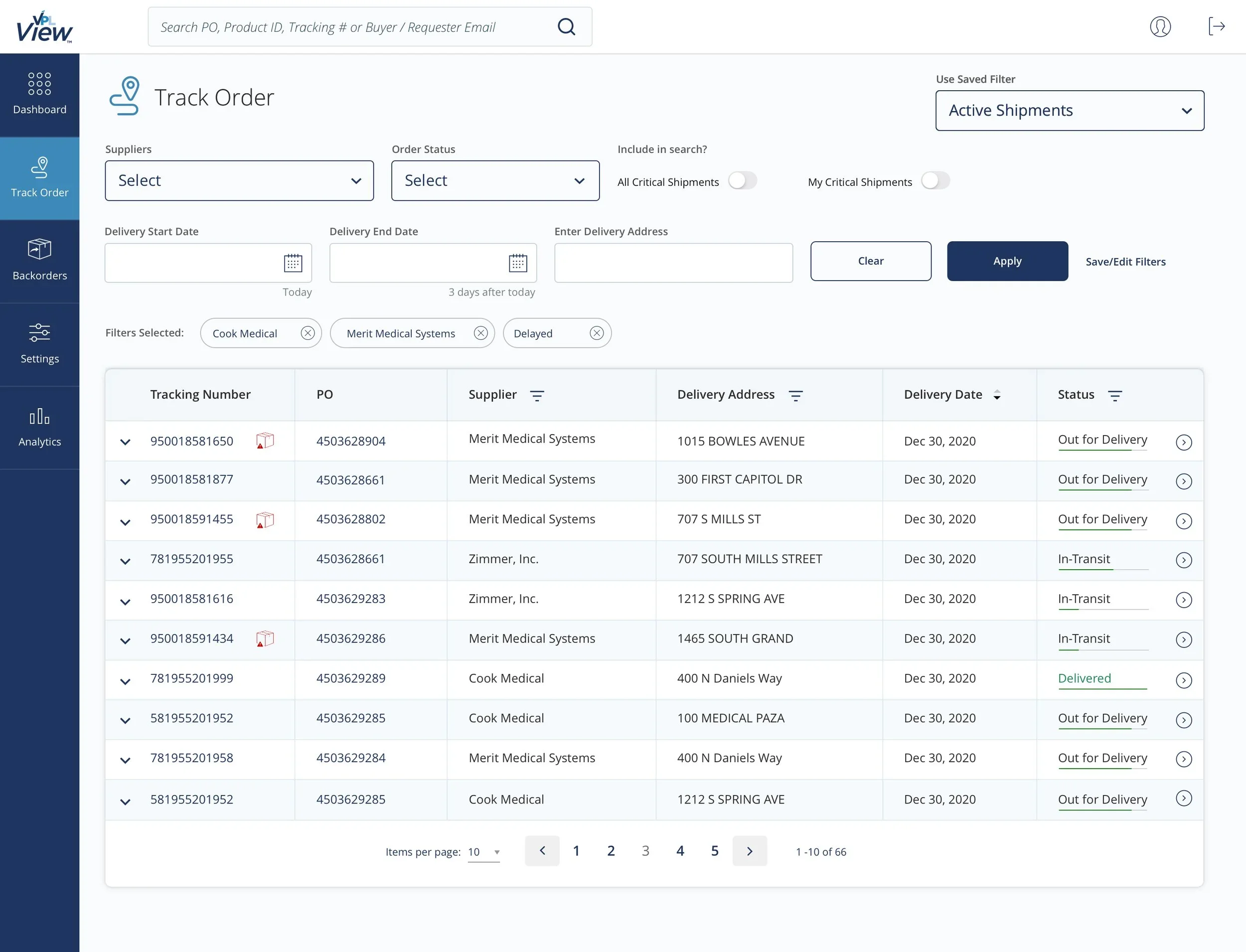
The product brought shipment status, delivery dates, supplier information, critical exceptions, backorders, and tracking details into one operational view. Users could search by purchase order, product ID, tracking number, buyer, or requester; focus on active or critical shipments; and move from an overview into the details of a specific delivery.
Product Strategy
Content Strategy
Information Architecture
UX & UI Design
New Design System Creation
Responsive Desktop and Mobile Design
Scope
Role & Ownership
I reimagined VPL View from the ground up, shaping the information architecture, UX, UI, content structure, and responsive design direction.
My role was to turn complex, distributed shipping information into an experience that made status, risk, and next steps easier to understand. I established the product structure and design system across dashboards, tracking, backorders, settings, and analytics.
The Real Problem
Teams responsible for healthcare shipments need a quick way to understand what is on track, what is delayed, and what requires attention. Shipment status, supplier information, delivery addresses, estimated dates, backorders, and alerts can become difficult to follow when they live across separate records and systems.
VPL View needed to make that operational information visible and actionable without forcing users to hunt through dense data.
What Changed / Outcome
I designed a connected visibility experience that gave users a clearer path from a high-level shipping overview to the details behind a specific order.
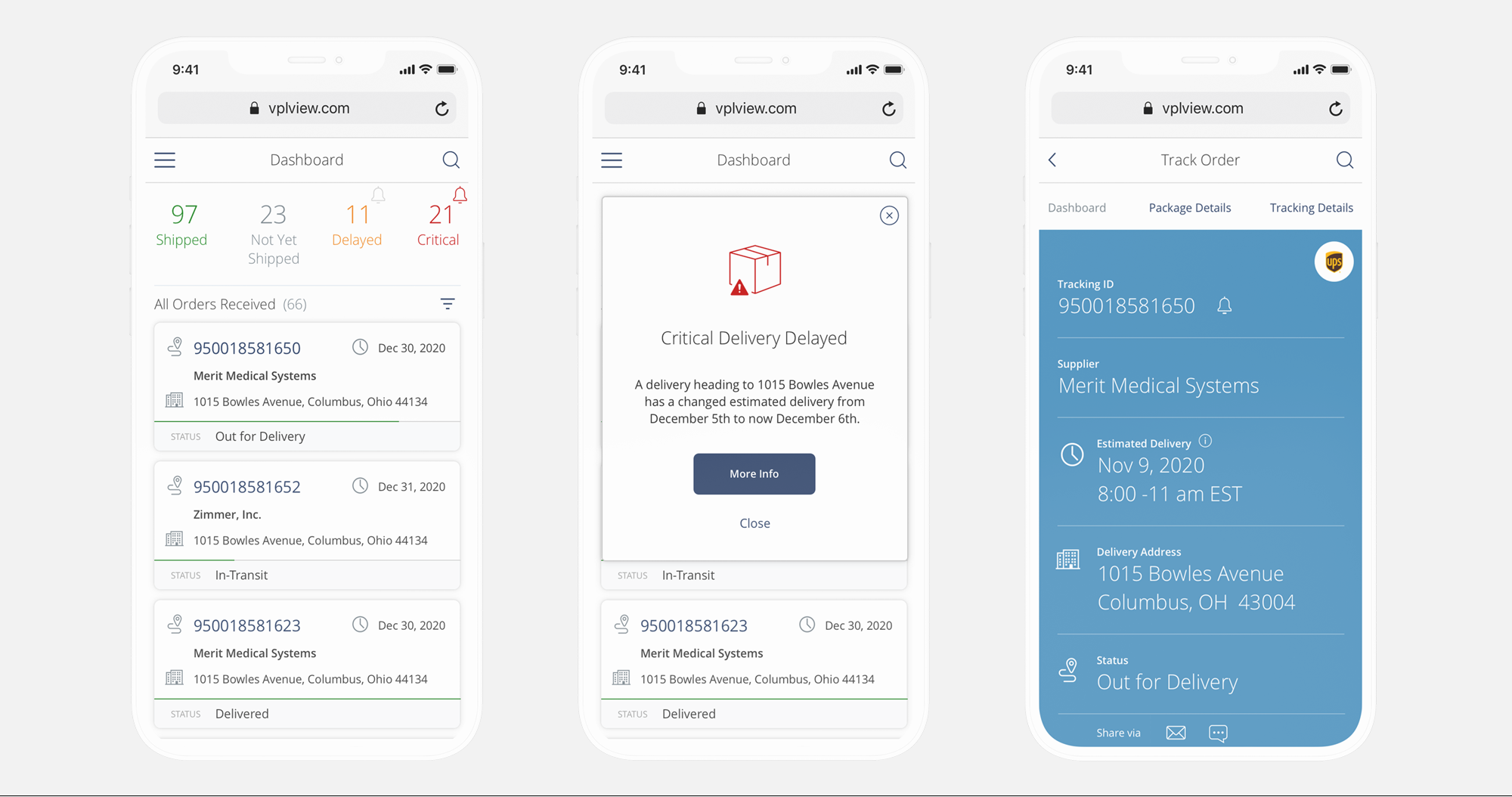
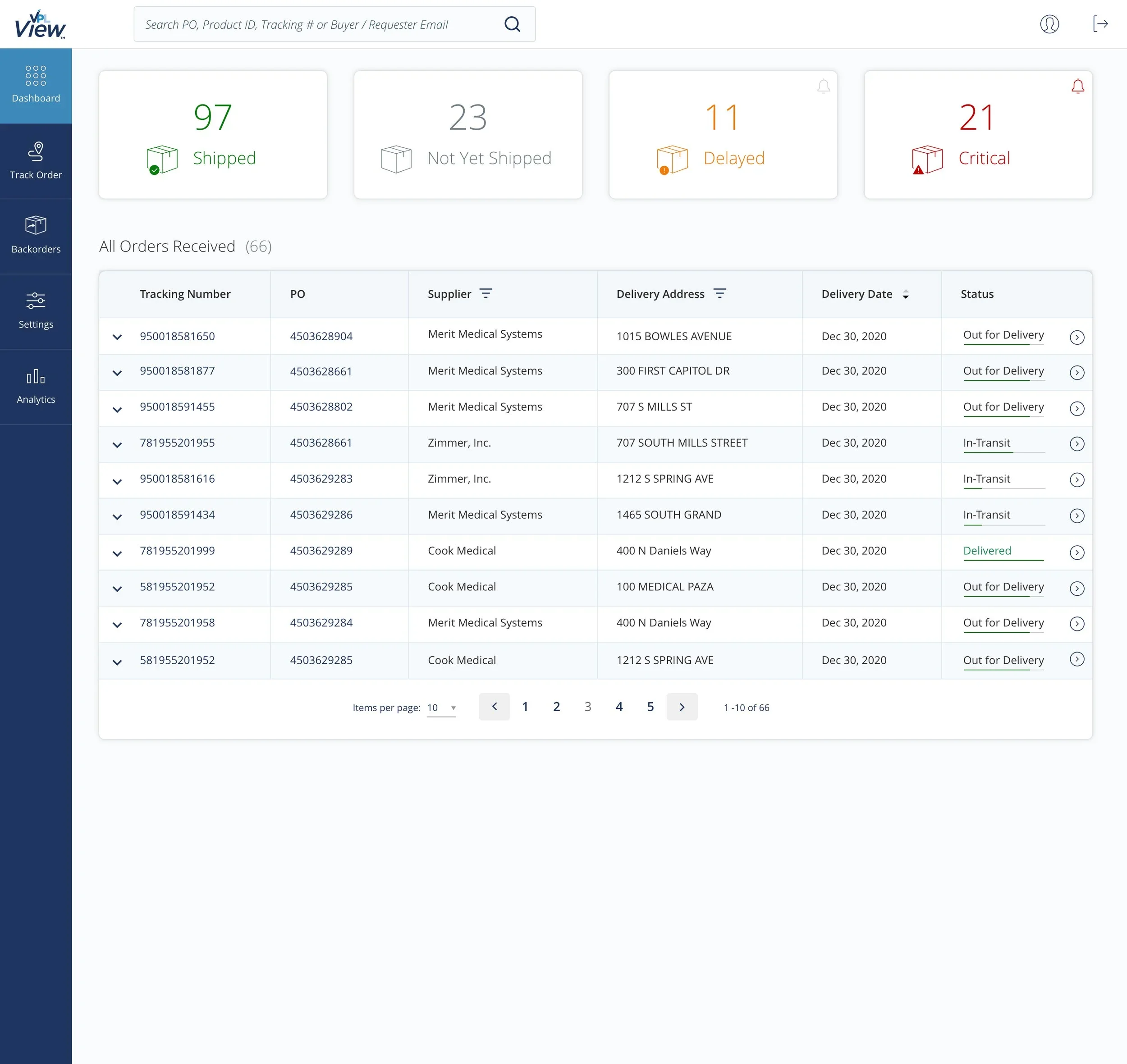
The dashboard surfaced shipped, unshipped, delayed, and critical orders at a glance. Tracking views supported saved filters by supplier, status, delivery date, and address, while detailed shipment pages combined live route context, estimated delivery windows, package information, order quantities, and delivery status.
I also designed dedicated backorder management, critical-delay alerts, notification settings, and user-configurable defaults. Together, these workflows gave VPL a separate but complementary product for monitoring the shipments created and managed through VPL Traject.
The documented outcome is a complete product direction and responsive design system for VPL’s supply-chain visibility experience.