
A practical, senior-led approach to product design
I work closely with product teams to bring clarity to complex problems, guide design decisions, and keep progress moving—without overcomplicating the process or slowing teams down.
HOW I WORK
What guides my work on every project
Direct collaboration and ownership
I work directly with product and engineering leads to understand the problem quickly and move decisions forward. You work with me, not through layers, and I stay accountable for direction, quality, and outcomes throughout the engagement.
Simplifying complexity
I focus on making complex systems easier to reason about without losing necessary depth. That means reducing cognitive load, clarifying intent, and designing interfaces that feel predictable—even when the underlying system isn’t.
UX Informs Every Decision
Design decisions are guided by user behavior, business goals, and technical realities—not opinions or trends. This keeps work focused on what will actually improve usability, adoption, and efficiency.
Clear expectations and steady communication
We align early on scope, priorities, and what success looks like. Communication stays direct, progress stays visible, and decisions don’t stall due to ambiguity or misalignment.
MY PROCESS
A flexible, repeatable framework for clarity and momentum
My process adapts to the complexity of your product, its maturity, and your team’s needs—creating structure where ambiguity exists without slowing progress.
Not every project requires every step—this framework flexes based on scope, risk, and where clarity is most needed.
1 | Discovery of your needs
I begin by understanding your product at its core. Through stakeholder interviews, product walkthroughs, system mapping, and UX audits, we reveal:
workflow friction
unclear paths
misaligned expectations
usability blockers
gaps between business goals and user needs
This step builds a shared baseline of truth and establishes the foundation for decision-making.
2 | Generative Research
Before designing anything, I uncover how users think, behave, and make decisions.
I use a combination of:
user interviews
task-flow reviews
heuristic evaluations
competitive analysis
journey mapping
These methods help us understand motivations, frustrations, expectations, and mental models, the raw ingredients of strong UX strategy.
3 | Concept Development & Insight Analysis

This is where research turns into clarity.
I synthesize insights into frameworks and align your team around what problem to solve and why.
This may include:
opportunity areas
concept models
early sketches or system logic
revised workflows
new structural patterns
This step ensures we are solving the right problem, not just the visible one.
4 | UX/UI Design & Prototyping
Once alignment is in place, we translate insight into intuitive product experiences.
I design:
workflows
logic paths
user journeys
interface components
responsive layouts
interaction patterns
Then I prototype to validate direction, gain stakeholder buy-in, and expose any usability friction before engineering begins.
The methodologies I use to uncover meaningful product improvements
DESIGN APPROACHES
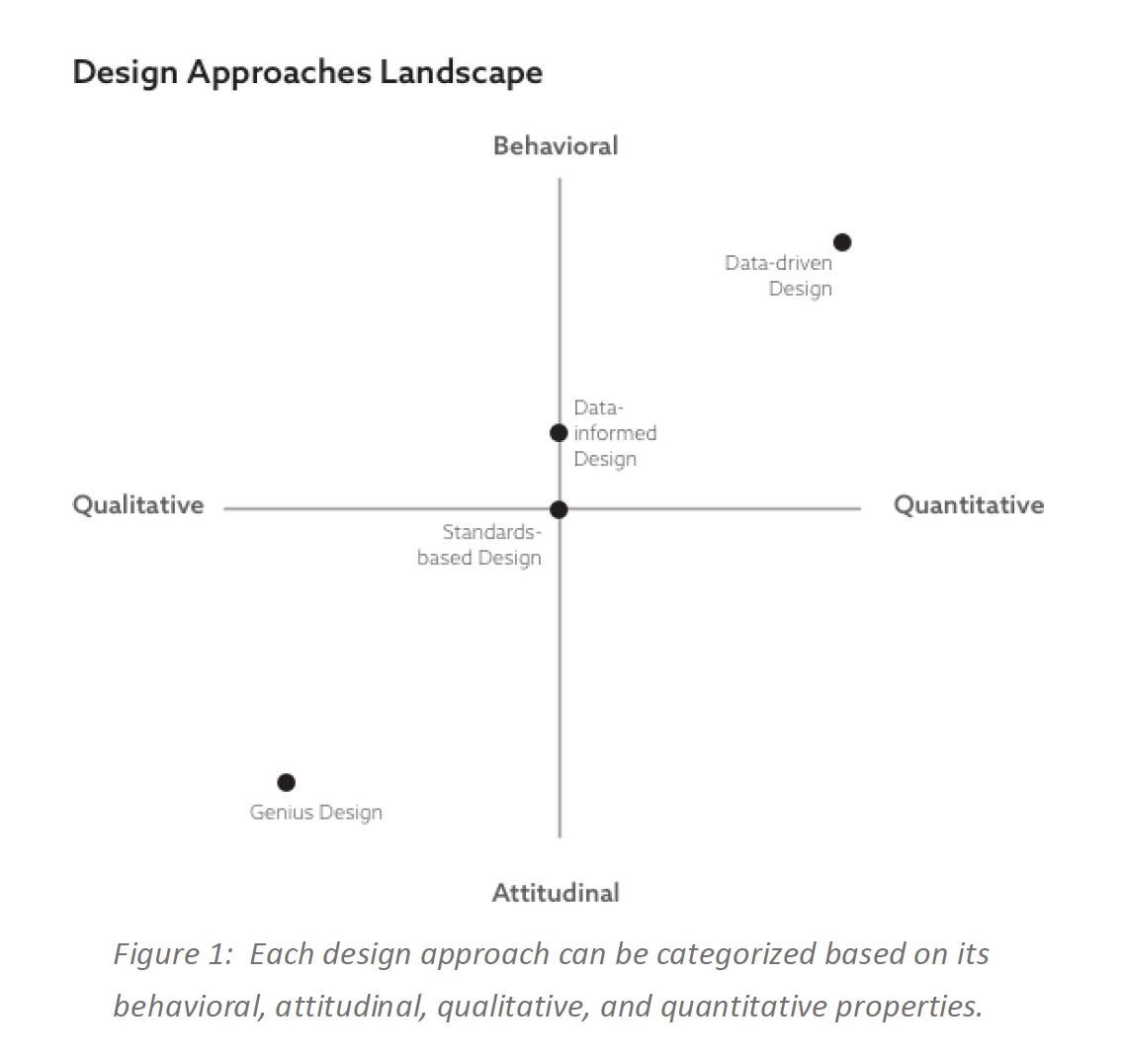
I draw from a blend of generative, evaluative, and systems thinking methodologies. Each one answers a different question about your product and user behavior.
I use design approaches to determine:
what users are trying to accomplish
why certain tasks feel difficult
where workflows break down
how decisions happen in the real world
what patterns support clarity and predictability
how the experience can scale
Methods I commonly apply:
Heuristic analysis to evaluate existing usability
Task-flow modeling to reduce friction in multi-step processes
Decision logic mapping for complex branching paths
Journey mapping for emotional and functional insight
Concept modeling to align teams early
Prototyping to validate assumptions before development
These methods help teams avoid costly rework, find clarity faster, and build with confidence.
RESEARCH METHODS
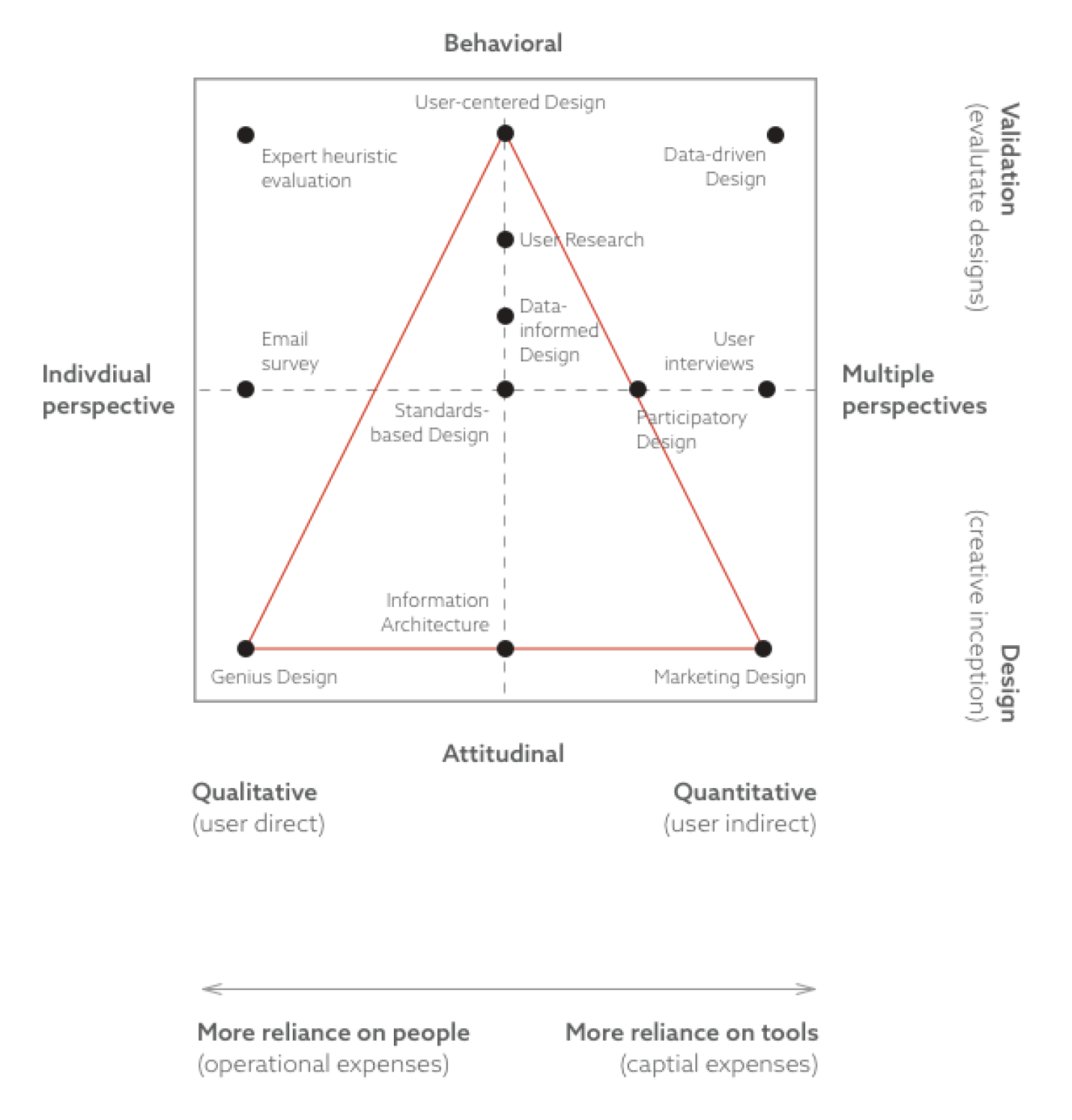
Understanding how people think, feel, and act
Strong UX requires understanding both what users say and what they actually do.
I combine attitudinal and behavioral research because each uncovers different layers of truth.
Behavioral Research
Reveals real patterns in how people:
complete tasks
navigate a workflow
handle errors
form mental models
adapt to system constraints
This tells me how the product supports or hinders real action.
Attitudinal Research
Reveals how people:
perceive value
feel about friction
describe challenges
evaluate success
define expectations
This helps me design experiences that align with their motivations and decision-making.
Common methods we use:
contextual inquiry
observational studies
moderated testing
unmoderated prototype reviews
concept testing
surveys + attitudinal validation
Together, these approaches help me build products that feel natural, reduce cognitive load, and support the way people actually work.
Designed to reduce risk and keep teams moving
WHY THIS APPROACH WORKS
Product teams move fast, and design needs to support that momentum—not slow it down or introduce unnecessary overhead. This approach is intentionally flexible, grounded in real constraints, and built to help teams make confident decisions early.
The focus isn’t process for its own sake. It’s creating enough structure to move forward with clarity while avoiding rework, misalignment, and costly surprises later.
It works because it:
aligns stakeholders early around the right problems
surfaces risks and assumptions before engineering begins
reduces unnecessary iteration and rework
creates shared understanding across product, design, and engineering
adapts from early MVPs to complex, scaled systems
blends strategic thinking with hands-on senior execution
The result is product design that teams can trust—clear, predictable, and built to support real-world use without constant course correction.
Ready to get clarity on your product challenges?
Speak directly with me about your product, your users, and where things feel unclear or stuck. I’ll help you identify what’s holding the experience back and where focused UX work can have the biggest impact.
FAQ
-
Senior judgment and consistency.
Clients work directly with me from start to finish. I bring experience from shipping and scaling real products, not just producing screens. My role is to help you make better decisions faster — not to decorate interfaces or disappear after delivery.
-
Almost every project begins with a conversation and a short discovery phase.
We’ll talk through your product, users, constraints, and goals. From there, I’ll recommend the right starting point — whether that’s a UX audit, research, workflow mapping, or jumping straight into design. Not every project needs the same steps.
-
Up front and transparently.
We align early on expectations, scope, and cadence. You’ll always know what I’m working on, what’s coming next, and where decisions stand. No surprises, no ambiguity.
-
My process is flexible and adapts to the problem.
At a high level, it usually includes:
clarifying the problem and constraints
understanding users and workflows
aligning on direction before heavy design investment
designing and prototyping solutions that can be tested and built with confidence
The goal is always the same: reduce ambiguity and help teams move forward with clarity.
-
I work as an embedded partner.
I collaborate closely with product managers, engineers, and stakeholders to make decisions visible and keep momentum moving. I design with technical constraints in mind and aim to make implementation straightforward, not fragile.
-
Yes — I personally lead and contribute to every engagement.
I work directly with clients on discovery, UX strategy, and design direction. Depending on scope, I may bring in additional Sr. designers for execution, but I stay hands-on in decision-making, reviews, and quality throughout. You’re never handed off to someone else, I maintain a point of contact throughout the project.
-
Yes. That’s very common.
I regularly step into existing products, design systems, and partially built platforms. I focus on understanding what’s already working, where friction exists, and how to improve without unnecessary rework or disruption.
-
Start with a conversation.
If you’re unsure what you need, that’s fine. We can talk through your situation and determine whether it makes sense to work together — and what approach will actually help.