Reliance Matrix
Rebuilding a legacy disability claims platform to improve clarity, compliance, and employee confidence
Reliance Matrix engaged me as part of a digital transformation initiative to replace a legacy disability claims portal that lacked transparency and usability.
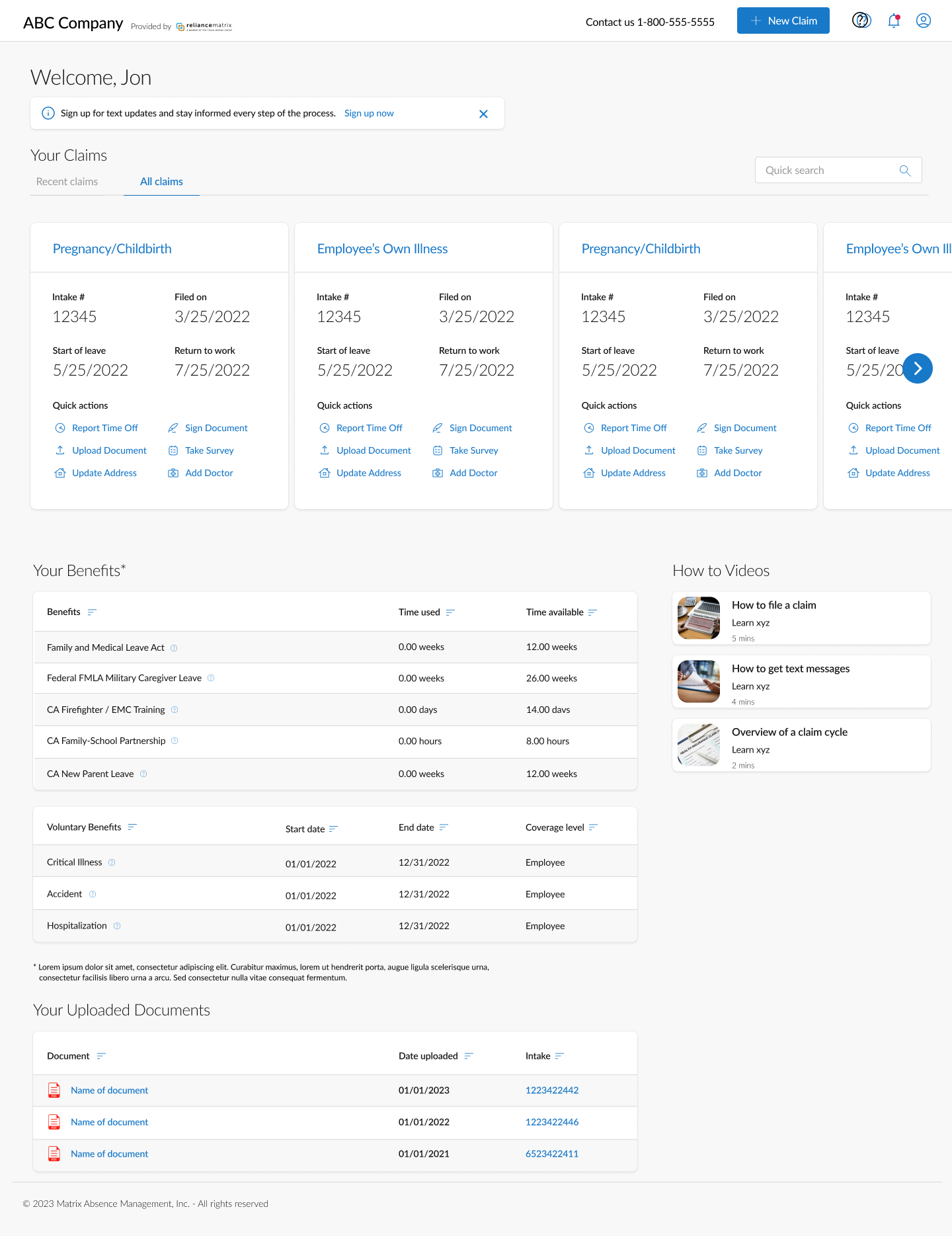
Employees had little visibility into their claim timelines or payment details and often relied on HR to interpret confusing PDFs. Employers struggled with fragmented administrative tools that didn’t provide clear insight into claim status, documentation, or reporting.
The goal was to modernize the platform and introduce clarity into a highly regulated, state-specific disability insurance environment.
Legacy Portal Replacement
Claims Workflow Redesign
Employee Self-Service Experience
Information Architecture & Data Clarity
UX & UI System Modernization
Compliance-Aware Interaction Design
Scope
Role & Ownership
I led UX strategy and experience direction for the redesign in an embedded capacity, working closely with product, engineering, and compliance stakeholders. I directed workflow restructuring, defined new interaction models, and shaped system-level decisions across both employee and employer experiences.
Through stakeholder working sessions and iterative reviews, I ensured the experience aligned with regulatory requirements while improving usability and clarity across the claims lifecycle.
The Real Problem
The legacy portal created confusion in a domain where clarity and trust are critical.
Employees struggled to understand:
When their claim began and ended
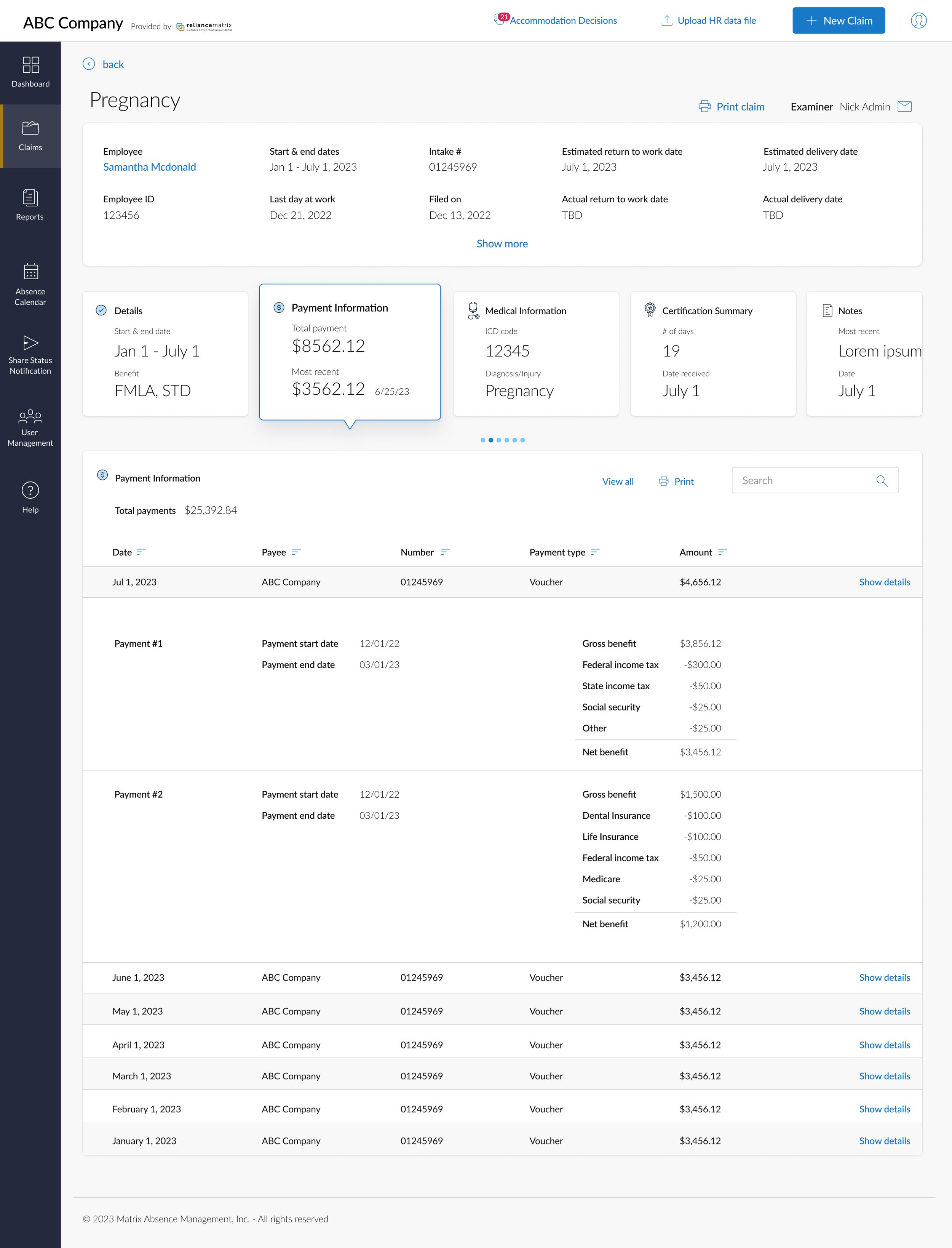
What they were being paid and why
How federal and state-specific payout phases worked
What documentation was required
Information was often surfaced through static PDFs and dense data tables. Claim naming conventions were unclear, and timelines lacked context.
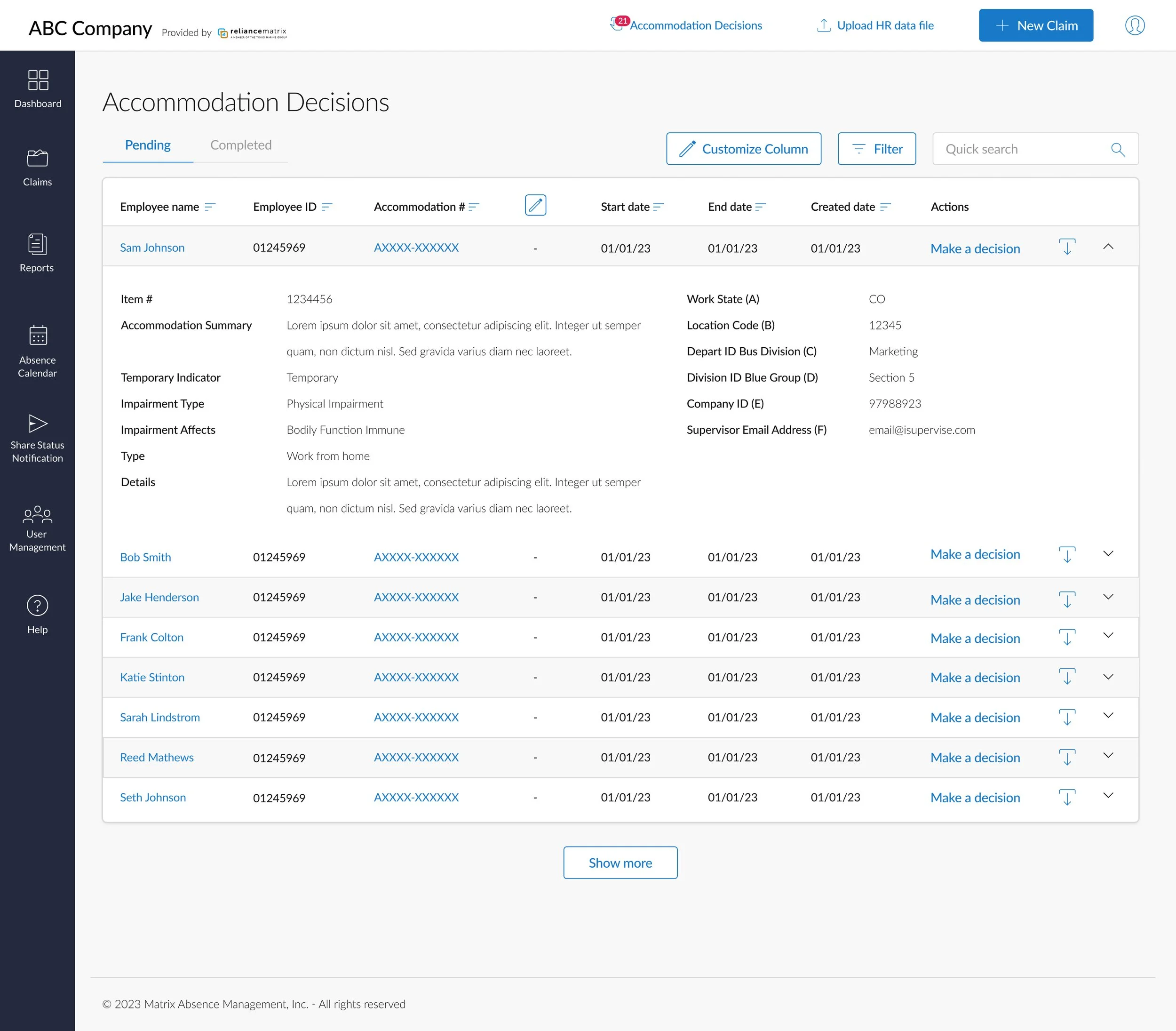
For employers, administrative visibility was limited. Reporting tools, documentation management, and claim tracking were fragmented, increasing operational friction.
What Changed / Outcome
I introduced structured clarity into the claims experience.
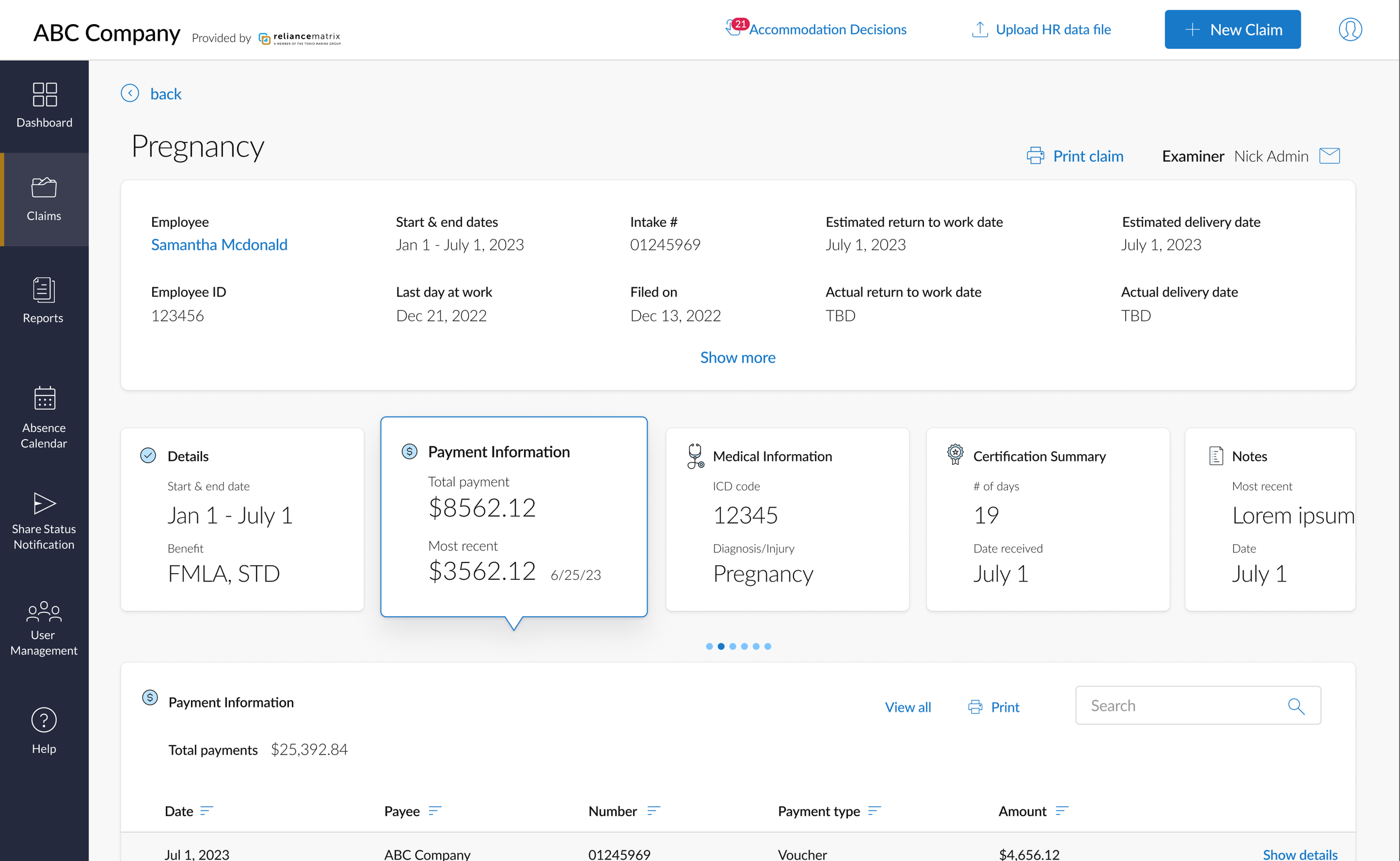
Interactive timeline visualizations showed claim phases and state-specific payout periods using color-coded segments and contextual detail. Payment breakdown modules provided clear explanations of amounts and timing, replacing static documents with actionable information.
A unified claim status area consolidated critical data in one place, reducing reliance on HR for interpretation. Documentation workflows were streamlined so users could upload and manage required materials directly within the platform.
For employers, I helped redesign the administrative portal with clearer dashboards, reporting tools, absentee tracking, and improved visibility into employee claims and notifications.
The result was:
Faster understanding of claim status and payments
Reduced confusion and HR dependency
Improved clarity across compliance-driven workflows
A more modern, scalable foundation for future enhancements