Walmart Pharmacy
Designing a self-service kiosk that allowed customers to securely review, pay for, and retrieve eligible prescriptions from an in-store locker.

Building on Walmart’s Pharmacy of the Future work, the team explored a new way for customers to pick up eligible prescriptions without waiting in the staffed pharmacy line.
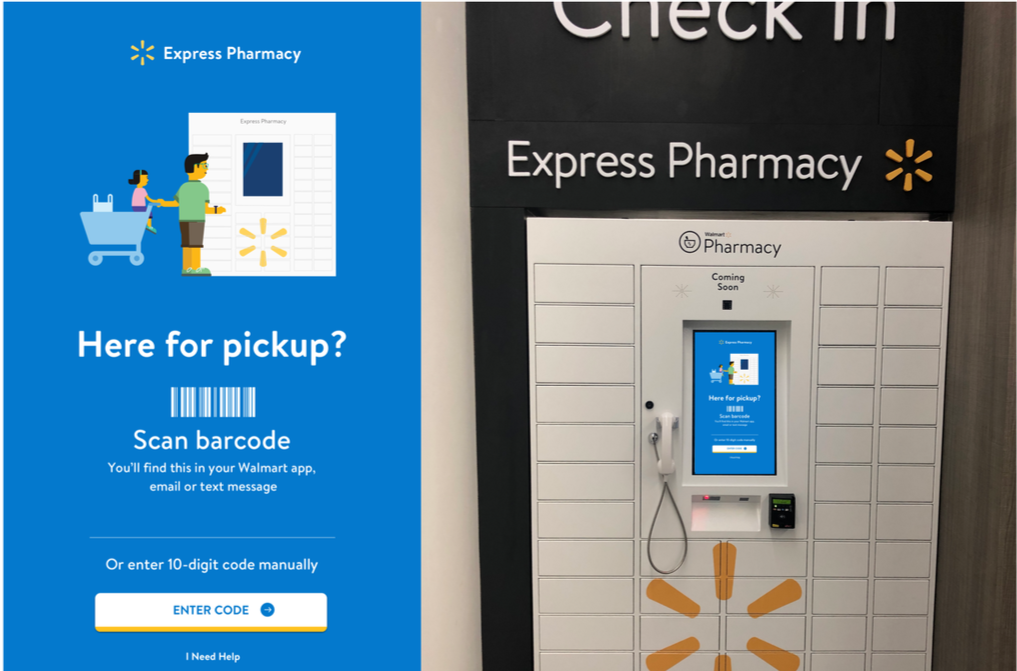
Pharmacists would prepare the order and place it inside a secure locker. When the prescription was ready, the customer received a barcode and 10-digit pickup code through the Walmart app, email, or text message. At the store, a custom pharmacy kiosk guided the customer through identification, order review, payment, required acknowledgements, and physical retrieval.
The concept was designed as a first-of-its-kind pharmacy-locker experience for the U.S. market. Unlike a standard retail locker, it needed to preserve the safety, privacy, payment, and care protocols associated with dispensing prescriptions.
Product and Self-Service Experience Strategy
Healthcare Kiosk UX and Interaction Design
User Research and Journey Mapping
Payment, Privacy, and Exception Workflows
Content Strategy, Graphics, and Illustration
Prototyping, User Testing, and Field Testing
Scope
Role & Ownership
I was a key member of the product team and led UX/UI design for the locker-dispense experience.
I worked closely with another designer, the product owner, and cross-functional partners responsible for pharmacy operations, hardware, engineering, payments, and compliance. Together, we defined how the service should work across the Walmart app, pharmacy workflow, custom kiosk, payment hardware, and physical locker.
My work included product and content strategy, user research, journey mapping, wireframes, UX/UI design, prototyping, graphics, illustrations, usability testing, and testing in the physical environment.

The Real Problem
Picking up a prescription may appear to be a simple handoff, but moving that interaction into a self-service locker introduced significant complexity.
The experience needed to confirm that the correct customer had reached the correct order while protecting sensitive prescription information in a public environment. It needed to support payment methods stored in the customer’s Walmart account, accept alternative payment when necessary, present required privacy and legal acknowledgements, capture a signature, and coordinate the opening of a physical locker door.
Not every prescription or customer situation was eligible for self-service. Some orders needed to be moved back to the pharmacy for assistance. Payments could fail. Customers could arrive without a scannable barcode, abandon the flow, require help, or leave the locker door open.
A safe experience therefore needed to do more than optimize the happy path. It had to recognize when self-service was appropriate, guide customers confidently through the transaction, and transfer them to a pharmacy associate when it was not.
What mattered most
Make the process immediately understandable
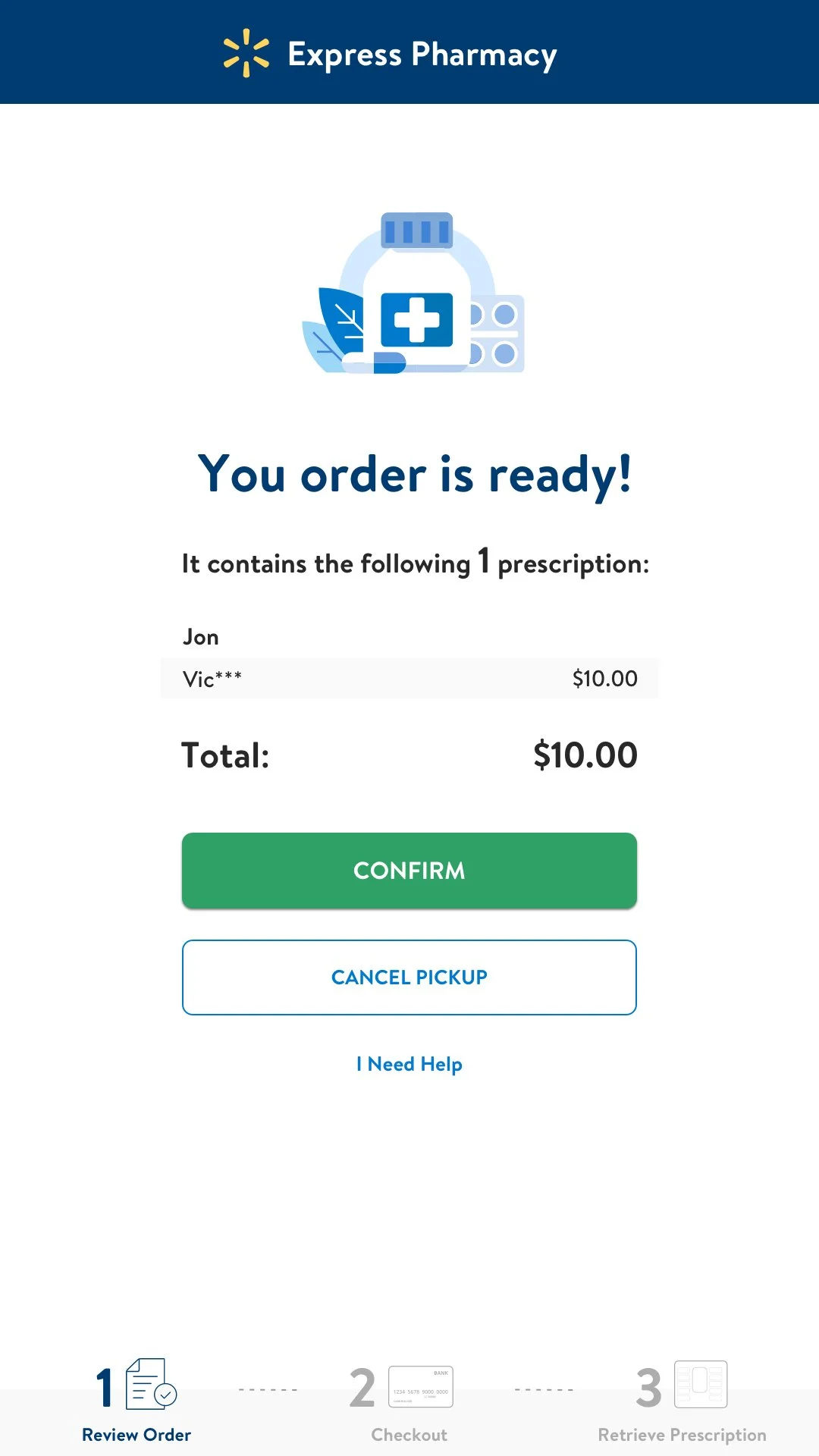
The primary journey was organized into three visible steps:
Review the order
Check out
Retrieve the prescription
A persistent progress indicator helped customers understand where they were and what remained. Large typography, clear calls to action, and restrained screen content made the kiosk easier to use while standing in a busy retail environment.
Connect the customer’s phone to the kiosk
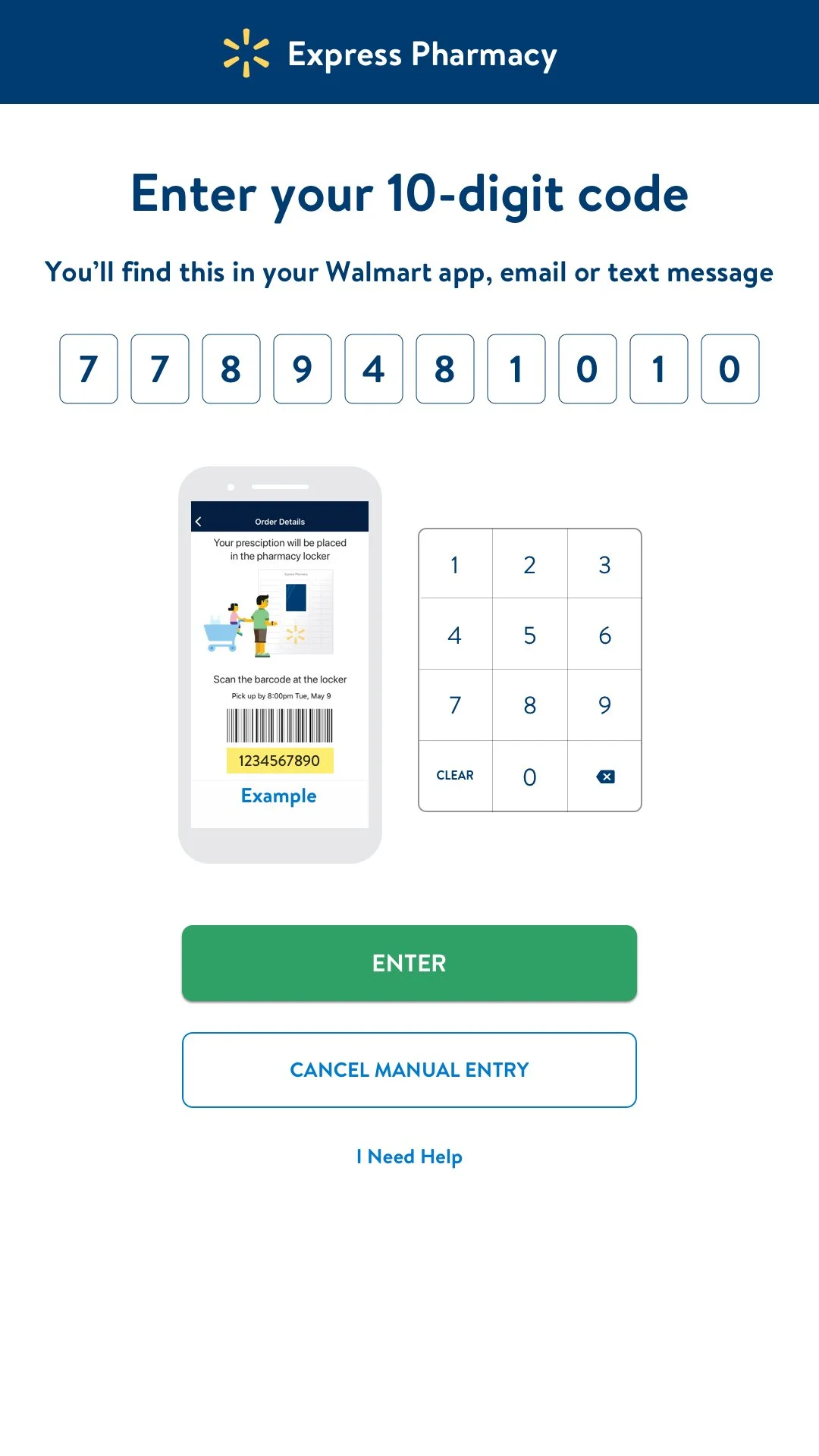
Customers could begin by scanning a barcode delivered through the Walmart app, email, or text message. Manual entry of a 10-digit code provided a clear fallback when scanning was unavailable.
The interface showed customers exactly where to find that code, using an example phone screen rather than relying on instructions alone.
Protect privacy without hiding essential information
The order-review screen confirmed that the prescription was ready, showed the number of prescriptions and total cost, and masked sensitive prescription details.
Customers could confirm the order, cancel the pickup, or request help. This gave them enough information to proceed confidently without unnecessarily exposing private health information on a large public display.
Keep checkout simple while supporting required safeguards
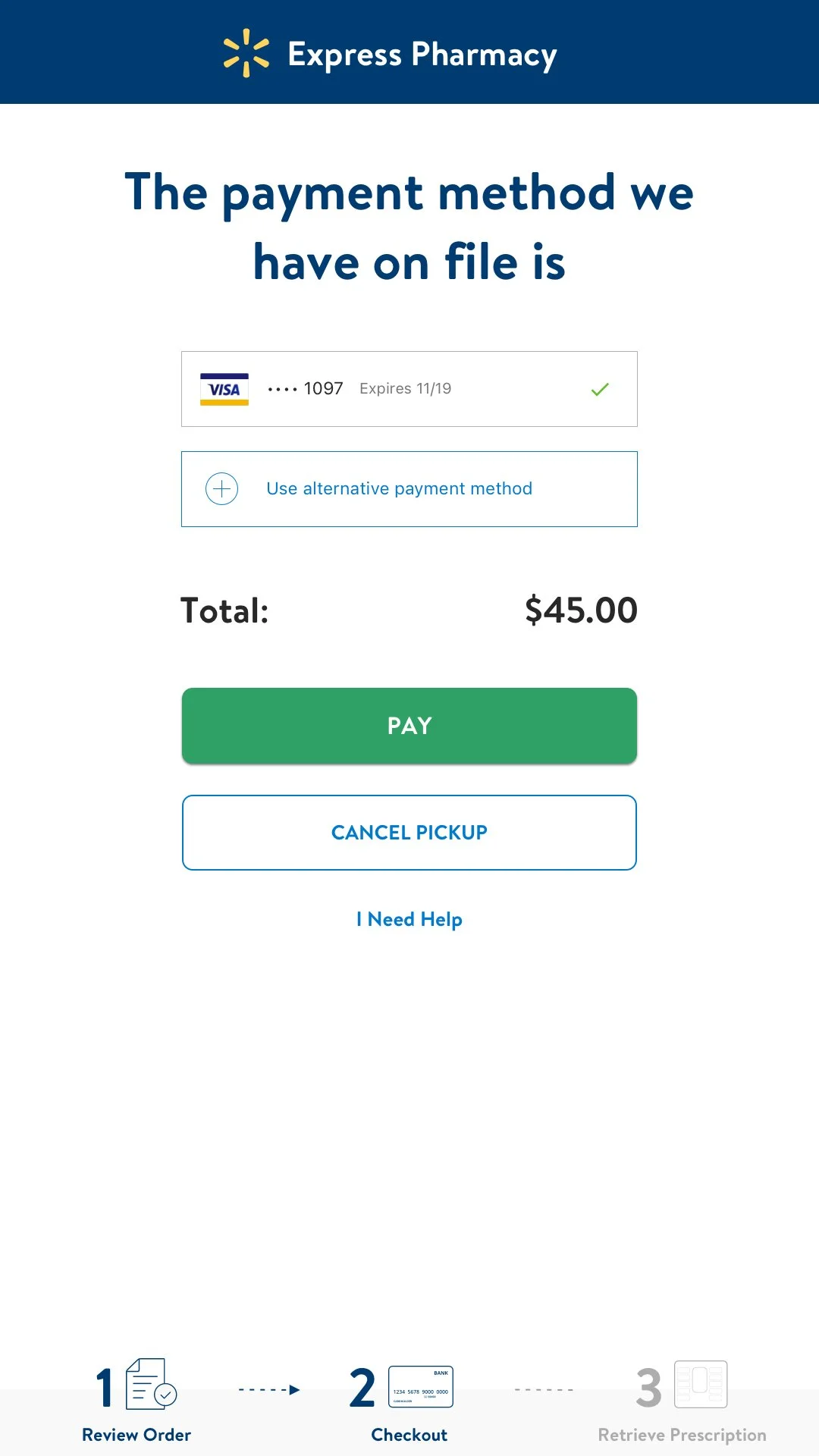
When a payment method was already associated with the customer’s account, the kiosk could surface it directly and allow the customer to pay with minimal additional entry. Customers could also choose an alternative payment method through the kiosk’s point-of-sale card reader.
When required, the experience presented privacy practices, assignment-of-benefits language, private-payer authorization, and other acknowledgements before collecting the customer’s signature.
These requirements were incorporated into the checkout journey rather than treated as disconnected forms.
Bridge the digital and physical experience
After payment and acknowledgement, the interaction moved from the screen to the physical locker.
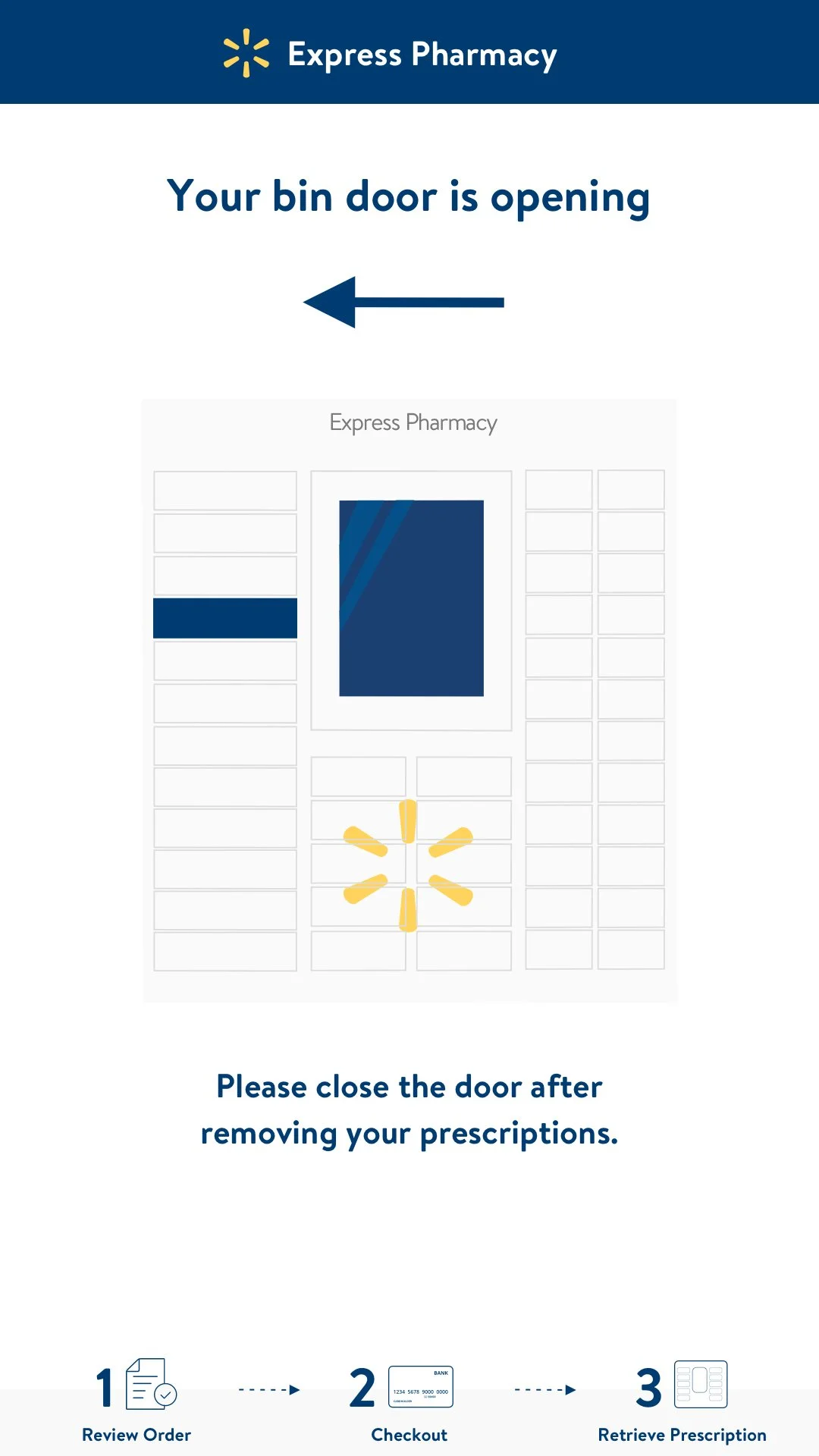
The kiosk displayed a large directional arrow and a diagram identifying which side and area of the locker contained the customer’s prescription. Once the door opened, the interface instructed the customer to remove the prescription and close the bin.
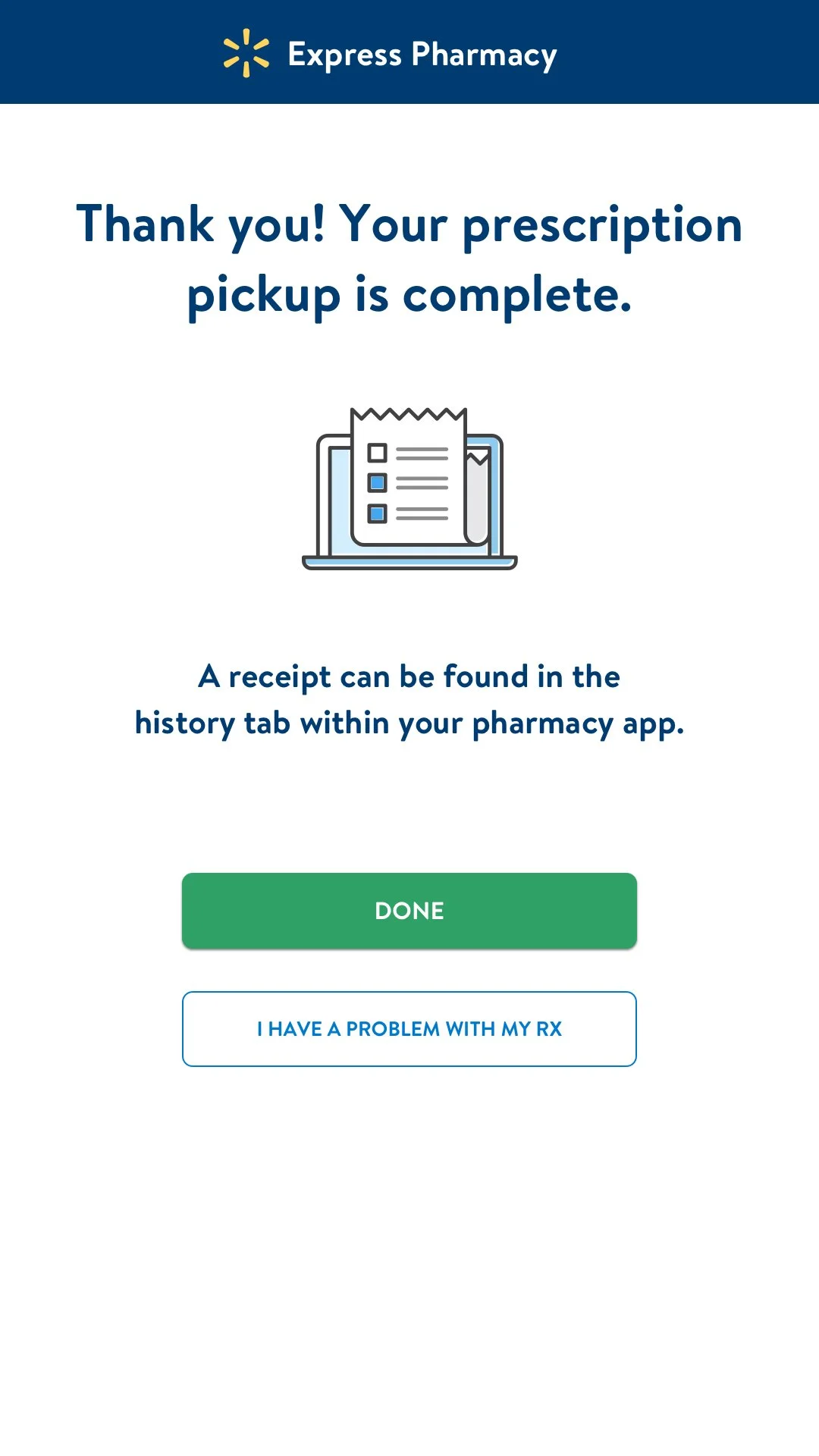
Timed messaging handled situations where the door remained open, and the completion screen confirmed that pickup was finished and explained where to find the receipt.
Design clear exits from self-service
Exception states were treated as part of the core experience.
If payment could not be processed, the kiosk directed the customer to a pharmacy associate instead of leaving them at a technical dead end. If an order had been moved out of the locker, the interface clearly explained that it was available behind the pharmacy.
Help, cancellation, and pharmacist handoff options remained available throughout the journey. The goal was not to force every customer through automation; it was to make self-service efficient when appropriate and human assistance obvious when needed.
Outcome
The work produced a complete, field-tested kiosk experience for reviewing, paying for, and retrieving eligible prescriptions from a secure in-store locker.
The final experience connected Walmart’s mobile communication, customer account and payment information, pharmacy operations, regulatory acknowledgements, custom 22-inch kiosk, point-of-sale hardware, and physical locker system within one understandable journey.
For customers, the design created a convenient alternative to waiting in the pharmacy pickup line. For pharmacists and store teams, it established a structured way to shift eligible pickups into self-service while routing restricted prescriptions, payment problems, and other exceptions back to an associate.
The project extended Walmart’s Pharmacy of the Future initiative beyond the staffed counter, demonstrating how thoughtful digital and physical service design could make prescription pickup more convenient without removing the safeguards and human support expected in a pharmacy.