Barrett-Jackson
Designing and rethinking high-stakes buying and selling experiences for one of the world’s most trusted automotive auction brands.
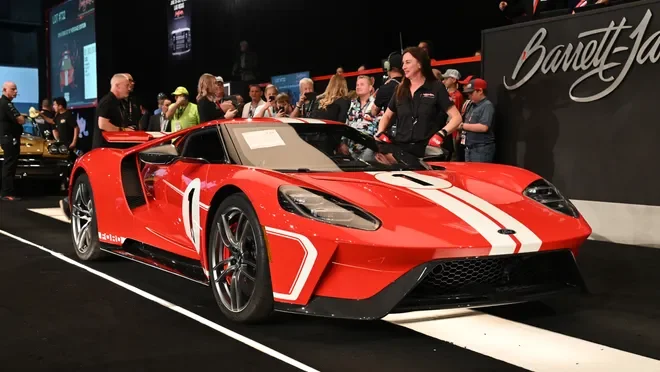
This engagement was structured from the outset as a multi-phase, long-term digital transformation of Barrett-Jackson’s digital ecosystem. I intentionally planned the work to span public-facing experiences and core software workflows, with design positioned as a foundational driver of how users discovered vehicles, consigned cars, registered to buy, and managed their participation over time.
Barrett-Jackson’s website served as both its primary marketing surface and the entry point into business-critical applications, making clarity, trust, and findability essential. While the brand carried significant prestige, the digital experience had fallen behind, creating friction across high-value user journeys at a moment when the business needed its platform to operate at the same level as its reputation.
Generative Research
Product & UX Strategy
UX & UI Design
Design System & Interaction Patterns
Brand & Visual Direction
Video Editing
Scope
Role & Ownership
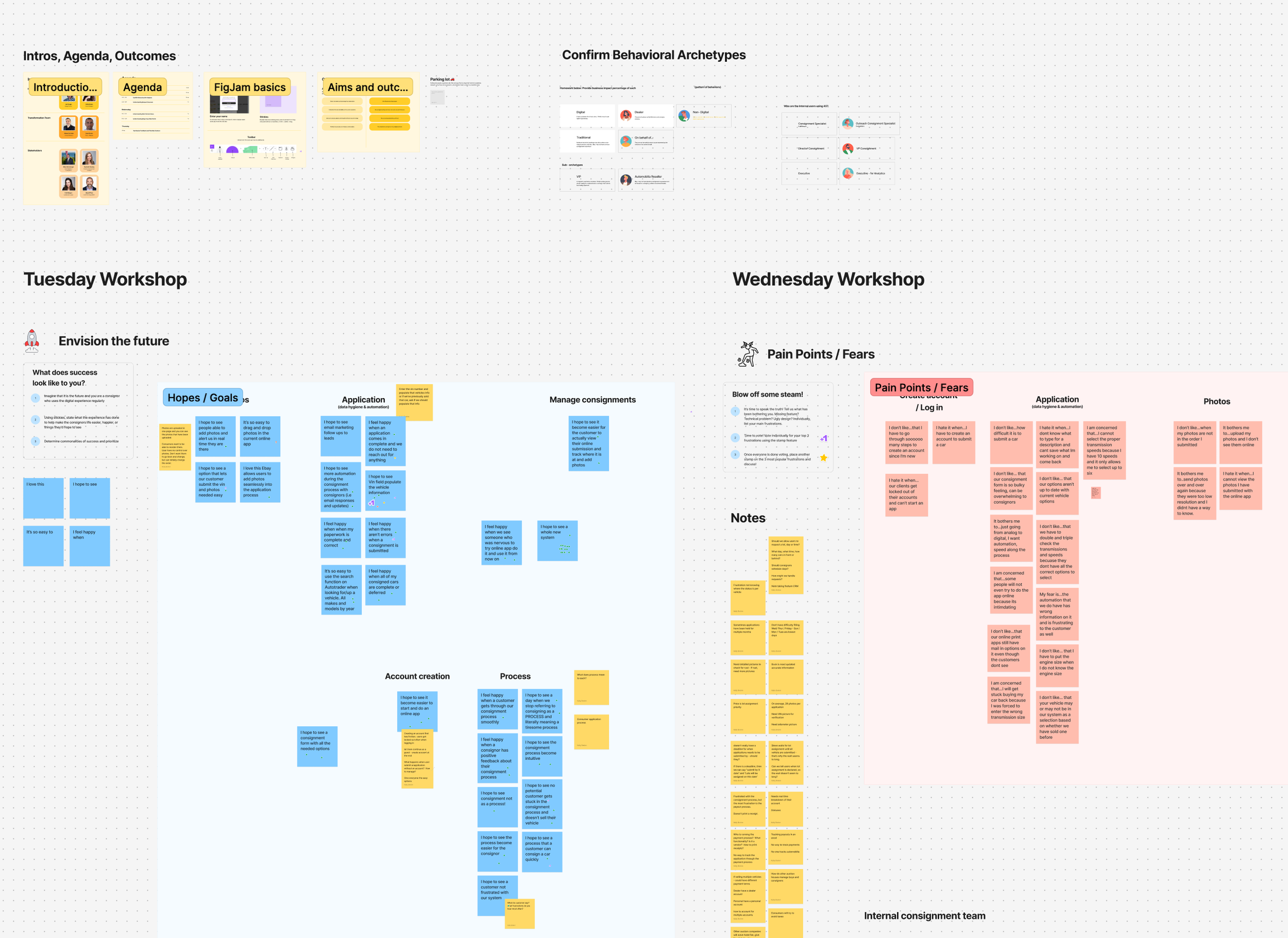
I served as the lead UX and design partner for Barrett-Jackson’s marketing website, working closely with executive leadership and marketing stakeholders to redefine how the brand presented itself digitally and how users entered key business journeys.
My responsibility centered on shaping the end-to-end marketing experience, from information architecture and content strategy to UX and visual design. The site needed to function not only as a brand showcase but as the primary entry point into high-stakes actions such as consigning a vehicle or registering to bid, making clarity, trust, and narrative flow essential.
I led stakeholder alignment across marketing and adjacent teams, translating business goals into a cohesive site structure and page-level storytelling. This included defining navigation, restructuring content hierarchies, and directing UX-driven messaging that guided users naturally toward next steps without overwhelming them.
I also directed design execution across UX and UI, ensuring the marketing experience was cohesive, performant, and extensible as the platform continued to evolve.
The Real Problem
The issue wasn’t incremental usability. It was a fundamental mismatch between Barrett-Jackson’s brand in the real world and its digital presence.
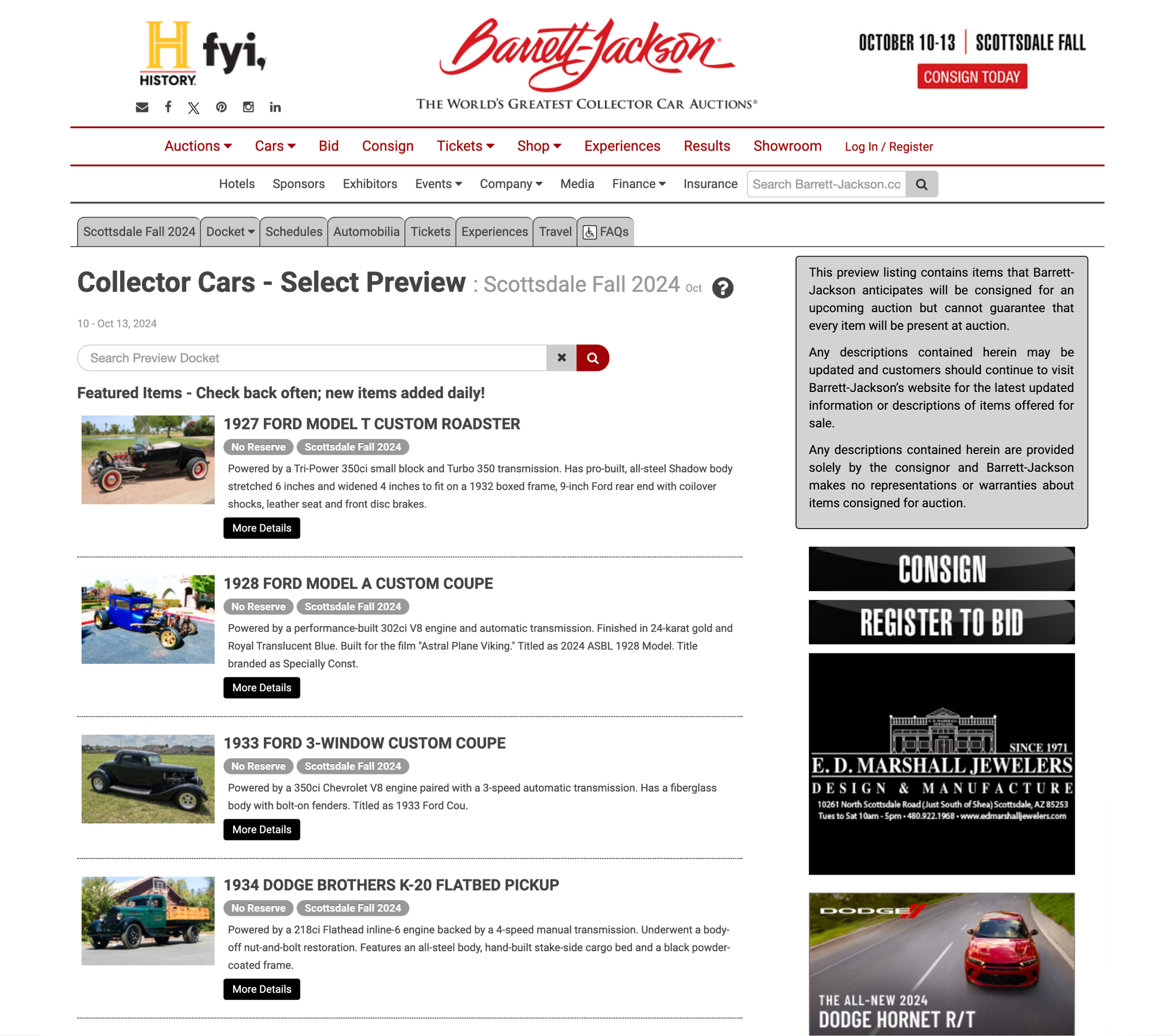
In person, the auction experience is premium, high-energy, and trusted at the highest level of the automotive world. Online, the website failed to reflect that equity. The visual design felt dated, the structure lacked clarity, and the overall experience did not communicate the scale, quality, or authority of the brand.
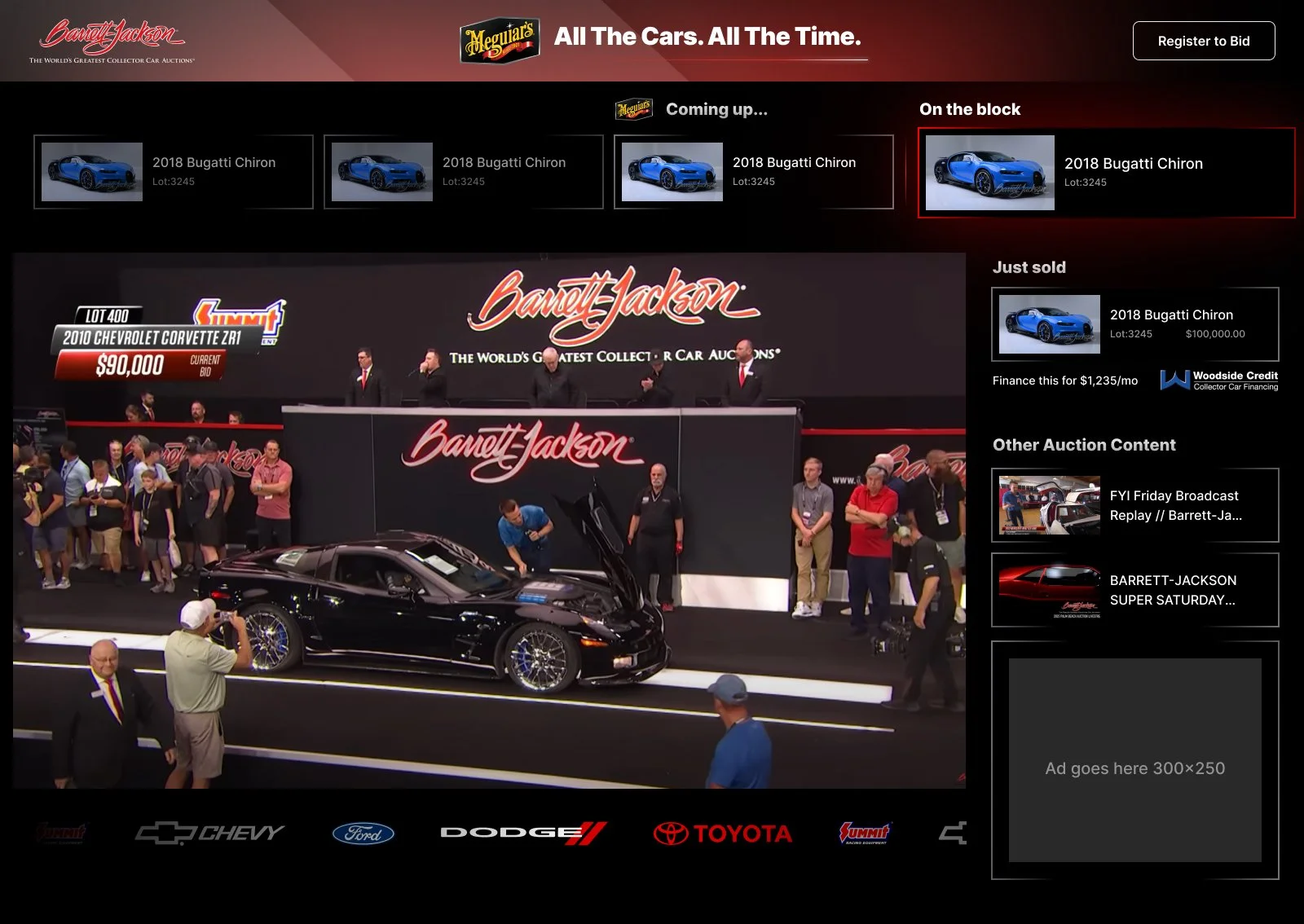
From a UX standpoint, the site functioned more like a content-heavy blog than a modern marketing platform. Navigation had grown overly complex, findability suffered, and users struggled to locate vehicles, understand offerings, or confidently take next steps. This created friction at the exact moment when the website needed to establish trust, showcase inventory, and guide users into core actions.
What Mattered Most
Visually, I needed the digital experience to carry the same energy and authority as the in-person auction without redefining the brand itself. I preserved the logo and core visual language, focusing on translating the excitement, contrast, and premium feel of the live event into a modern digital presence rather than reinventing it.
From a UX standpoint, I made findability the top priority. Buyers and sellers needed to locate vehicles and vehicle details quickly and confidently, particularly given a demographic that skewed older and valued clarity over novelty. I needed the site to feel intuitive, direct, and easy to navigate without sacrificing depth.
Equally important was surfacing critical auction information. I made upcoming auction dates, registration deadlines for consigning and bidding, and event-specific details immediately accessible and clearly presented. The website needed to function as a reliable source of truth, helping users understand what was happening, when it was happening, and what actions they needed to take.
Key Decisions
To address these priorities, I focused on a small number of structural decisions that reshaped how users navigated the site and initiated key actions.
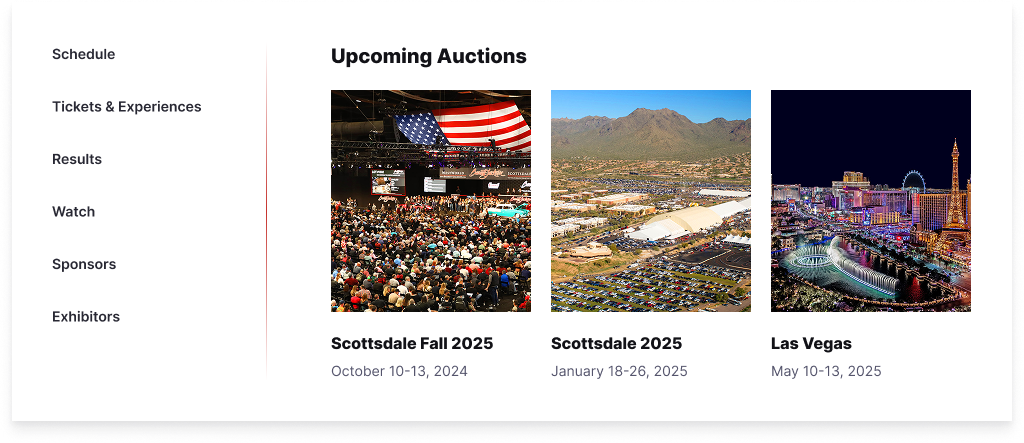
The first decision I made was to reorganize the information architecture around clear user intent. I grouped buying, selling, auction schedules, and past results into distinct, easy-to-understand sections, replacing fragmented navigation that had grown difficult to scan. This significantly reduced cognitive load and made it easier for users to understand where to go based on what they wanted to do.
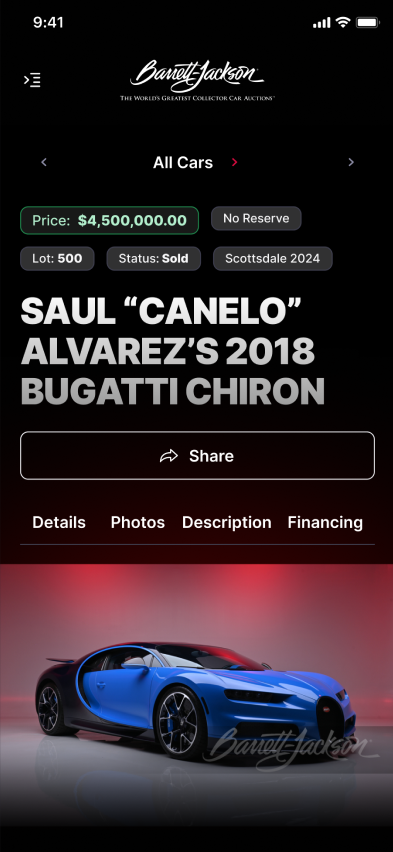
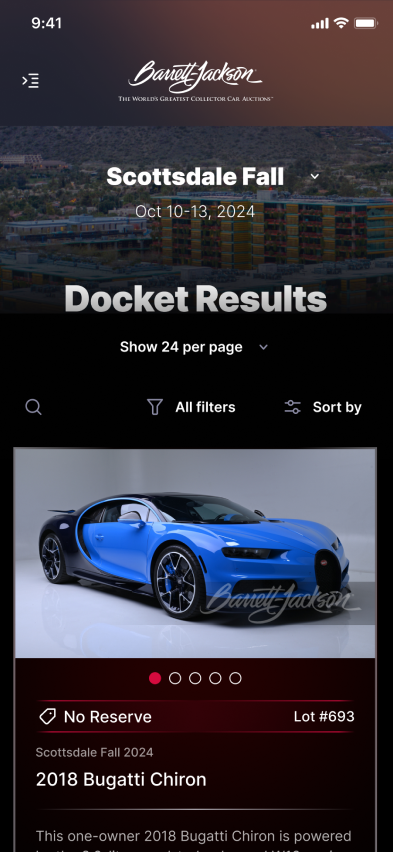
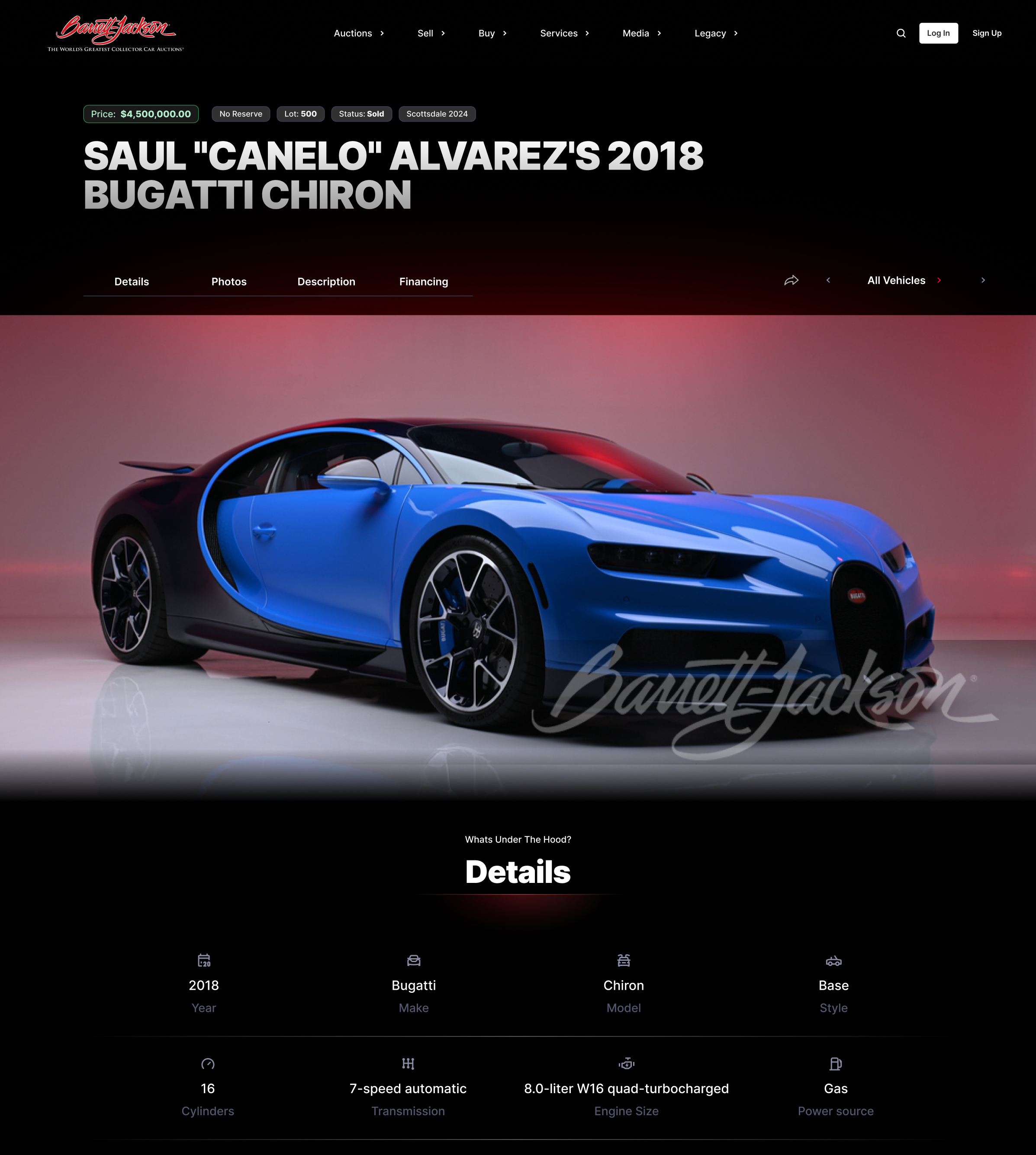
I elevated vehicle discovery and auction information as primary entry points. I surfaced finding cars, viewing car details, and accessing upcoming auction dates and deadlines prominently in both the navigation and homepage, ensuring these high-interest actions were immediately accessible rather than buried in secondary pages.
Finally, I redesigned the homepage to actively guide users into these journeys. Rather than functioning as a static brand page, it became a launch point for core actions such as finding a car, exploring upcoming auctions, registering to participate, or reviewing past results. I refined and revisited these pathways to balance clarity, prominence, and brand presence while supporting the business’s most important goals.
The Work
Several key areas of the marketing site best illustrate these decisions in practice.
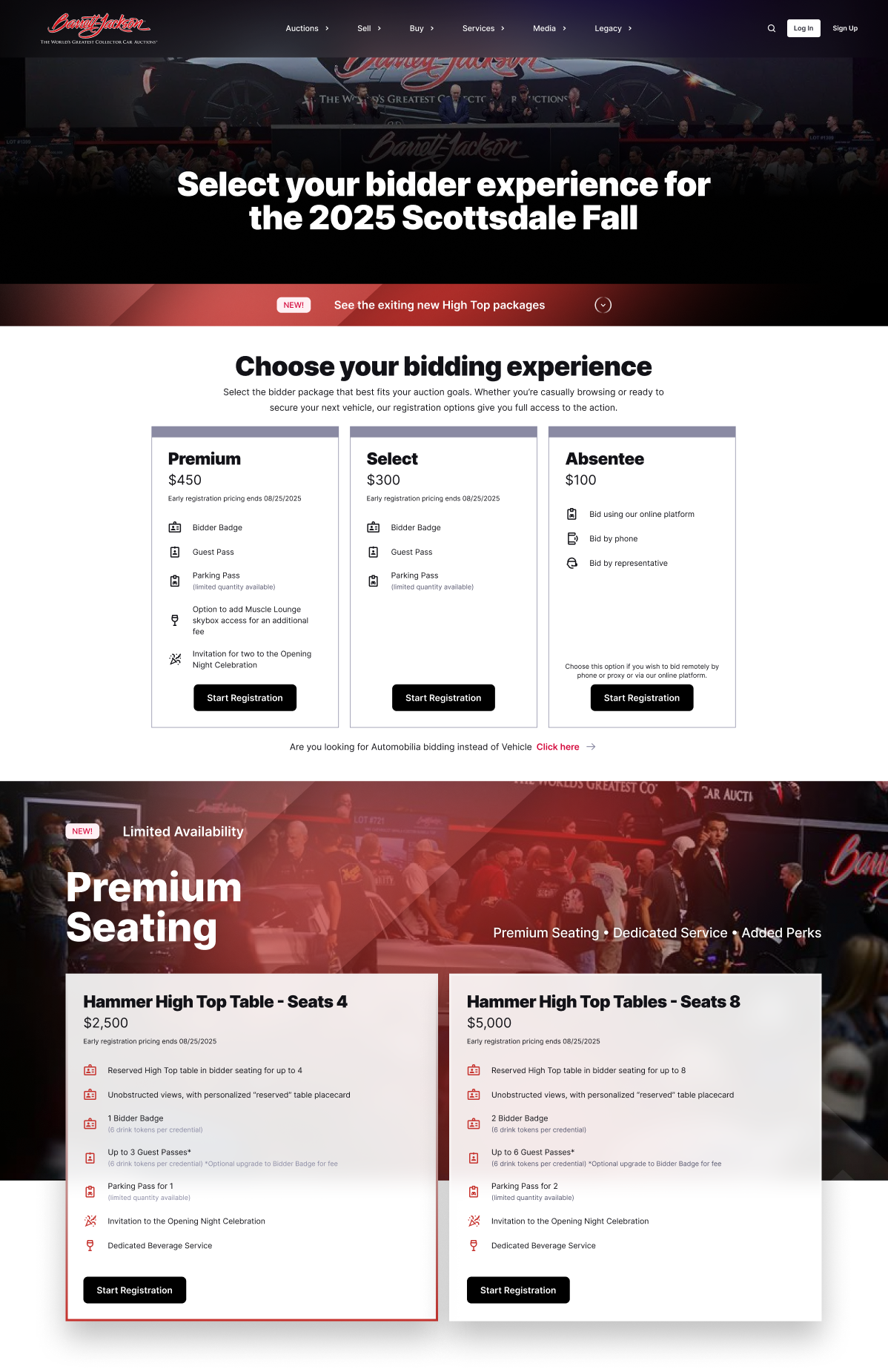
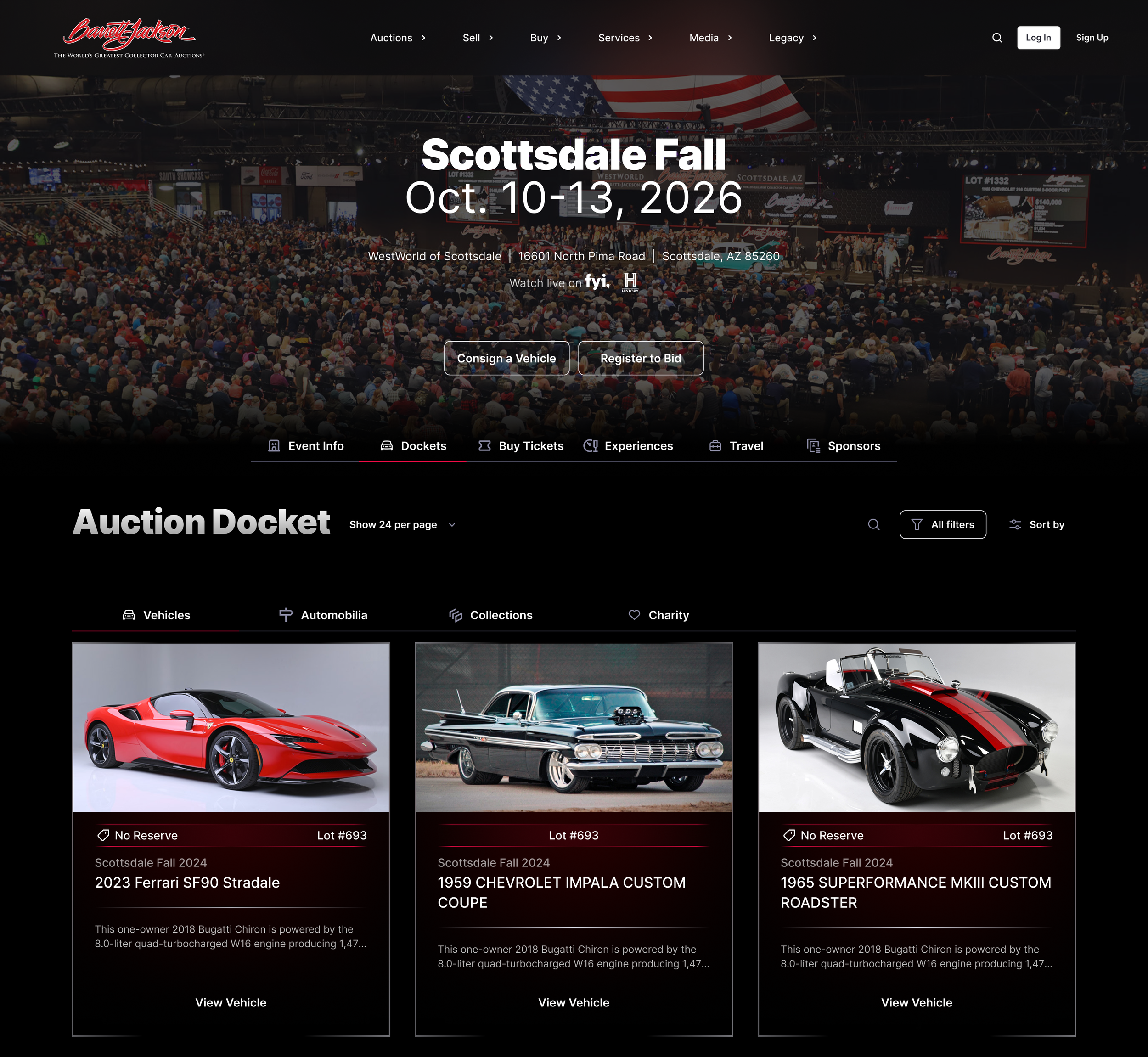
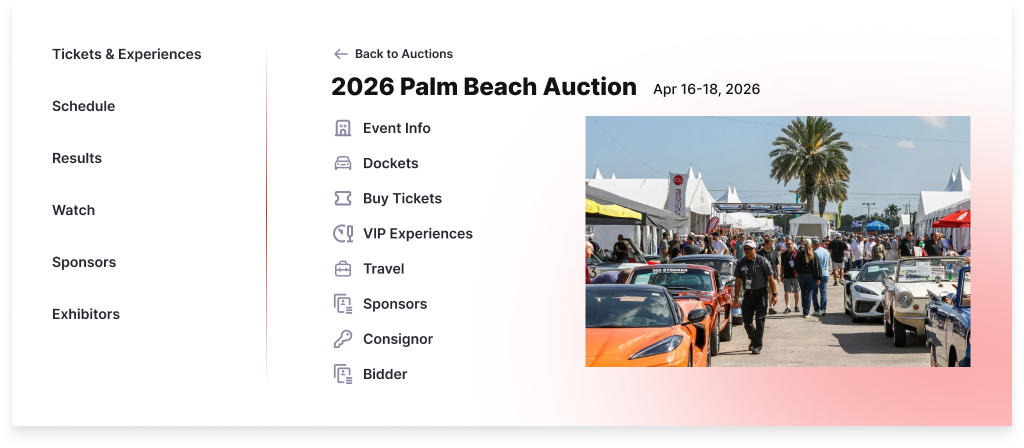
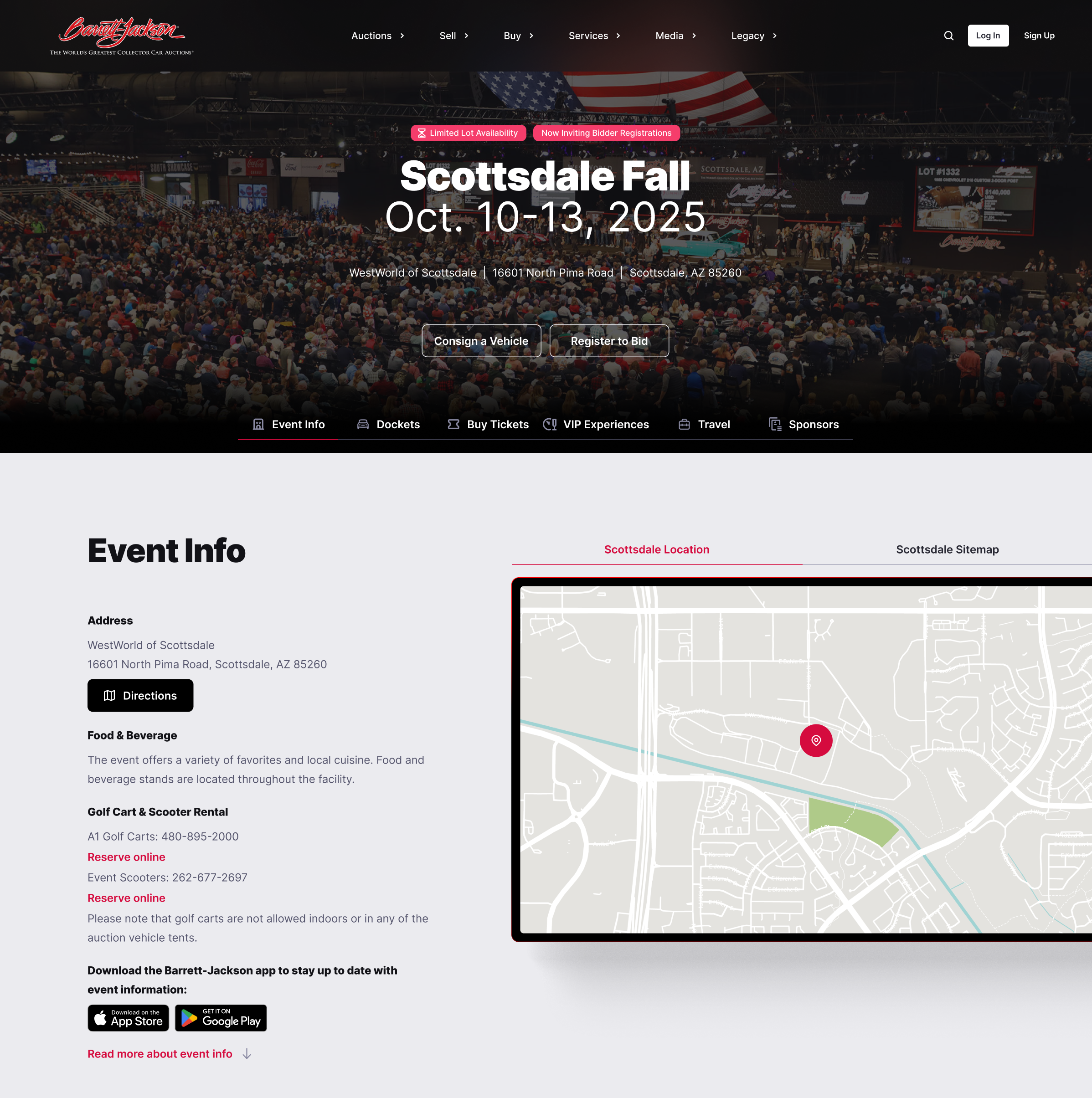
I designed the Auction Details page to function as a comprehensive hub for each event. I brought together auction dates, schedules, and the docket for viewing available vehicles alongside actions such as purchasing tickets, accessing VIP experiences, and finding travel and sponsor information. This consolidation ensured users could understand and act on an auction without navigating across disconnected pages.
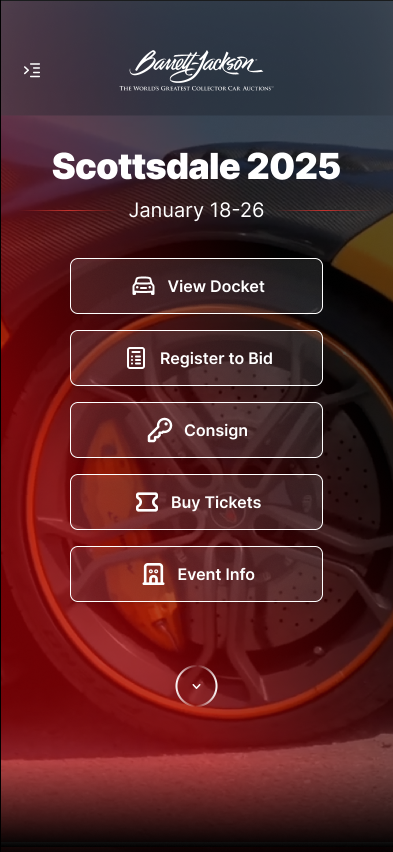
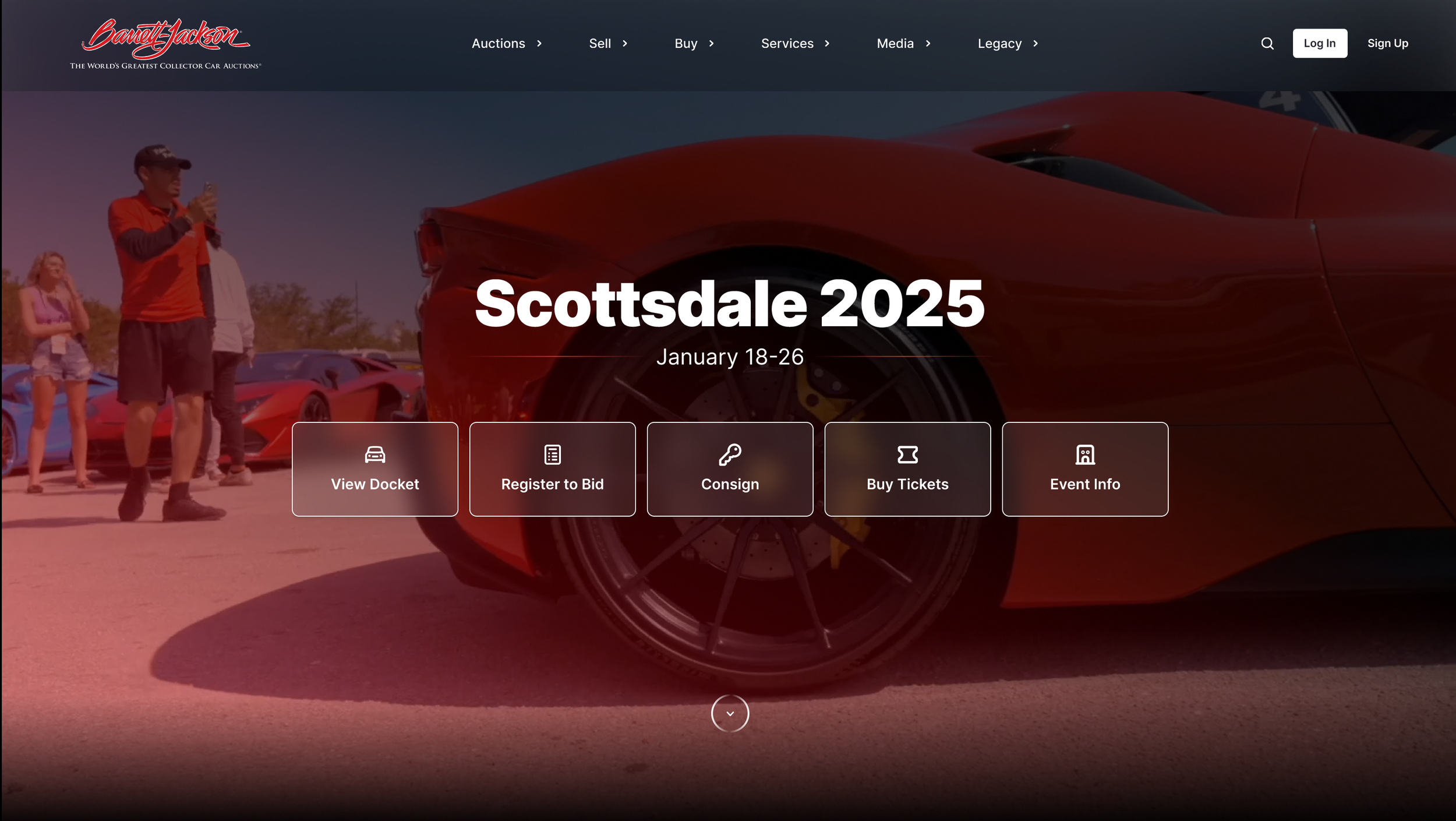
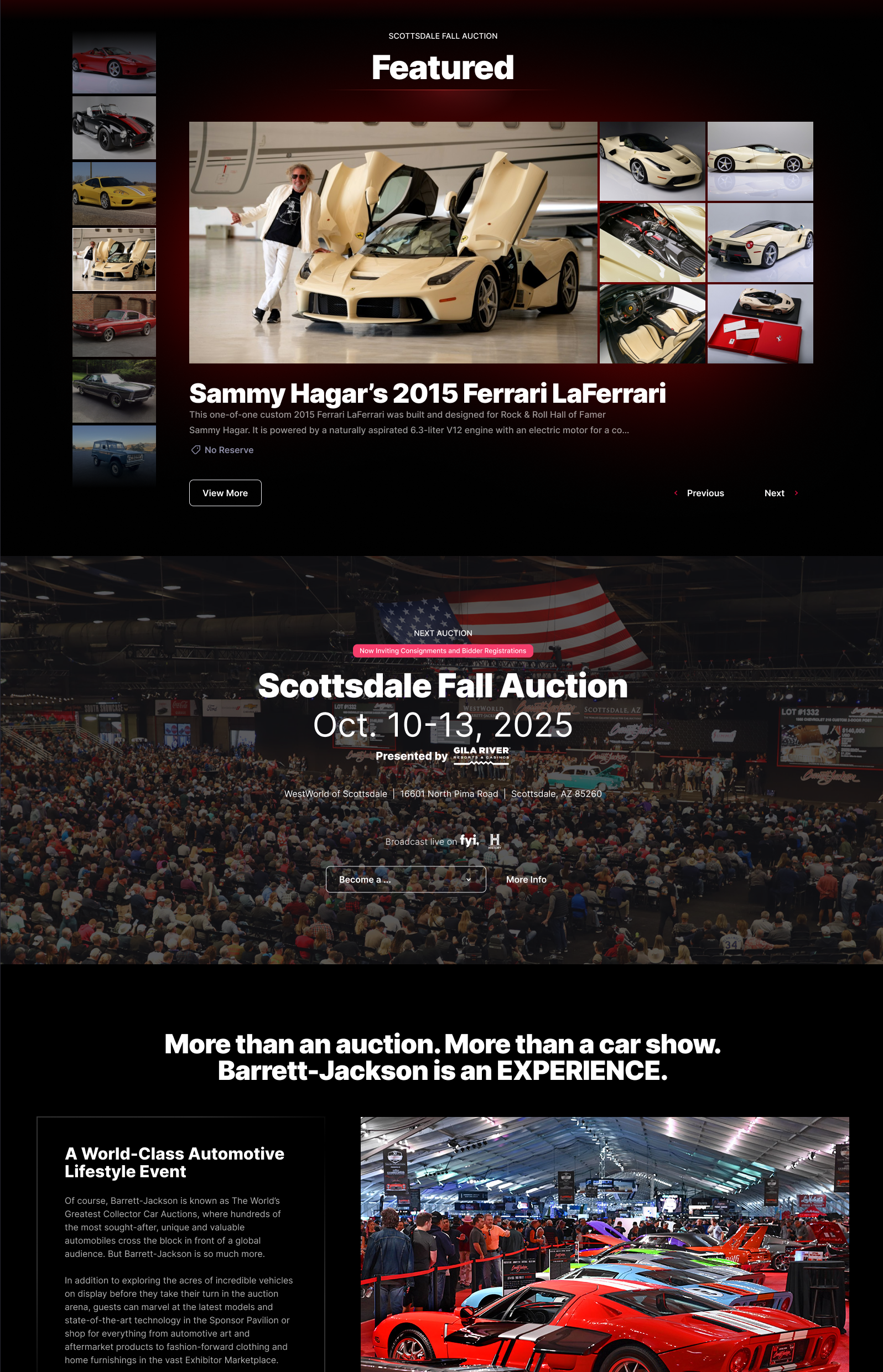
I redesigned the homepage to clearly surface what mattered most. I used the hero to highlight the current auction, its dates, and immediate access to core actions, including viewing the docket, registering to bid or consign, and purchasing tickets.
Below the hero, I prominently showcased featured vehicles to support browsing and discovery, reinforcing the site’s role as both a brand destination and an entry point into key journeys.

Stuart Price, CTO,
Barrett- Jackson
From Barrett-Jackson Leadership
“ I’ve worked with Jon across multiple companies over the years, including Barrett-Jackson and Gradera, and he consistently operates more like an embedded product and design leader than a typical external UX partner.
He brings structure to complex, often undefined product challenges quickly, helping teams align on what to build and why it matters. That clarity carries through into execution, reducing friction and keeping teams moving in the right direction.
What sets Jon apart is that he works like a true product partner. He brings strong, well-informed opinions when needed, collaborates effectively with leadership, and stays focused on outcomes rather than just deliverables.
I’d bring him into any team where getting the product right actually matters.”
Outcome
The marketing redesign fundamentally reset how Barrett-Jackson presented itself digitally and how users engaged with the brand online.
Information became easier to find, easier to understand, and easier to act on. Vehicles, auction details, and time-sensitive information were clearly surfaced, reducing friction for users making high-confidence, deadline-driven decisions. The website shifted from feeling dated and content-heavy to feeling premium, intentional, and aligned with the energy of the live auction experience.
The redesigned marketing experience also created a clearer entry point into key actions such as consigning a vehicle, registering to bid, and participating in upcoming auctions. Internally, teams gained a modern digital foundation that better supported customer engagement and ongoing operations.
Overall, the work resulted in a cohesive digital presence that matched the strength of the Barrett-Jackson brand, improved usability for a broad audience, and established a durable platform to support future growth.