
Sorcero
Leading 0→1 product design for an enterprise-ready AI platform.
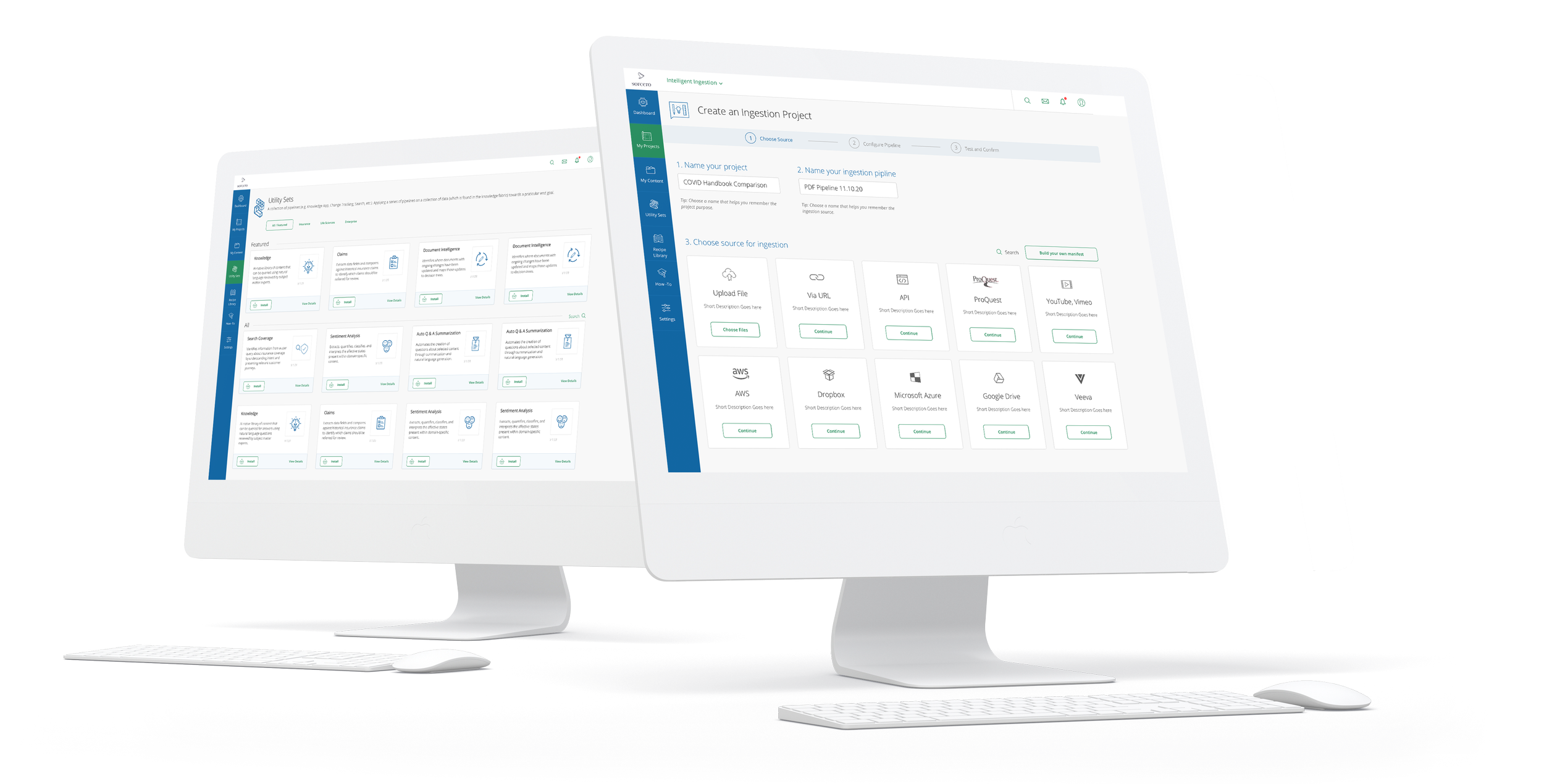
When I joined Sorcero, the company was an early-stage, venture-backed team of data scientists and engineers. They had developed powerful natural language processing capabilities and secured pilot engagements in life sciences and insurance, but those capabilities did not yet exist as a cohesive product.
AI tools lived across separate sandbox environments and proof-of-concept implementations. The company could deliver pilots, but there was no unified platform that enterprise buyers could clearly understand, adopt, or scale.
My role was to transform that advanced technical capability into a structured, usable product.
0→1 Platform UX Strategy
Product Architecture & System Definition
Complex workflow & Interaction Design
Design System Foundation
AI Output & Data Visualization
Cross-Functional Product Leadership
Scope
Role & Ownership
I joined as Sorcero’s first product and UX hire, serving as Principal Lead Product Designer. I worked directly with the CEO, CTO, data scientists, engineers, sales, marketing, and product stakeholders to define the company’s initial platform experience.
Beyond designing interfaces, I helped shape the product structure itself: how capabilities surfaced, how workflows were organized, and how enterprise users would configure AI processes, monitor their progress, and interpret the resulting output. I created Sorcero’s first design system, established foundational interaction patterns, and influenced roadmap direction so technical innovation could become a coherent, usable product.
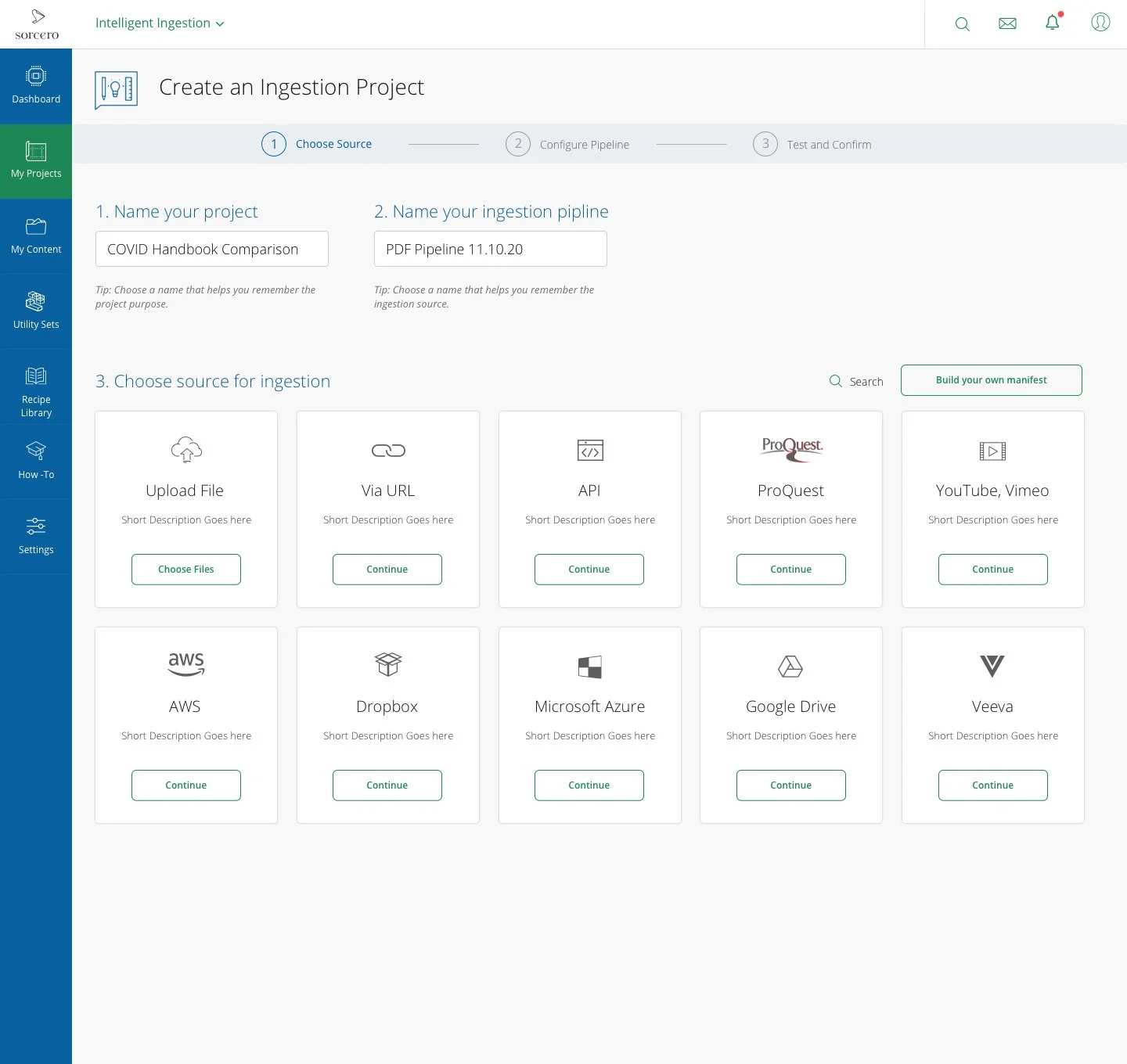
Create Ingestion Project: The ingestion flow turned a technical setup process into a guided sequence for defining a project, selecting content sources, and preparing information for downstream analysis.
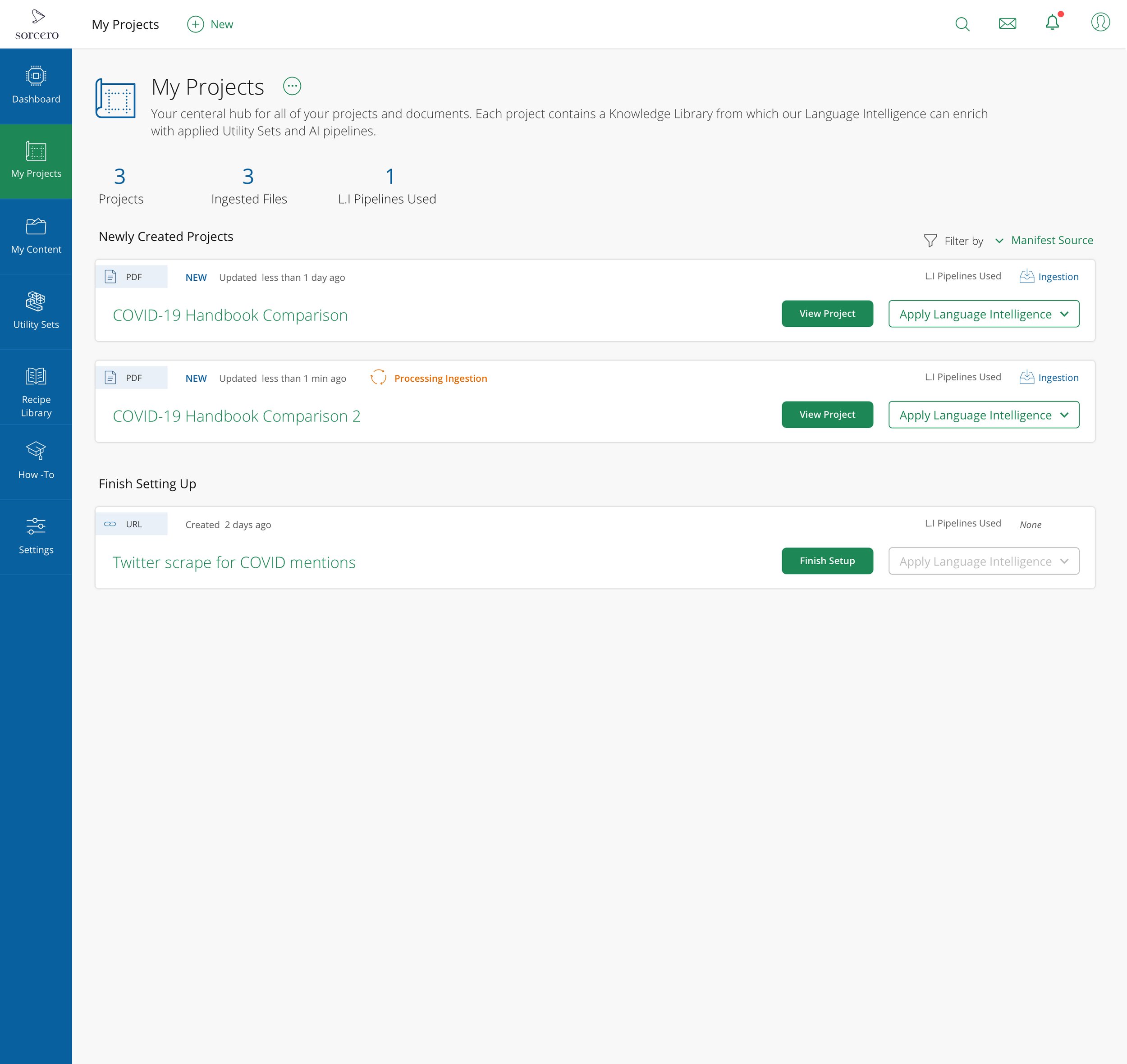
My Projects: A project-level workspace brought content, processing status, and available intelligence workflows into one view, giving users a clear starting point without flattening the platform’s underlying complexity.
The Real Problem
Sorcero’s technology was sophisticated, but it lacked product definition.
Engineers were building layered ontologies and domain-tuned intelligence, yet users had no cohesive workflow for moving from source content through configuration, processing, and analysis. The individual capabilities were powerful, but the relationships among them were difficult to understand.
The experience also needed to communicate system status clearly. Users had to know what was configured, what was still processing, what required attention, and when an output was ready to review. Without that structure, the offering was difficult to navigate, difficult to explain to enterprise buyers, and difficult to scale beyond individual pilots.
The central challenge was turning AI capability into product clarity.
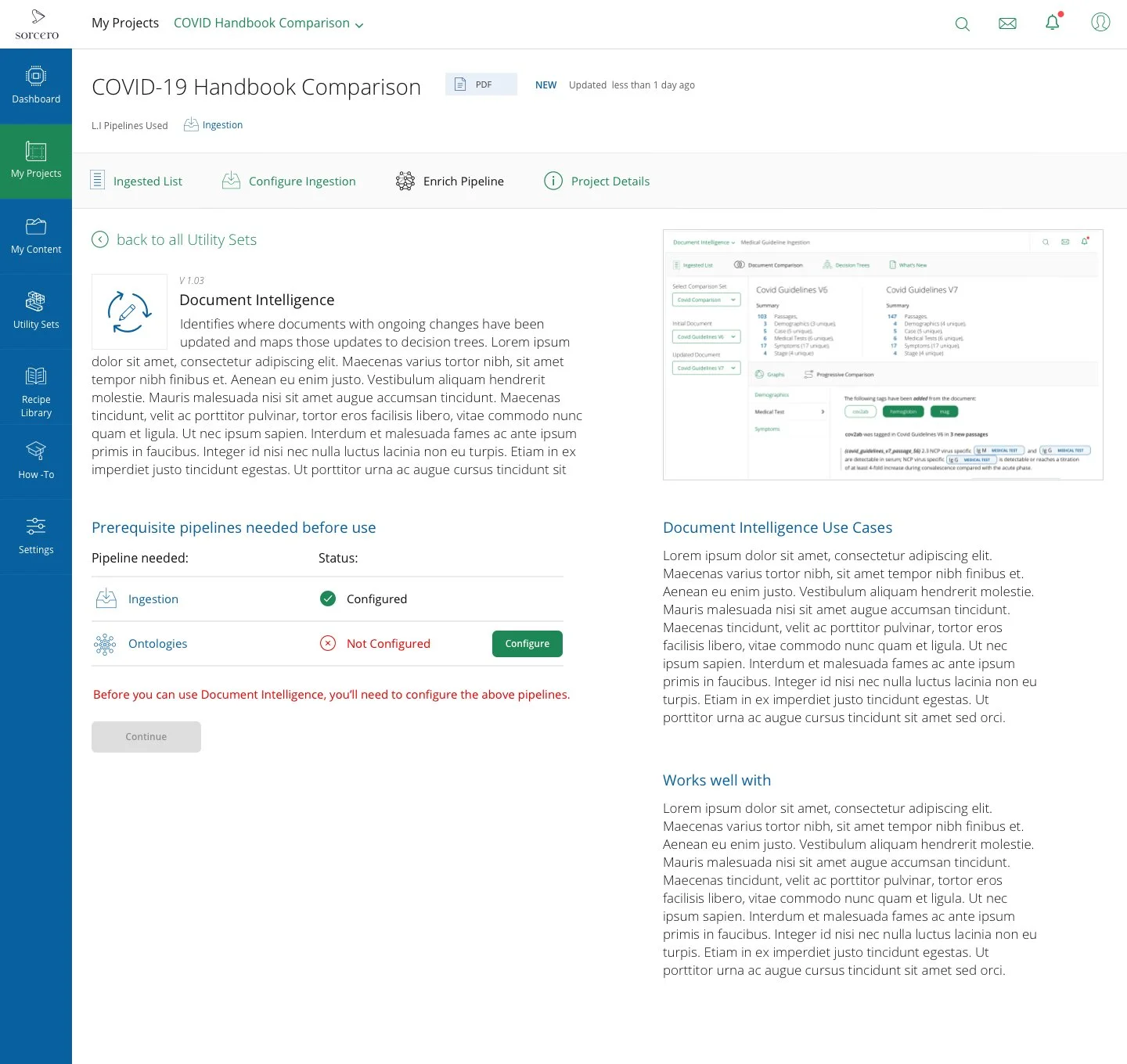
Project Detail and Prerequisites: Visible prerequisites and readiness states showed users what was configured, what was missing, and what needed attention before an intelligence workflow could run.
Clarity and explainability were non-negotiable.
I spent months learning the underlying technology so the experience could accurately represent what the AI could and could not do. In regulated industries such as life sciences and insurance, an AI-generated result could not simply appear as a definitive answer. Users needed context: where an insight came from, how it related to the source material, and whether it required further review.
The platform also had to work for people with different levels of technical expertise. Data scientists needed access to sophisticated configuration and processing concepts, while other enterprise users needed a clear path through the same system. The design used structured workflows, visible prerequisites, status feedback, and progressive detail to make that complexity understandable without hiding it.
Designing for Trust and Human Judgment
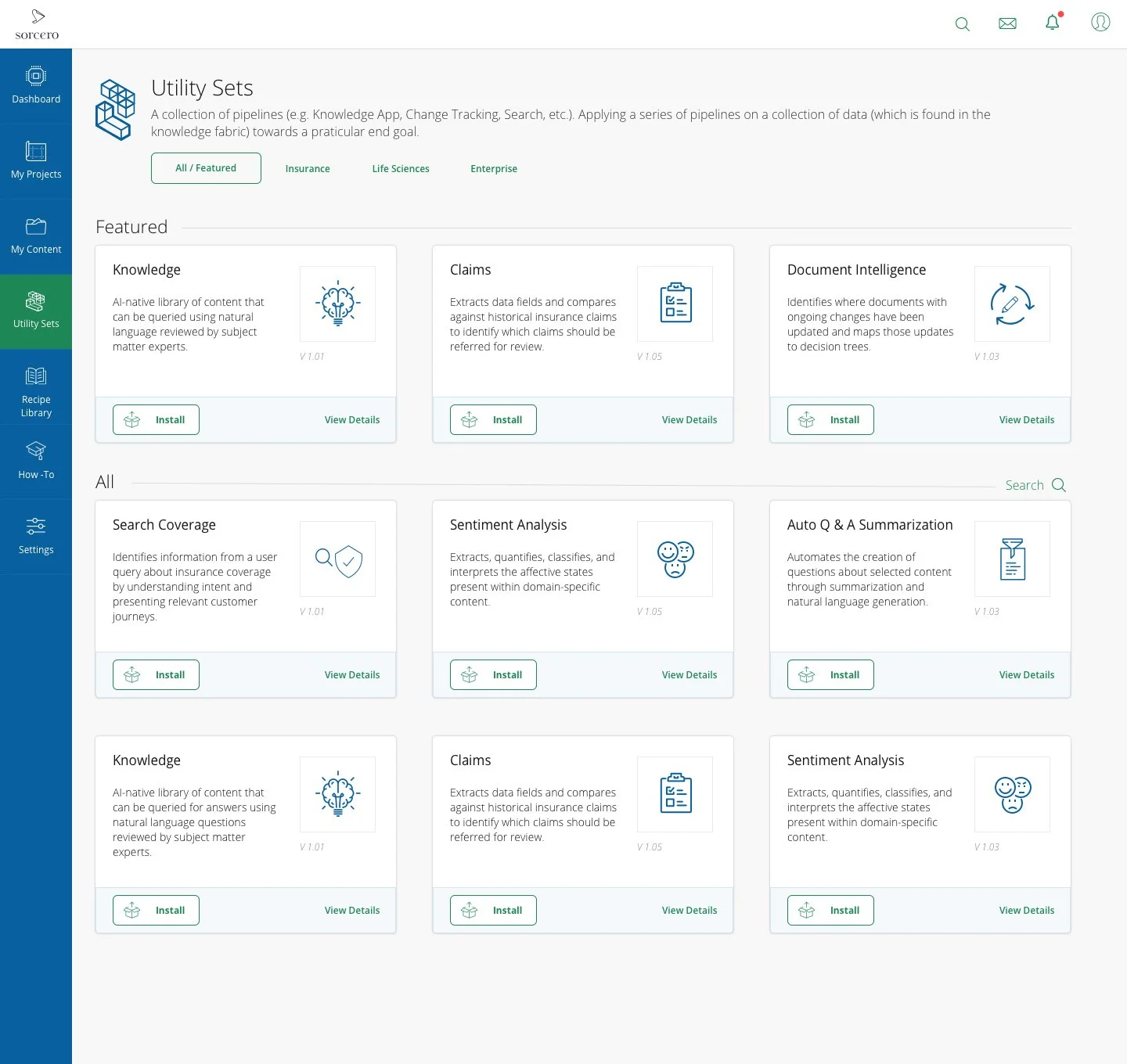
Utility Sets: Utility sets organized reusable language-intelligence capabilities around the work users wanted to accomplish instead of exposing a disconnected catalog of technical services.
Key Decisions
One of the most important decisions I made was defining the platform’s core workflow model.
Rather than presenting disconnected AI features, I organized the experience around projects, ingestion pipelines, utility sets, and document-level analysis. This created a consistent path from bringing content into the system to applying intelligence and reviewing the result.
- Projects gave users a clear container for related content, workflows, and outputs.
- Ingestion became a visible product workflow for selecting sources, configuring pipelines, tracking processing, and resolving incomplete setup.
- Utility sets grouped reusable language-intelligence capabilities around meaningful outcomes instead of exposing a collection of technical services.
- Document views and comparison tools connected generated insights back to source material so users could inspect the system’s work rather than treating it as a black box.
I also designed the multi-tier navigation and the states connecting these layers. The result allowed users to move between a portfolio-level view, individual projects, pipeline configuration, enrichment workflows, and detailed analysis without losing context.
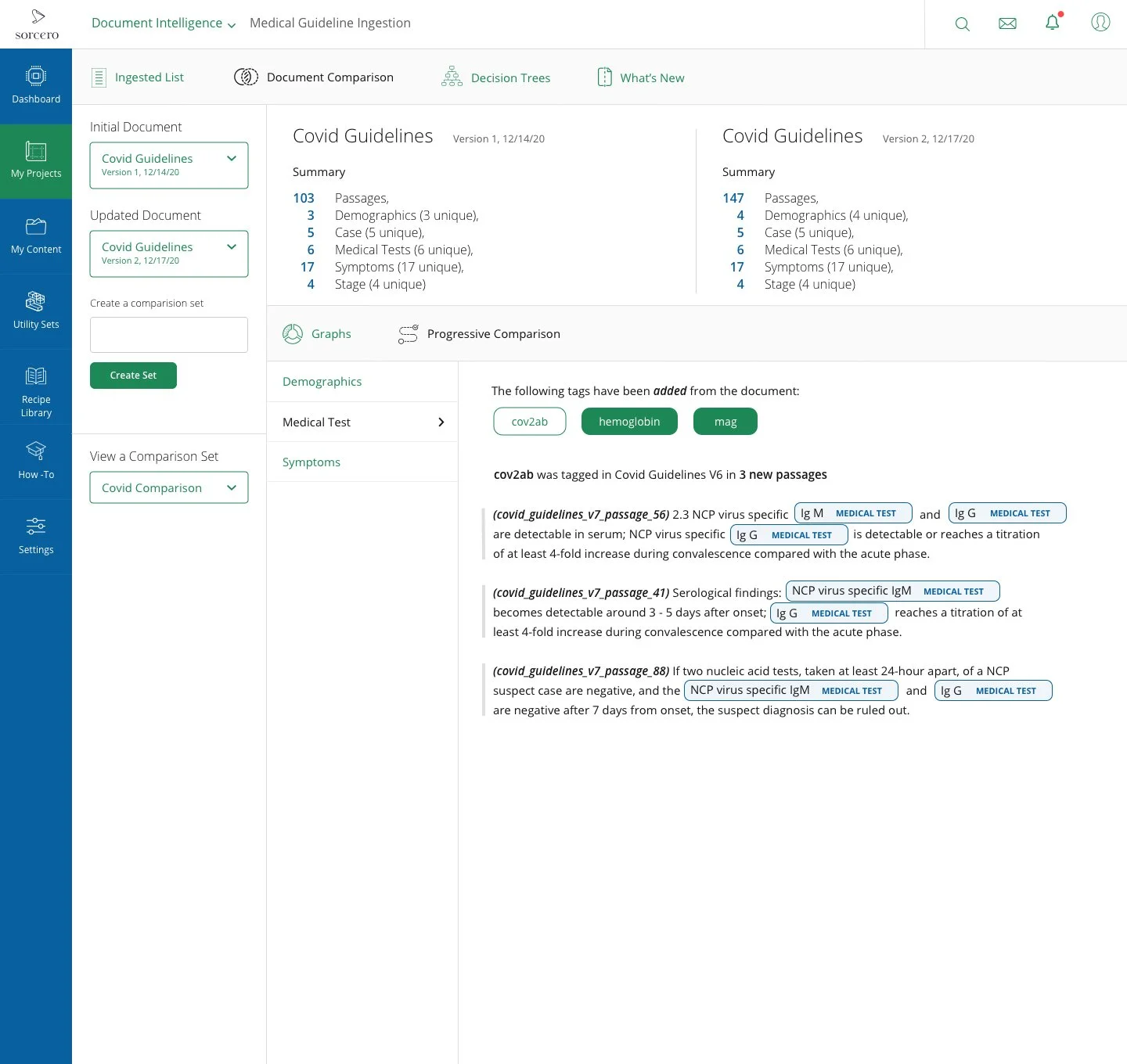
Document Intelligence Detail: The document-level experience connected processing and enrichment capabilities to a specific source, keeping advanced AI functions grounded in recognizable user context.
Side-by-side comparison helped users inspect AI-identified changes against source material, supporting human review instead of asking users to accept an opaque result.
The Work
The process began with collaborative journey mapping in Mural, translating abstract technical capabilities into structured product flows. From there, I created detailed UX designs and high-fidelity prototypes in Sketch to make those workflows tangible and validate direction with the internal team and early users.
I worked iteratively with data scientists, engineers, executives, and product stakeholders. Together, we refined ingestion processes, multi-level navigation, permissions, system states, and the presentation of AI output. Formal usability testing was limited during this early stage, so continuous stakeholder and pilot feedback informed rapid improvements.
The work extended beyond individual screens. By defining reusable components and interaction patterns, I created the foundation of a design system that could support new capabilities while keeping the platform coherent. The product experience also helped the company communicate its technology more clearly to prospective enterprise customers.
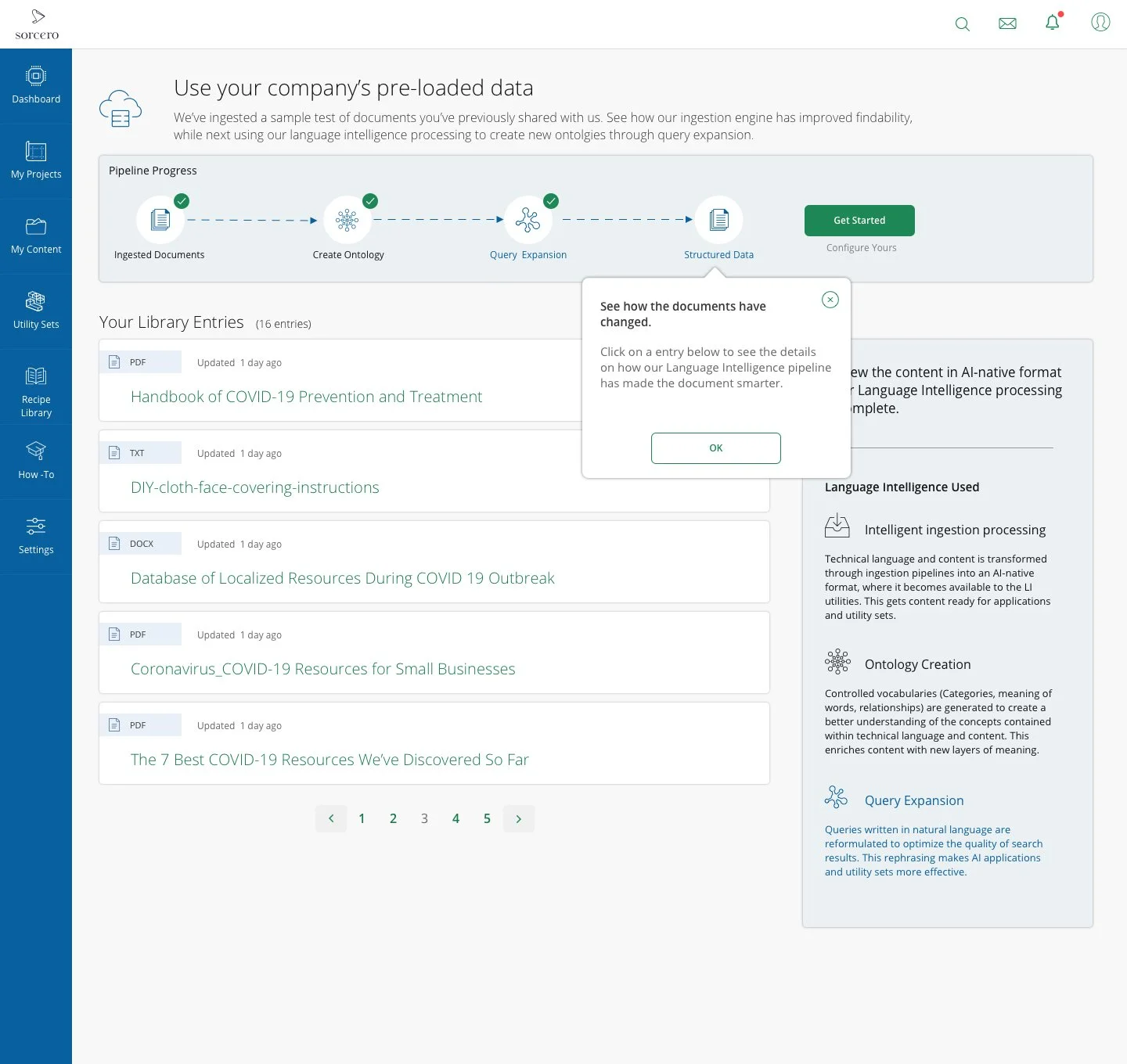
Structured Data: Structured views translated extracted information into scannable patterns that users could examine and apply within downstream workflows.
Outcome
Sorcero emerged with a defined, functional platform where previously there had been a collection of technical capabilities and pilot implementations.
The company could demonstrate a cohesive product experience to enterprise buyers. Users could move through data ingestion, configuration, processing, and AI-assisted analysis within a structured system, with clearer visibility into status, prerequisites, and the relationship between source material and output.
The platform established the UX foundation for Sorcero’s transition from experimental implementations toward a scalable, enterprise-ready offering.
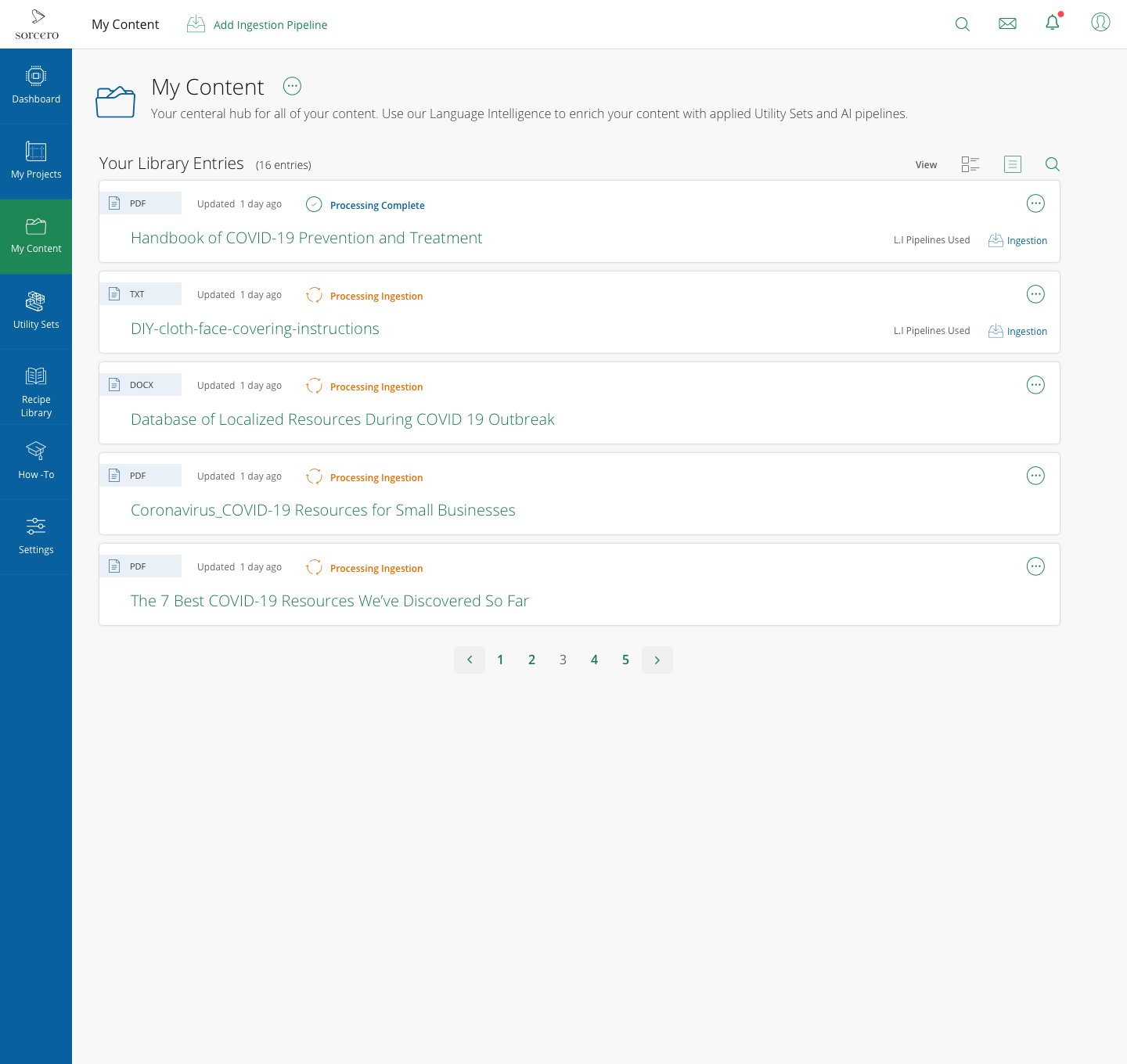
My Content: The content workspace connected source documents to their processing state and available analysis, making the relationship between input and AI-generated output easier to follow.