Next Agency
Creating a 0→1, white-label HR and benefits platform for employers, insurance brokers, and employees.
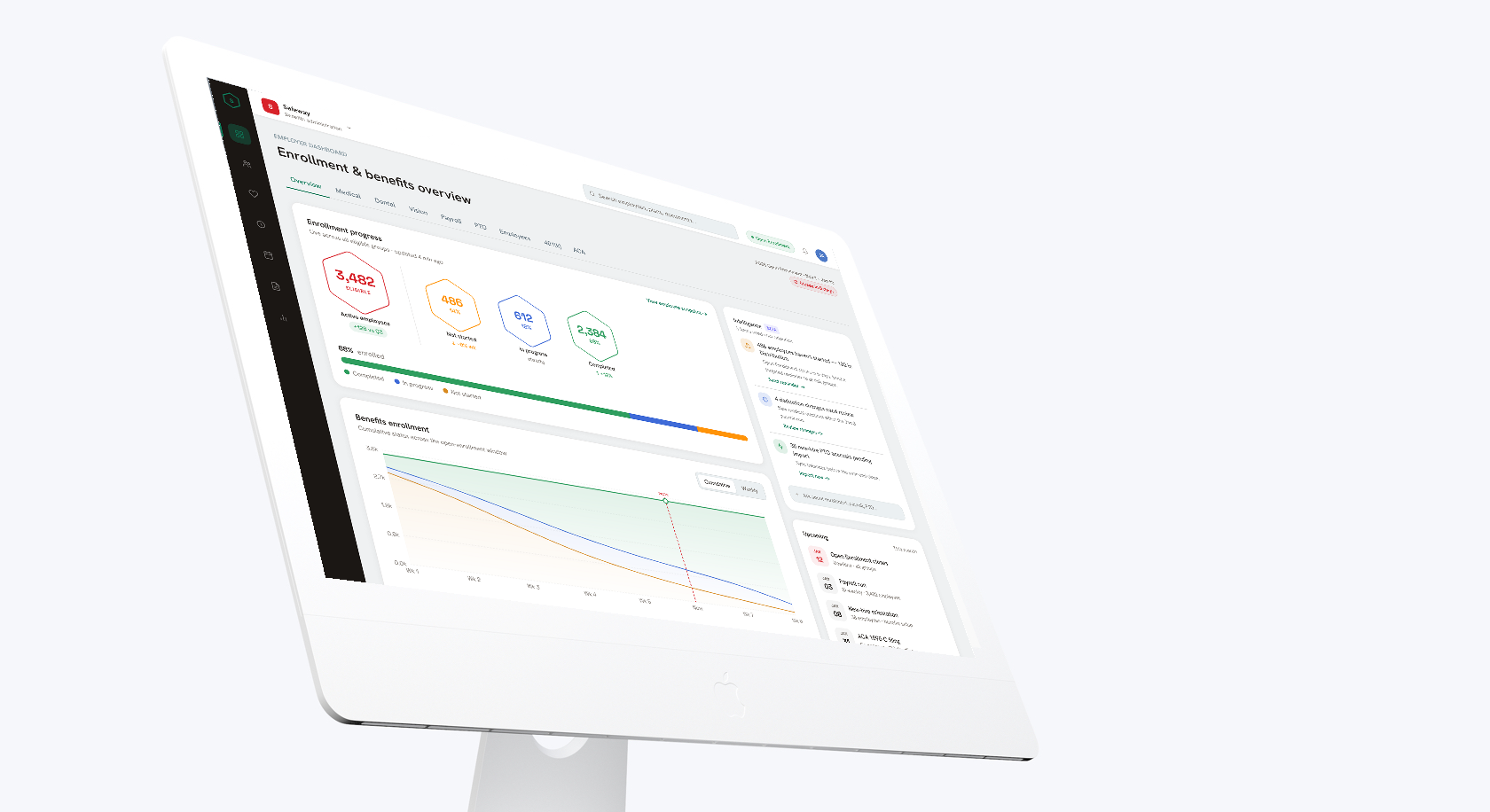
Next Agency wanted to give companies one place to manage employees, benefits, payroll, time off, and insurance - while also supporting the brokers responsible for configuring and selling benefit plans.
The platform operated as a white-label SaaS product. Employer customers such as Safeway could present the experience under their own brand while Next Agency’s technology and broker relationships powered the system behind it.
The product needed to support several connected but fundamentally different users. Employer administrators needed visibility across their workforce. Brokers needed to generate quotes and manage proposals. Employees needed secure access to their information and benefits. Each user required a tailored experience governed by their role, permissions, and responsibilities.
0→1 HR and Benefits Platform Strategy
Role-Based Information Architecture and User Journeys
Employer, Broker, and Employee Portal Design
Benefits Shopping and Insurance-Quote Workflows
Payroll, PTO, and Employee Administration
White-Label UX/UI Design and Prototyping
Scope
Role & Ownership
I served as lead product designer, working directly with Next Agency’s CEO to define the first version of the platform.
There was no established product experience to redesign. I helped determine how the different HR, payroll, insurance, and employee-management capabilities should come together within one system.
My work included competitive and market analysis, provisional personas, user journeys, information architecture, wireframes, UX/UI design, and interactive prototyping. I designed role-based experiences for employers, brokers, and employees while establishing a visual and interaction system that could support different white-label customers.
The Real Problem
The original software created significant cognitive overload. Users were asked to process too much information on each screen, with long, dense forms that made workflows feel overwhelming and hard to complete.
Visual noise compounded the issue. Aggressive form validation and error states appeared before users took action, creating friction and confusion rather than guidance. As the platform evolved and new backend requirements were introduced, the existing UX patterns could not scale, making it increasingly difficult for users to move through critical logistics workflows efficiently.
What Changed / Outcome
I helped turn Next Agency’s concept into its first cohesive product experience.
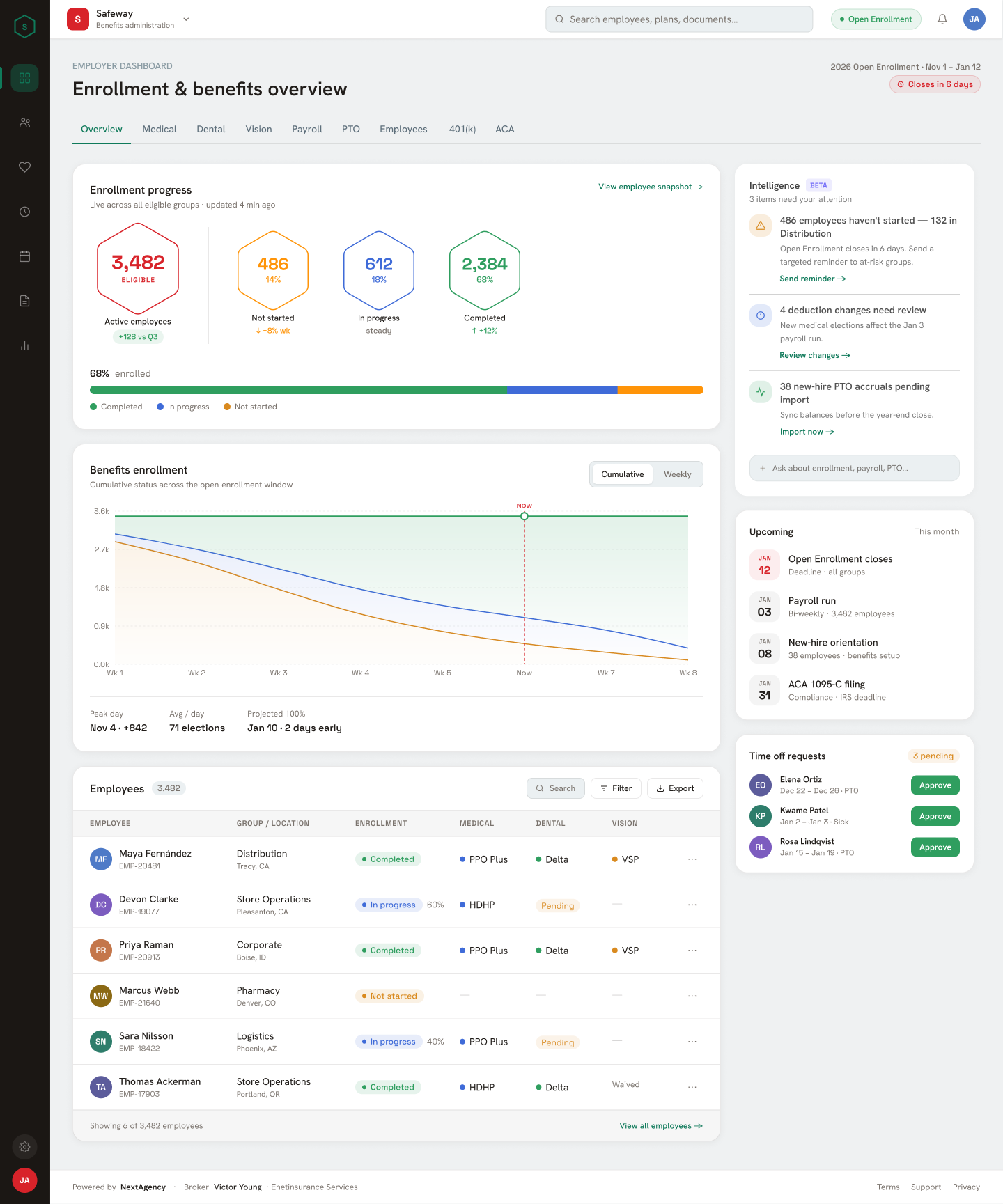
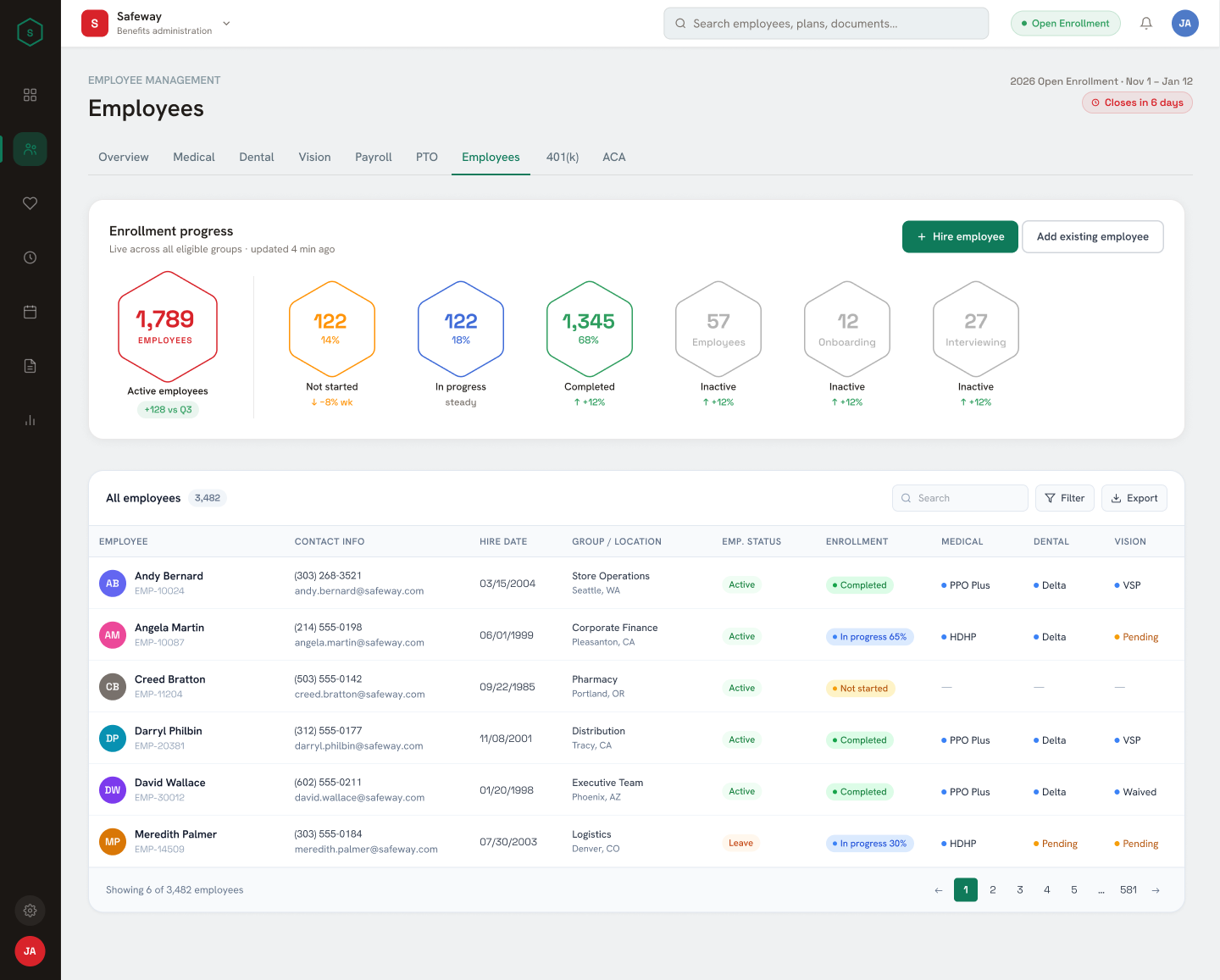
The resulting platform gave employers a centralized view of employees, enrollment status, benefit plans, payroll, PTO requests, documents, and company activity. Detailed employee profiles brought employment records, benefits, tax information, banking details, and supporting documents into one structured experience.
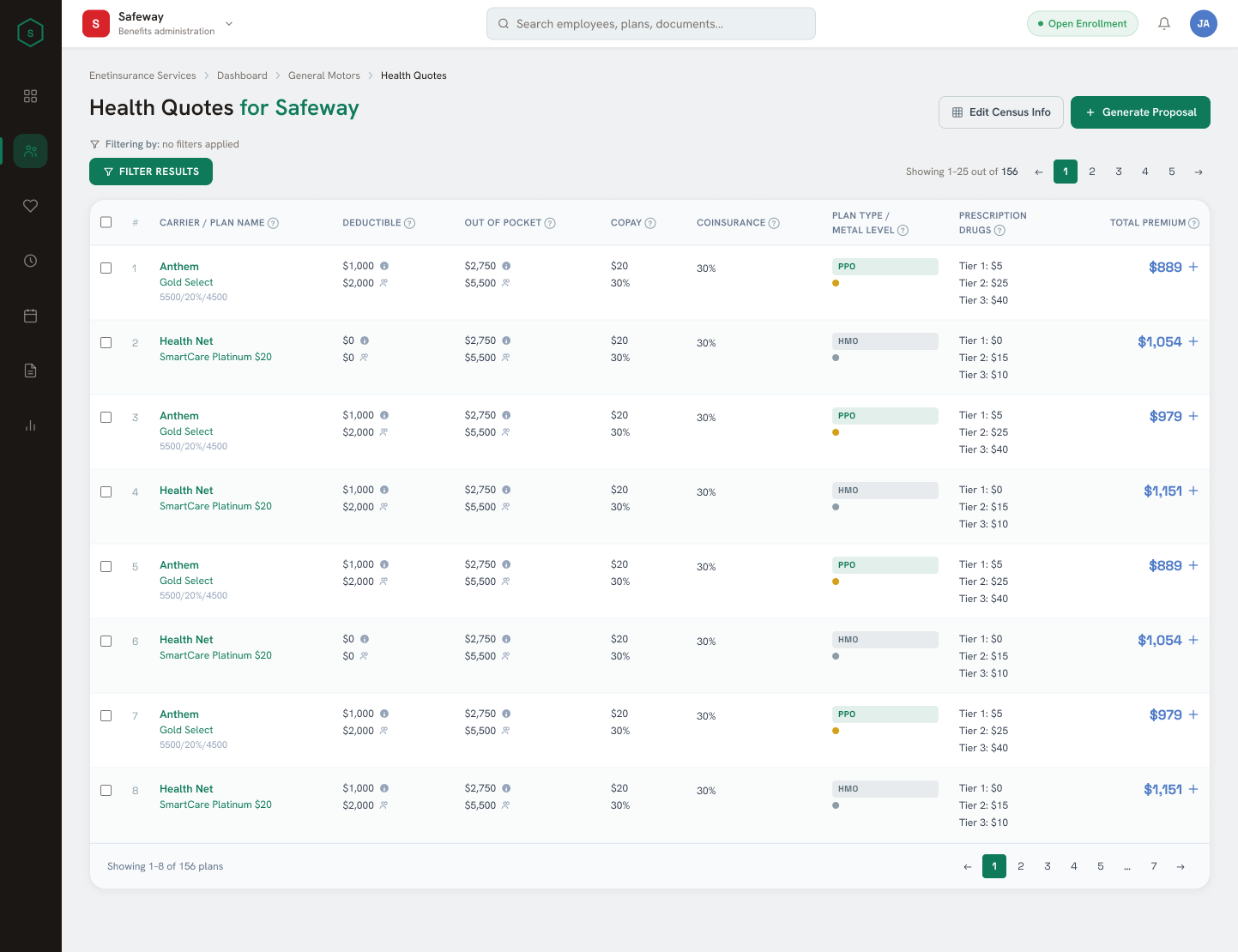
Insurance workflows enabled brokers and employers to explore health-plan quotes, compare carriers and coverage details, review pricing, and manage benefit proposals. Payroll was incorporated through guided setup and connected-provider options rather than existing as an unrelated external task.
A role-based information architecture connected these capabilities while presenting each user with the tools and information relevant to their responsibilities. The white-label system allowed employer customers—including Safeway—to offer the platform under their own brand.
Instead of an assortment of disconnected HR and insurance functions, Next Agency had a unified SaaS foundation it could sell to employers and extend across employee management, benefits, payroll, and insurance brokerage.