Ballers Bridge
Designing a basketball recruiting platform that helped high-school players turn game film into a credible, coach-ready digital presence.
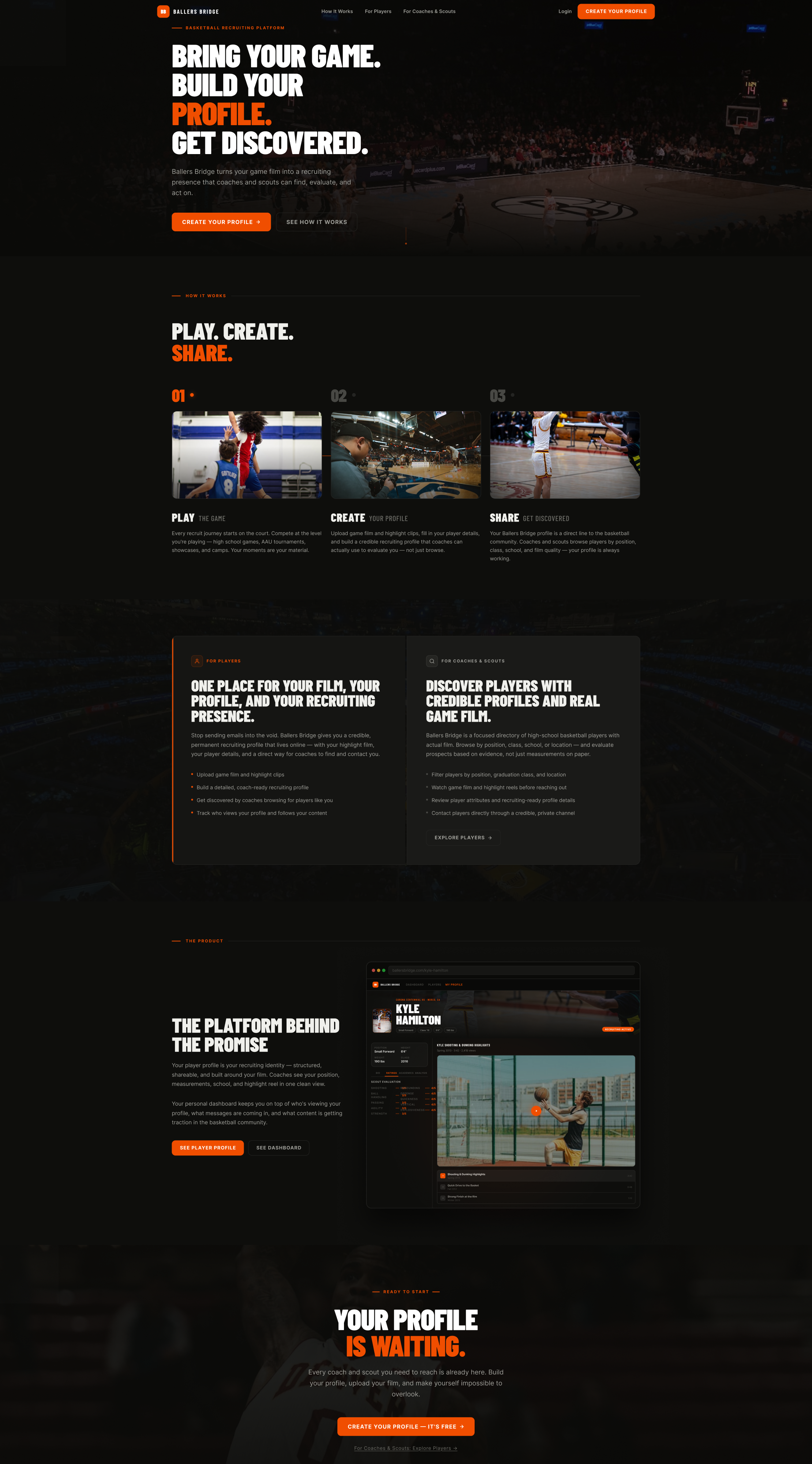
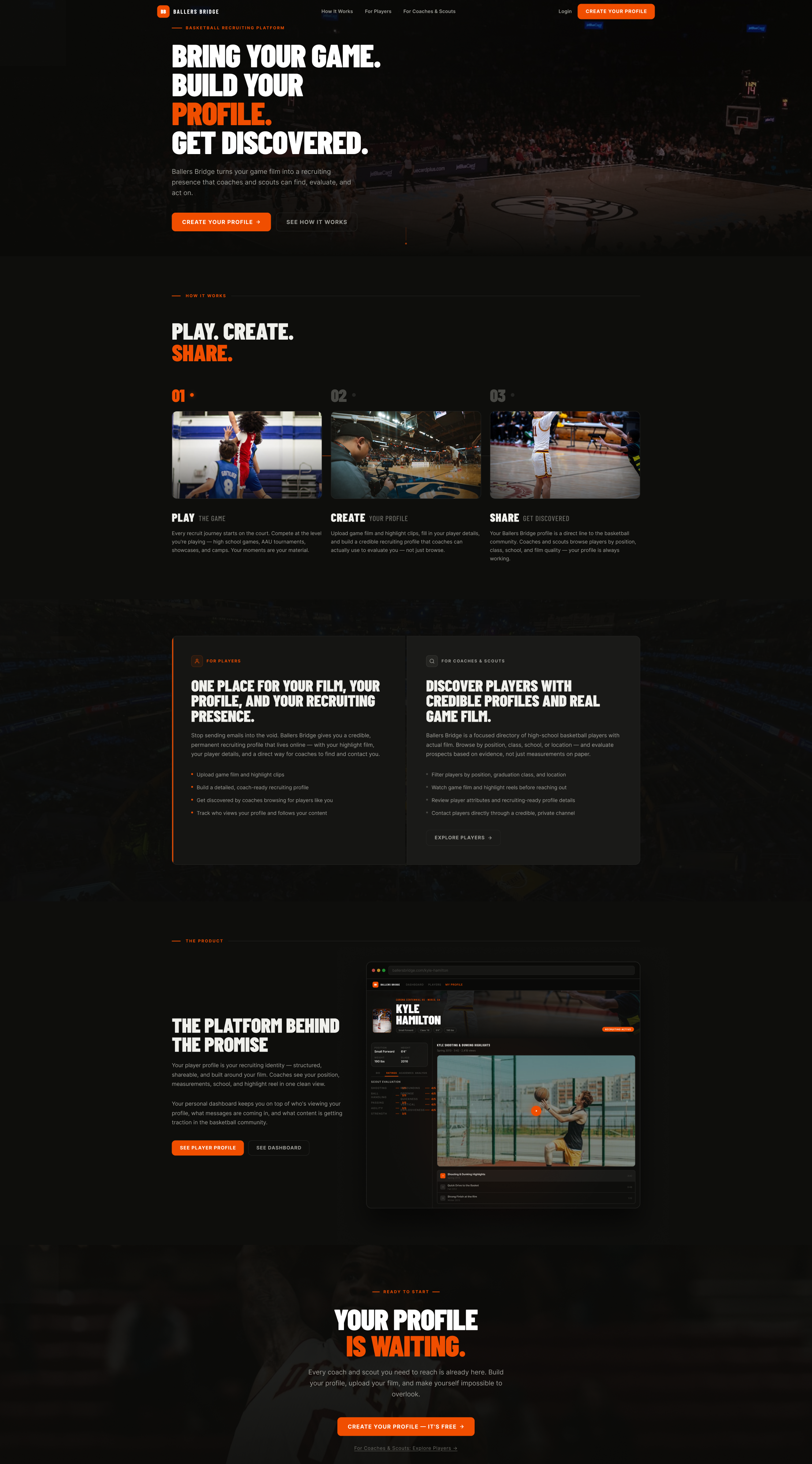
Ballers Bridge began with a simple but consequential gap in basketball recruiting. The players with the most exposure already had established networks, dedicated recruiting coverage, and people advocating for them. A far larger group of capable athletes had game film and ambition, but no clear way to present themselves to coaches outside their immediate geography.
I co-founded Ballers Bridge to give those players a more complete recruiting presence. The platform brought together player identity, position and school information, attributes, game film, and shareable media in one place, while giving coaches and scouts a clearer way to discover and evaluate talent. The work spanned the public brand and marketing experience, the logged-in player platform, and the product system that connected them.
Brand Strategy
Product Strategy
Marketing Website
Player Profiles
Recruiting Dashboard
UX and UI Design
Investor and Event Materials
Scope
Role & Ownership
I was a Co-founder and Product Design Lead for Ballers Bridge. I shaped the company’s brand, visual identity, marketing presence, and product experience from the beginning, when the idea existed as a clear need in the recruiting market but not yet as a defined platform.
My role extended beyond interface design. I worked across product strategy, experience design, presentations, specifications, developer collaboration, stakeholder and investor conversations, event materials, and the day-to-day decisions required to turn an early concept into a public product. I created the identity and visual language, then carried it through the public site, player profiles, logged-in dashboard, and supporting startup materials.
The Real Problem
High-school basketball players could upload a clip to YouTube, but a clip did not make them discoverable. It did not establish who they were, where they played, what position they held, how they compared within their role, or how a coach could evaluate their body of work over time.
For players who were not already elite prospects with extensive recruiting attention, that fragmentation created a real access problem. They might have talent and game tape, but not the exposure, resources, or relationships needed to put it in front of the right programs.
Coaches faced the opposite version of the same problem. They needed to identify players outside their immediate networks and review meaningful evidence efficiently. The recruiting process depended heavily on geography, relationships, travel, and scattered video. Ballers Bridge needed to create a more direct connection between an athlete’s work on the court and a coach’s ability to find and assess it.
What Mattered Most
The platform had to feel credible to both audiences. Players needed a place they would be proud to share, one that represented their game with more substance than a social-media profile. Coaches and scouts needed a fast, structured way to move from a player’s identity to the evidence: film, position, school context, and the information that made the footage easier to evaluate.
That meant video could not be a secondary feature. It had to be central to the experience. A player profile needed to establish context quickly, then make featured game film and a deeper media library easy to access.
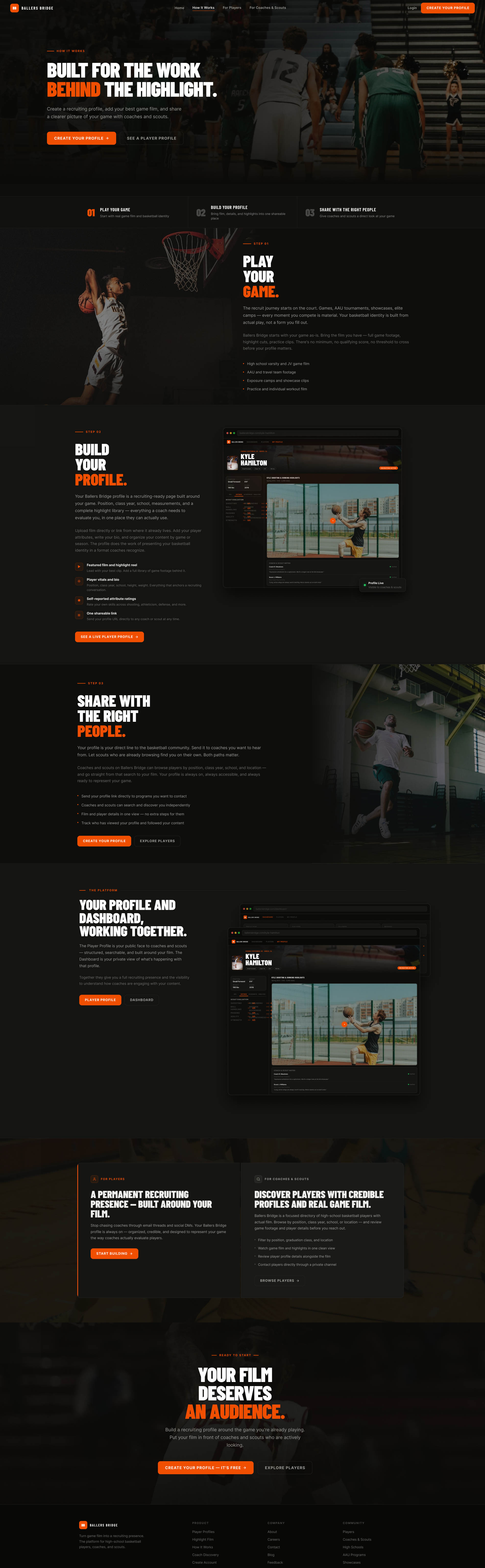
The public experience mattered just as much. The marketing site had to explain the opportunity in a way that felt native to basketball culture while making the product’s value understandable to players, parents, coaches, and scouts. It was the entry point into a product built around one simple progression: play the game, create your profile, and share it with the basketball community.
Key Decisions
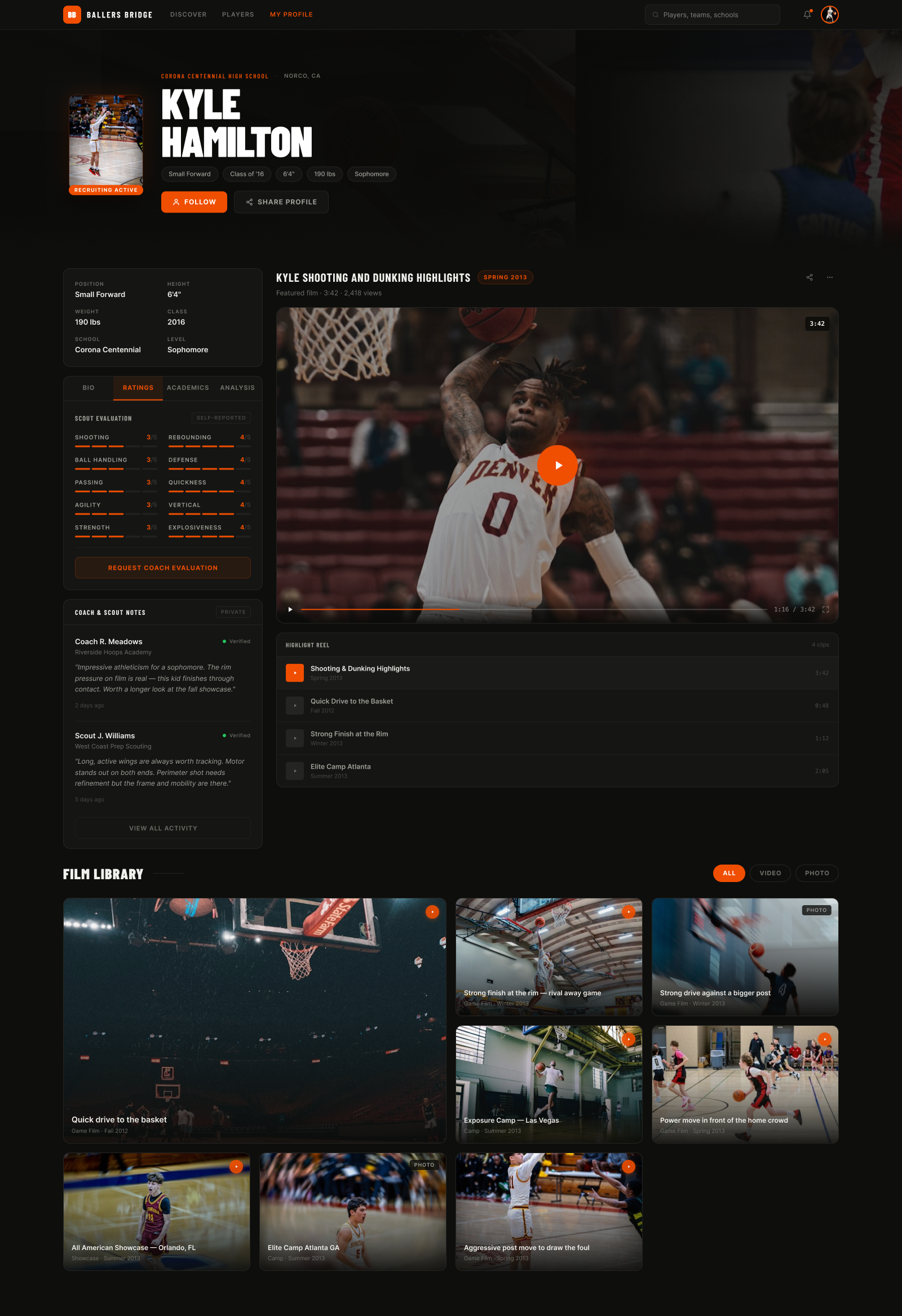
The first decision was to treat the player profile as a recruiting destination rather than a generic social profile. I designed it to bring player identity, position, physical details, school context, ratings, featured video, and a larger media library into one shareable experience. The profile gave athletes a place to organize their work and gave coaches an immediate starting point for evaluation.
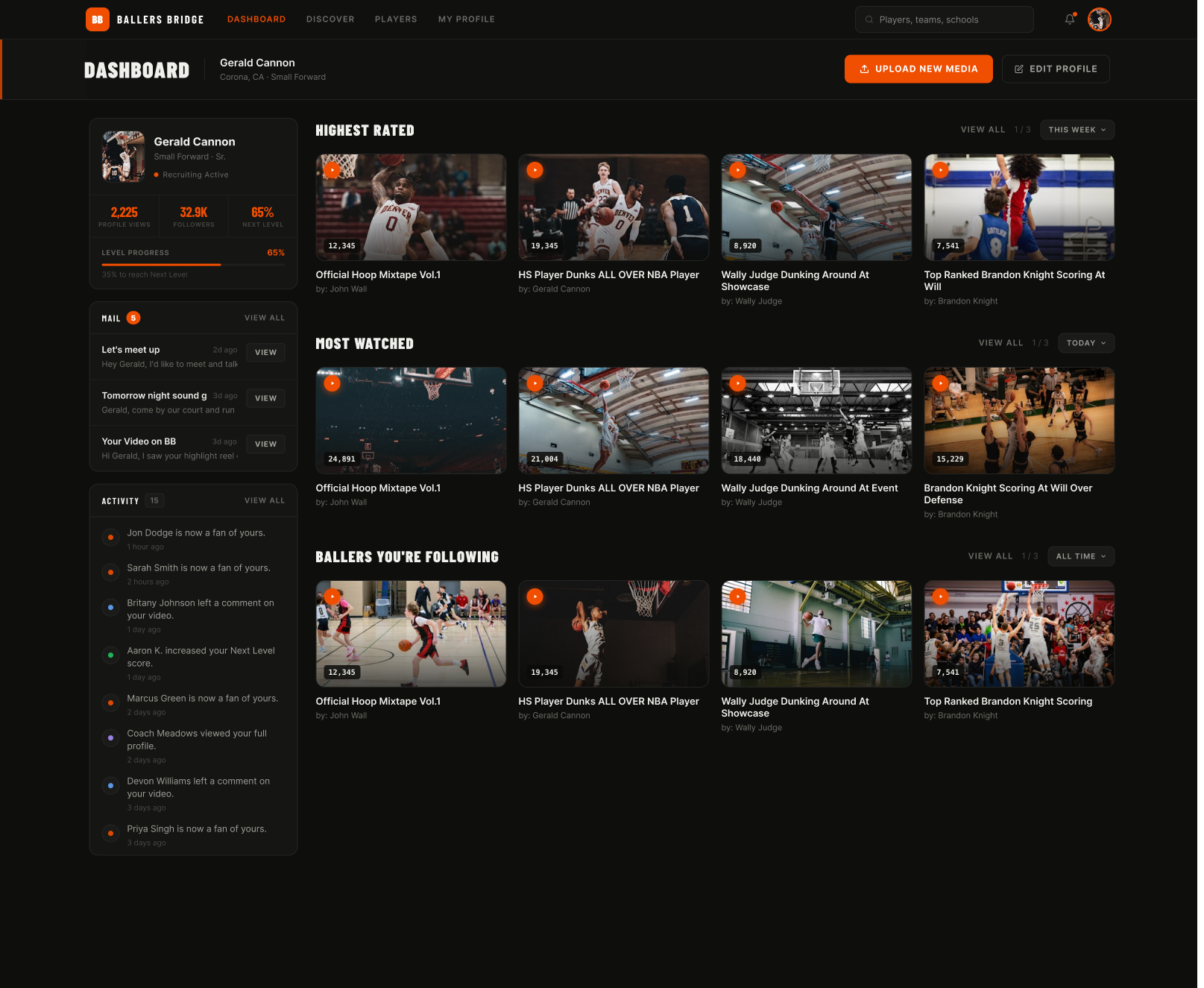
The second decision was to give players an active role in maintaining that presence. The logged-in dashboard became the operational center for uploading media, monitoring profile activity, managing messages, and discovering basketball content. It balanced utility with the energy of a basketball-media environment, making the product feel useful between games rather than only when a player shared a link.
The third decision was to make the public website and product feel like one system. I created the brand identity and visual language, then carried its dark visual foundation, high-contrast type, basketball imagery, and orange accent across both the marketing and logged-in experiences. The public site created interest and explained the product; the player platform delivered the value behind that promise.
The Work
I designed the Ballers Bridge identity and public marketing site from the ground up. The site introduced the platform’s purpose, explained how players could build a profile around their game, and gave coaches and scouts a path into player discovery. It also established the visual tone for the company across event materials, presentations, collateral, and product touchpoints.
Inside the platform, I designed the player profile as the primary recruiting artifact. It led with the athlete’s identity and context, then surfaced featured game film, player attributes, media, and supporting information in a format that could be shared with coaches and scouts.
I also designed the player dashboard, which brought together profile activity, messages, media management, and content discovery. The dashboard made the platform feel more like an ongoing recruiting presence than a static profile page. Together, the marketing site, profile, and dashboard created a connected journey from first awareness to player participation and coach evaluation.
Outcome
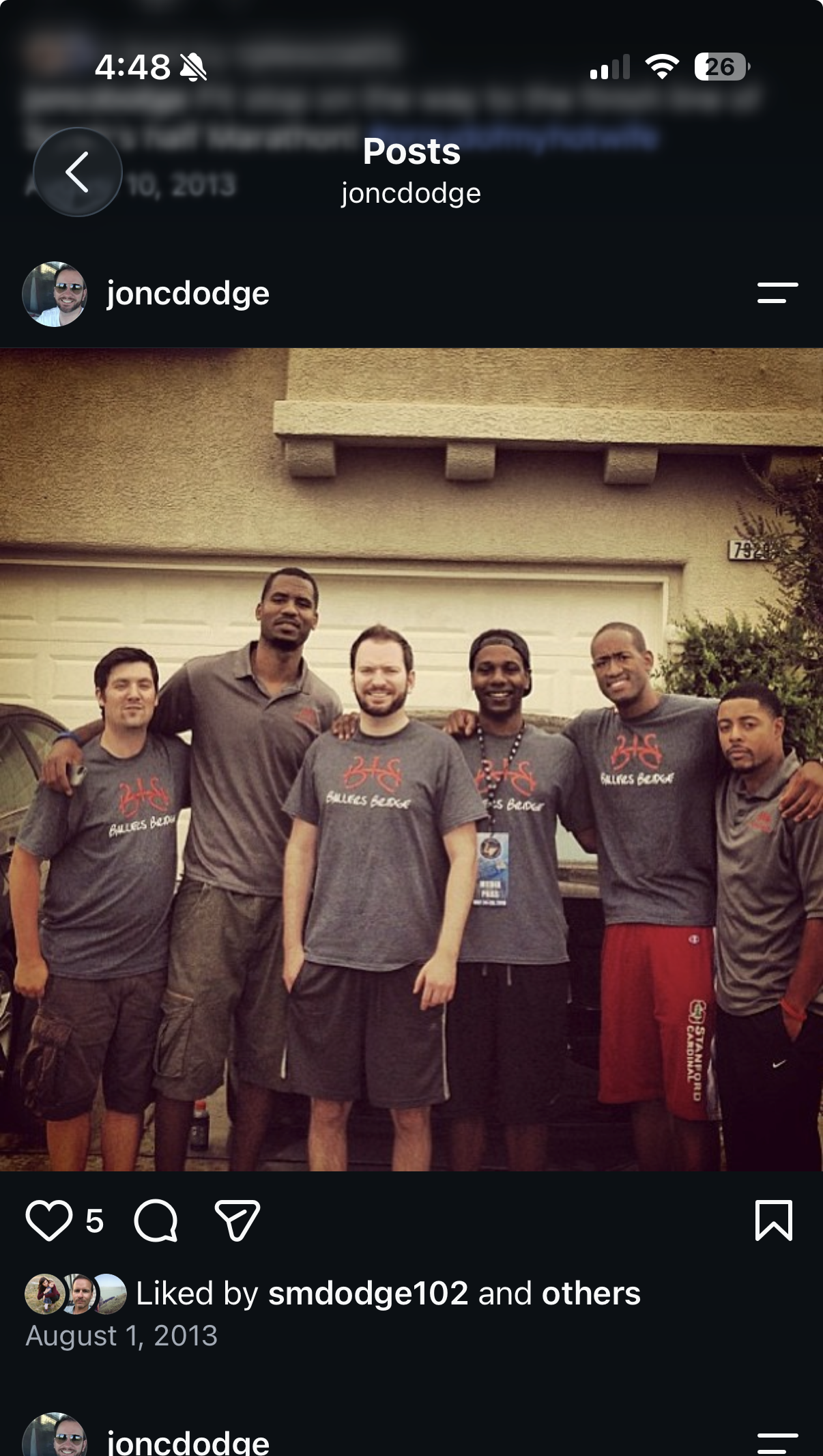
Ballers Bridge emerged through StartX and was publicly featured during the accelerator’s 2012 demo-day coverage. In 2013, the company was covered during its launch at high-school basketball tournaments in Las Vegas. Contemporary coverage recognized the platform’s focus on players who were not already obvious recruits and on giving coaches a richer way to review player information and full game film.
The work created a complete early-stage foundation across brand, public marketing, and product experience. It gave the company a coherent way to explain its mission, gave players a more credible presence for their game, and gave coaches a more structured path to discovering talent.
For me, Ballers Bridge was formative. It taught me how closely product decisions, brand decisions, funding constraints, technical reality, and user trust are connected when a company is being built from zero.