Sprint
Evaluating Sprint’s end-to-end customer experience and designing a unified application for the retail sales journey.
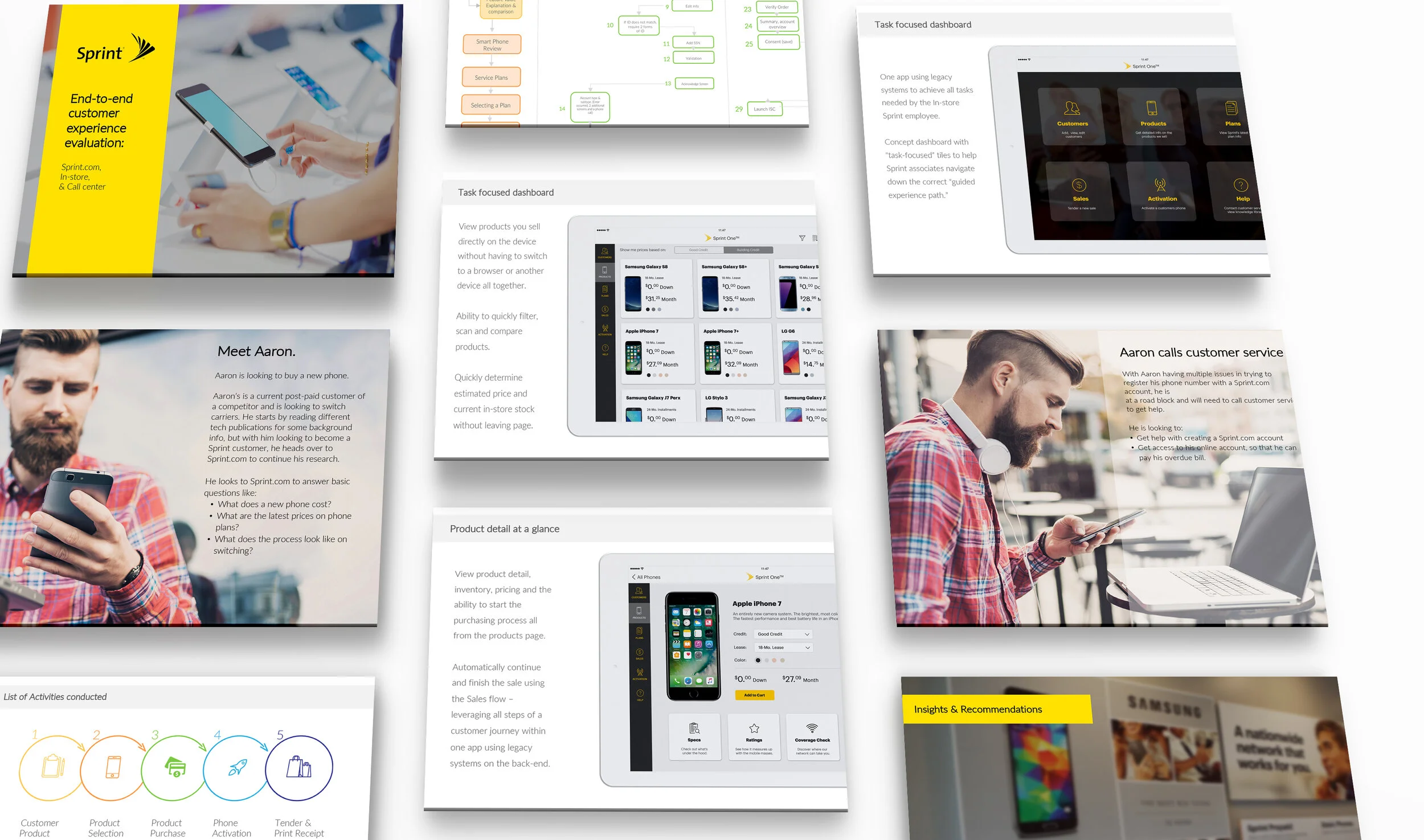
Sprint wanted to improve how customers moved between its digital properties, physical stores, and customer-support channels. Through ProKarma, I helped conduct an end-to-end customer experience evaluation and translate the findings into a new vision for the in-store sales-associate experience.
The work examined more than the interface of a single application. We evaluated Sprint.com, the retail buying experience, customer-service interactions, and printed sales materials to understand how the complete journey worked across channels.
A field study followed the retail experience from the moment a customer entered the store through product selection, purchase, activation, payment, and receipt. That research exposed a sharp contrast: the sales associate created a knowledgeable and personable experience, but the technology supporting that associate was fragmented, repetitive, and disconnected from the customer conversation.
The resulting concept, Sprint One, unified the most important parts of the associate journey within a single, task-focused application.
End-to-End Customer Experience Evaluation
Retail Field Study and Associate Research
Provisional Personas and Customer Journey Mapping
Product Strategy and Legacy-System Consolidation
UX/UI Design and Interactive Prototyping
Associate Pilot Testing and Design Validation
Scope
www.sprint.com

Role & Ownership
I served as lead product designer and product strategist for the engagement through ProKarma.
My work spanned research, experience strategy, information architecture, journey mapping, interaction design, visual design, and prototyping. I conducted and synthesized the field study, evaluated the experience across physical and digital touchpoints, created a provisional customer persona, documented the associate and customer journey, and translated the findings into product requirements.
I then designed the Sprint One concept, including its task-focused dashboard, customer workflows, product catalog, product-detail experience, and pathways into sales and activation.
The Real Problem
Sprint’s customer experience was divided across channels and constrained by the systems employees needed to use.
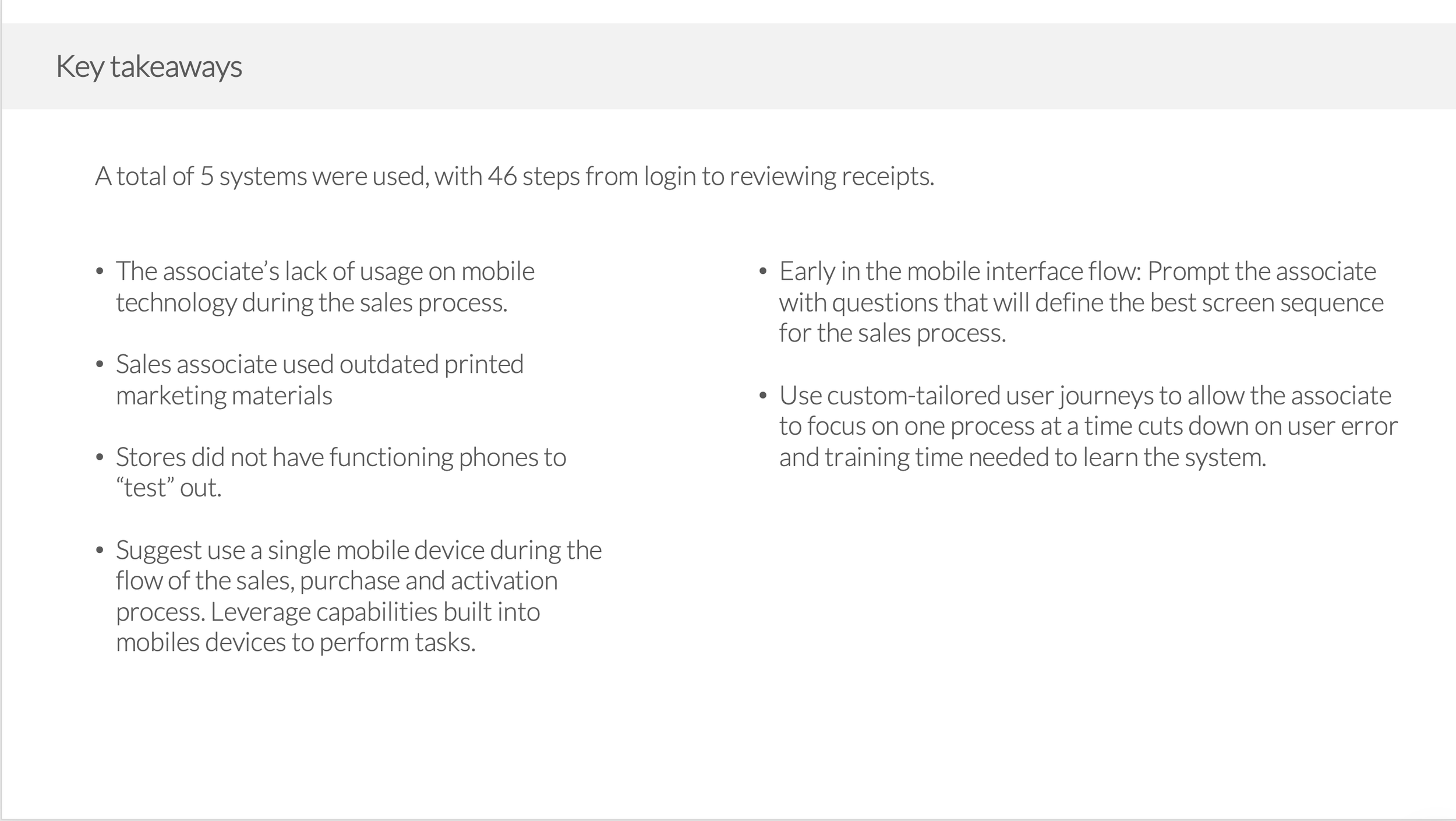
Inside the store, the associate did not have a company-provided mobile tool available during the early sales conversation. Current product comparisons were difficult to access. Printed plan information could become outdated, and display phones could not provide a meaningful hands-on demonstration. At one point, the associate used a personal phone to help the customer experience the product.
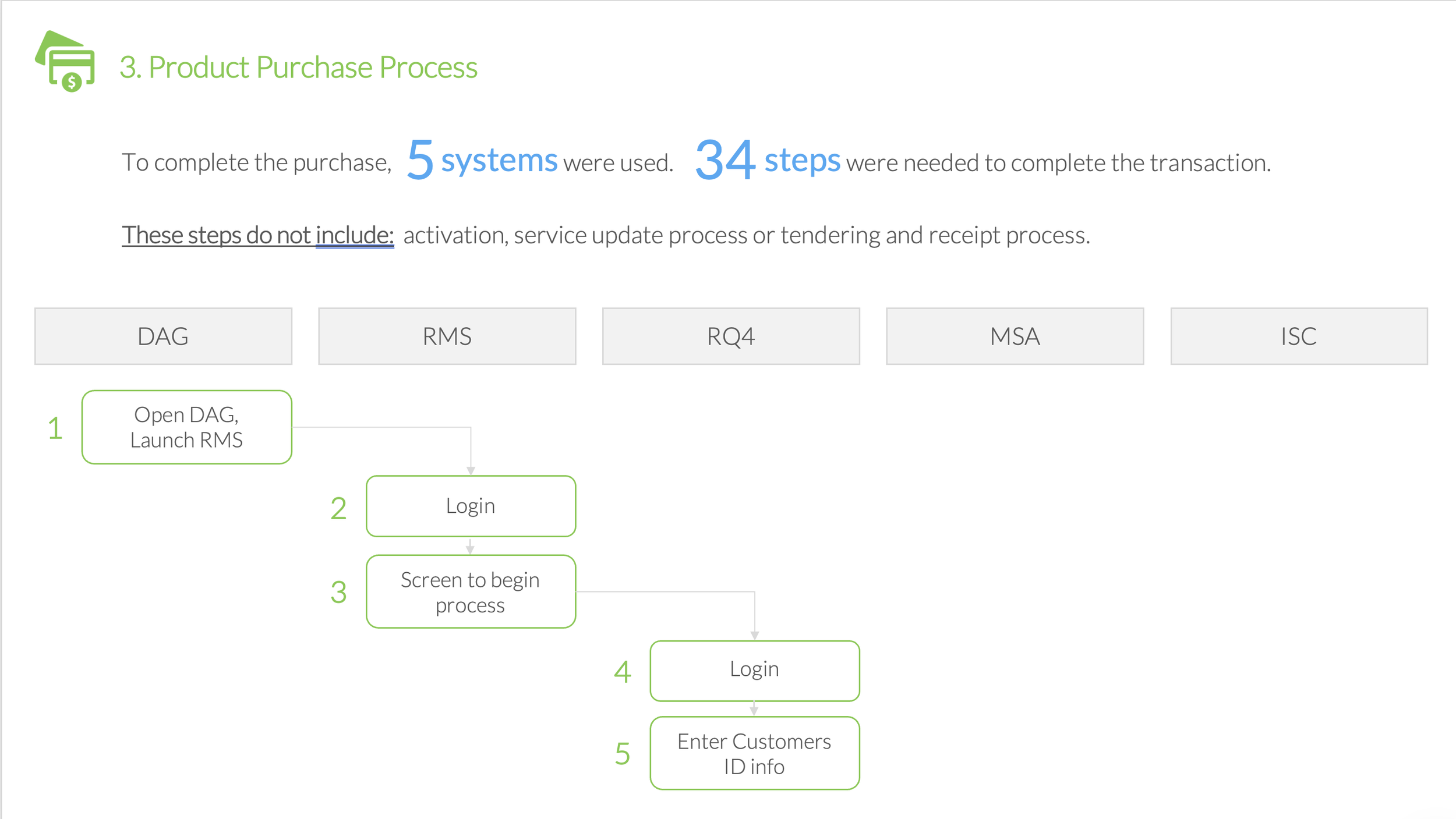
The operational experience became even more complicated once the customer was ready to purchase. The associate moved among five separate legacy systems to complete the transaction. The documented journey included 34 steps before activation, service updates, payment, and receipt processing. From the initial login through receipt review, the complete mapped workflow reached 46 steps.
The problem was not simply an outdated interface. The structure of the technology forced associates to think in terms of separate systems, logins, and processes while trying to maintain a coherent conversation with the customer.

What Mattered Most
The strongest part of the existing retail experience was the sales associate’s ability to listen, ask relevant questions, explain complicated options, and guide the customer toward a confident decision.
The new experience needed to support that human interaction rather than interrupt it.
That meant bringing useful information into the conversation when it was needed, reducing unnecessary movement between systems, and allowing associates to remain present with customers on the sales floor. It also meant organizing the application around recognizable employee tasks—not around the architecture or terminology of Sprint’s legacy platforms.
The technical reality could not be ignored. Sprint One therefore needed to provide a unified front-end experience while continuing to work with legacy systems behind the scenes.
Key Decisions
Evaluate the journey across channels
We began by examining the connected experience rather than isolating the store application.
The evaluation included Sprint.com before and after purchase, the physical retail journey, printed sales materials, and customer-service support. A provisional persona helped connect those touchpoints into a representative story: a customer researching a phone, visiting a store, completing a purchase, creating an online account, and seeking help when problems occurred.
This broader view showed that customers experienced Sprint as one company, even when its internal systems and channels operated separately.
Observe the work as it actually happened
The retail field study documented the complete interaction between a customer and an experienced sales associate.
We followed the journey through needs assessment, plan and product comparison, product selection, accessories, purchase, activation, payment, and receipt. I mapped the applications, screens, decisions, workarounds, and repeated information required along the way.
This made the complexity visible. It also distinguished the parts of the experience that were working—the associate’s knowledge and consultative approach—from the operational friction created by Sprint’s tools.
Design around tasks instead of systems
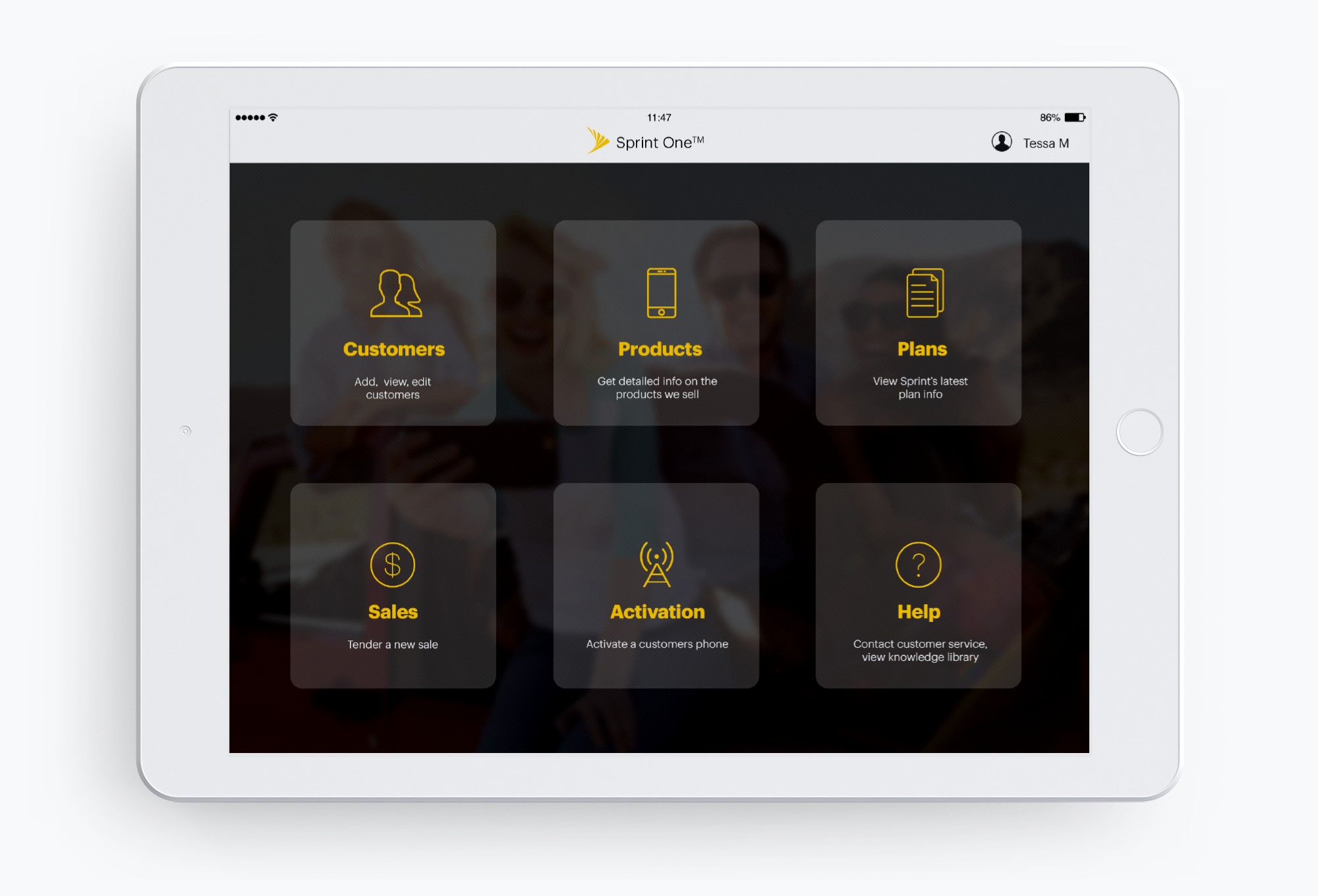
Rather than exposing employees to another system menu, I designed Sprint One around the tasks associates needed to accomplish:
View, add, and manage customers
Explore and compare products
Review current plans
Tender a sale
Activate a customer’s phone
Access help and support
The dashboard provided clear starting points and could direct associates into the appropriate guided pathway without requiring them to know which underlying system handled each step.
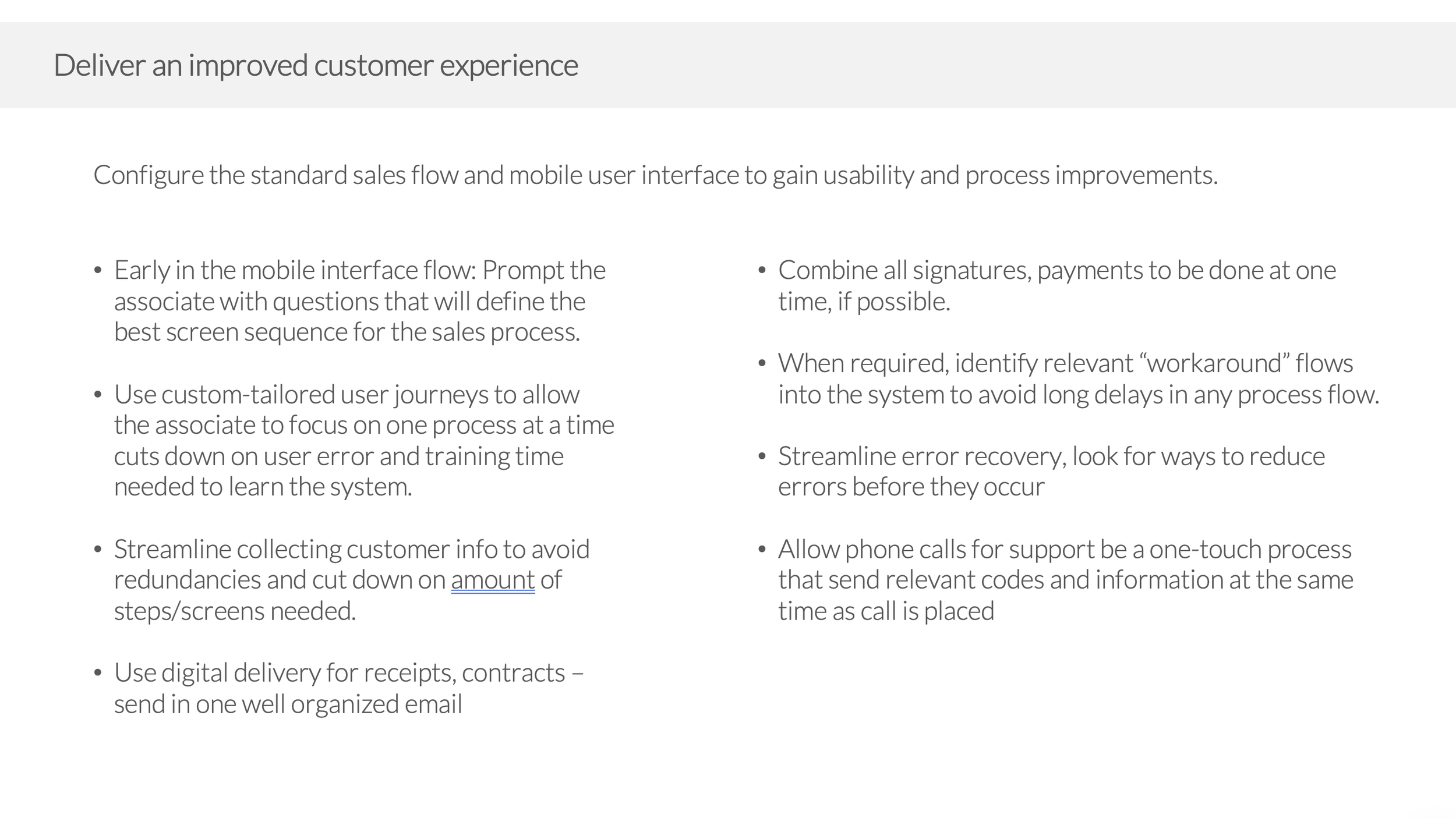
Capture information once
The existing journey required associates to move between systems and repeatedly collect or confirm customer information.
The proposed customer flow consolidated data entry into a focused experience. It also explored using the tablet’s camera to capture and validate identification, reducing manual entry and taking advantage of capabilities already available on the device.
The strategy extended beyond a single form. Related questions and actions could be grouped together, signatures and payments could be consolidated where possible, and receipts and contracts could be delivered digitally.
Put product knowledge in the associate’s hands
The field study revealed a gap between the customer’s need to explore products and the information readily available to the associate.
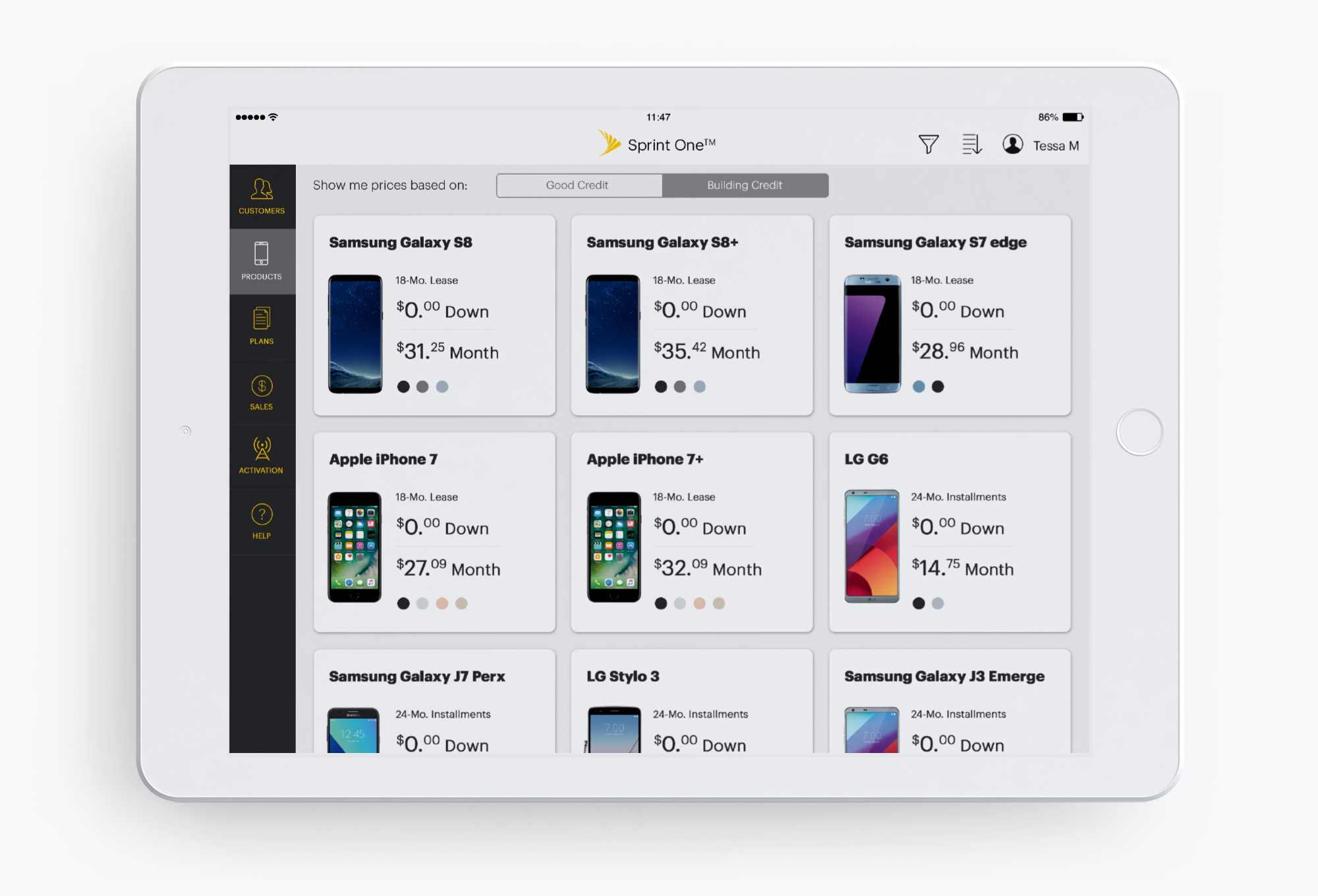
I designed a browsable product catalog that brought phones, pricing, payment options, colors, and estimated availability into the same application. Associates could filter and compare products without moving to another browser or device.
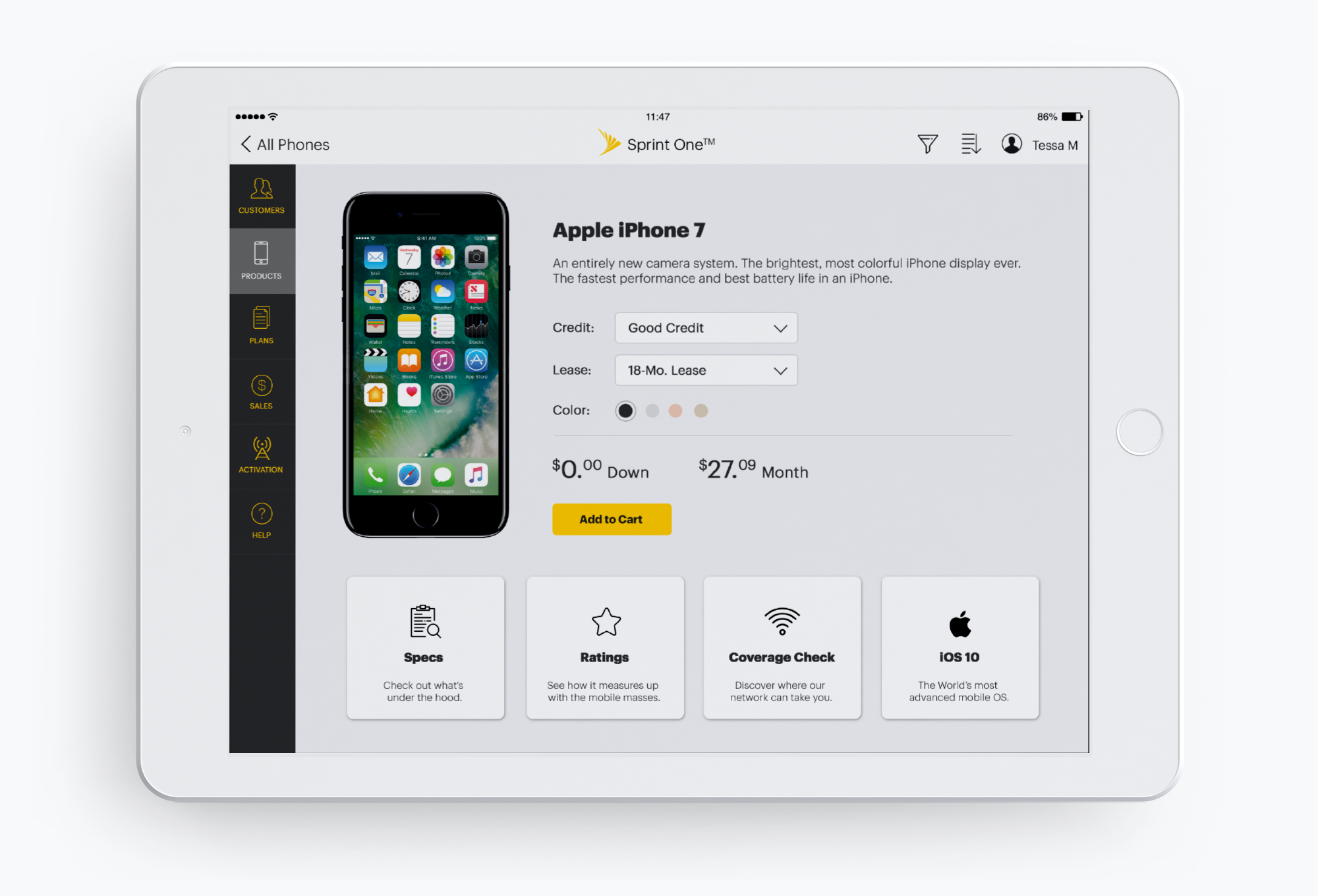
The product-detail experience combined specifications, ratings, coverage information, operating-system details, pricing, and purchasing actions. Once a customer selected a product, the associate could continue directly into the sales journey rather than starting again in a separate system.
Turn the strategy into a testable experience
The recommendations were translated into high-fidelity interfaces and an interactive prototype rather than ending as a research report.
Sprint One was then piloted and tested with sales associates, allowing the proposed unified model to be evaluated with the people who would use it in the store.
Outcome
The engagement gave Sprint an evidence-based vision for simplifying the retail sales experience.
Sprint One demonstrated how five fragmented systems and dozens of operational steps could be reorganized around a coherent associate workflow. The concept brought customer management, product exploration, plan information, sales, activation, and support into one task-focused experience while accounting for the legacy systems operating behind it.
Because the application was piloted and tested with sales associates, the work progressed beyond an abstract transformation recommendation. Sprint had a tangible product direction it could evaluate with intended users—grounded in observed retail behavior, mapped operational complexity, and the realities of the customer journey.